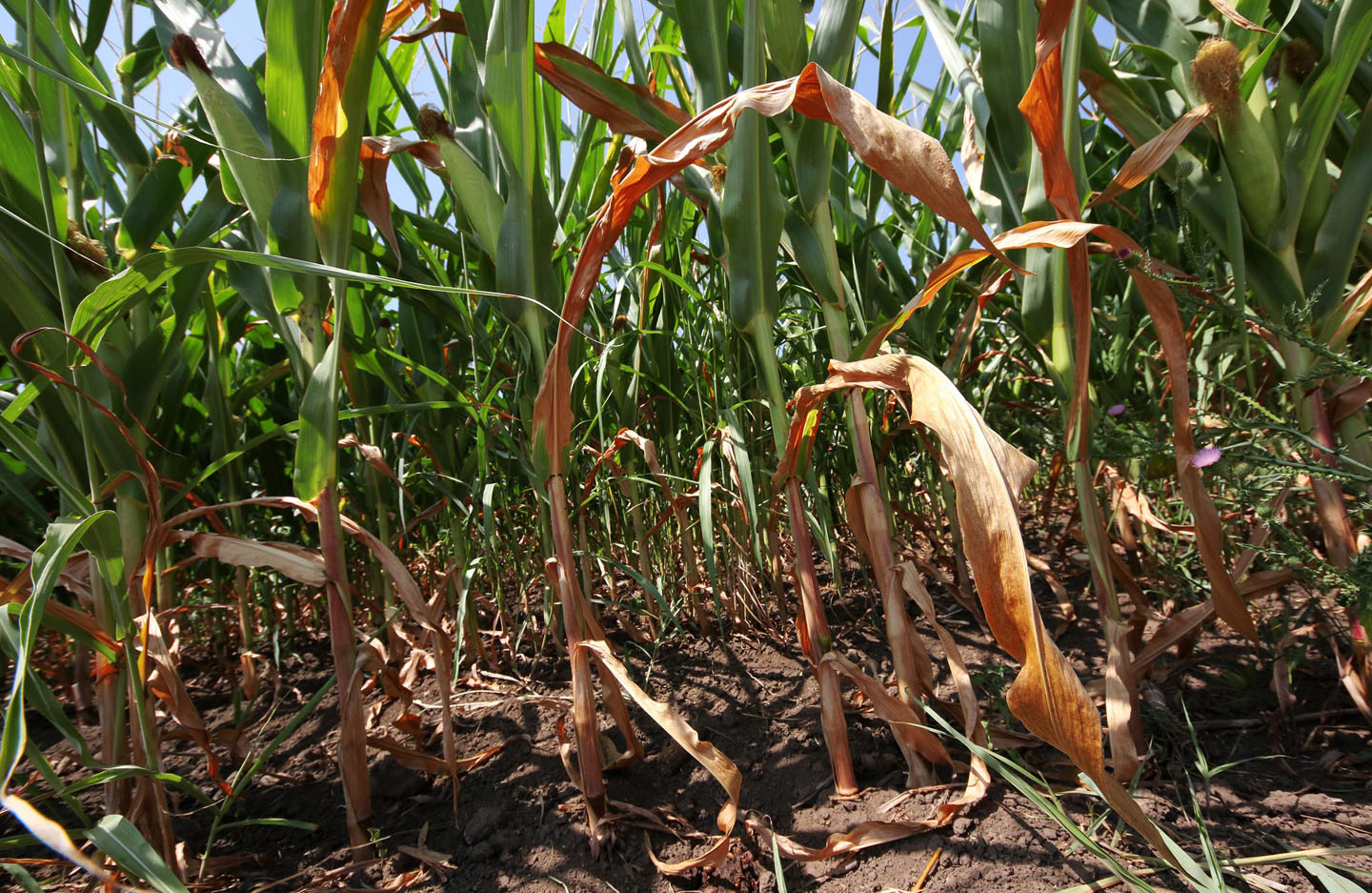
Agroeconomist Milan Prostran stated that drought will not threaten the needs of Serbia and its basic supply agricultural products, but that due to weaker yields, exports will be reduced, especially kukuruza, while soy will suffer the biggest drop in production.
Prostran said that about two-thirds of the agricultural year ended very well, with good yields of wheat, barley, rye, oats and canola, as well as fruits and vegetables, while there are more than two million tons of wheat in the silos.
"What arrived until July 20 was excellent. That part of the year is over and there is no reason for products that have already been harvested and placed in silos to increase in price significantly," Prostran told the FoNet agency.
He stated that, despite the reduction in yields, there will be enough corn for domestic needs, primarily due to the reduced number of cattle, but that Serbia could export less than planned.
"Corn is one of the most important export items of Serbian agriculture," stated Prostran.
Heatwaves "harvest" soybeans
According to his opinion, soybeans suffered the most.
Prostran stated that the July heat practically "washed the crop" of soybeans and that the production will not be enough even for all domestic needs.
"Soybean can hardly tolerate this kind of drought if it is not produced under irrigation conditions, which is still insufficiently represented in Serbia. In the future, whoever decides on soybeans will have to think about having all areas under irrigation systems," said Prostran.
He stated that Serbia previously encouraged the production of non-genetically modified soybeans, which are in demand in the industry.
"In the case of sunflowers, sown on more than 300.000 hectares, a drop in yield is expected. The yield could be around 2,5 tons per hectare, instead of the expected 3,5 tons. However, according to information from the field, the grain should be of good quality, so there should be enough raw material for oil production. The sunflower harvest has already started," said Prostran.
"Sugar beet is holding up relatively well for now, but the drought has also reduced its potential. Since beet harvesting will only begin in September, it is too early to assess the final yield and total production," said Prostran, noting that agricultural producers bear the brunt of the drought, especially due to prices.
"Agricultural producers will suffer the most"
As an example, Prostran cited sunflower, for which producers expected a price close to last year's, from around 50 to 55 dinars, while now they are being offered prices of around 40 dinars.
"Agricultural producers will suffer the most," said Prostran.
He added that the price of corn will be known only when the harvest is over, because it is a stock commodity, the price of which also depends on the movement on the world market.
Prostran also warned about the problem that comes with the beginning of the new agricultural year.
"Because of the extremely dry and cracked soil, it will be difficult to prepare the fields for the sowing of oilseed rape and wheat, which begins in the fall. I am more concerned about the soil conditions for the new agricultural year. How to model the field on such dry and cracked soil and prepare the soil for the sowing of wheat, which begins already in October," said Prostran.
He assessed that the domestic food balance will not be threatened, but that Serbia could be left without part of the planned export.
As an additional problem, Prostran cited difficult exports due to the low water level of the Danube, which traditionally transports part of the agricultural products.
Source: FoNet
Only in August: Save three thousand dinars on the annual subscription to the digital edition of "Vremena"! Take advantage of the discount here and support independent journalism.