Serbia took on a completely unusual debt on Tuesday, July 14. The state borrowed half a billion euros through specific "ad hoc" borrowing, which it did for the first time in the country's history, writes N1.
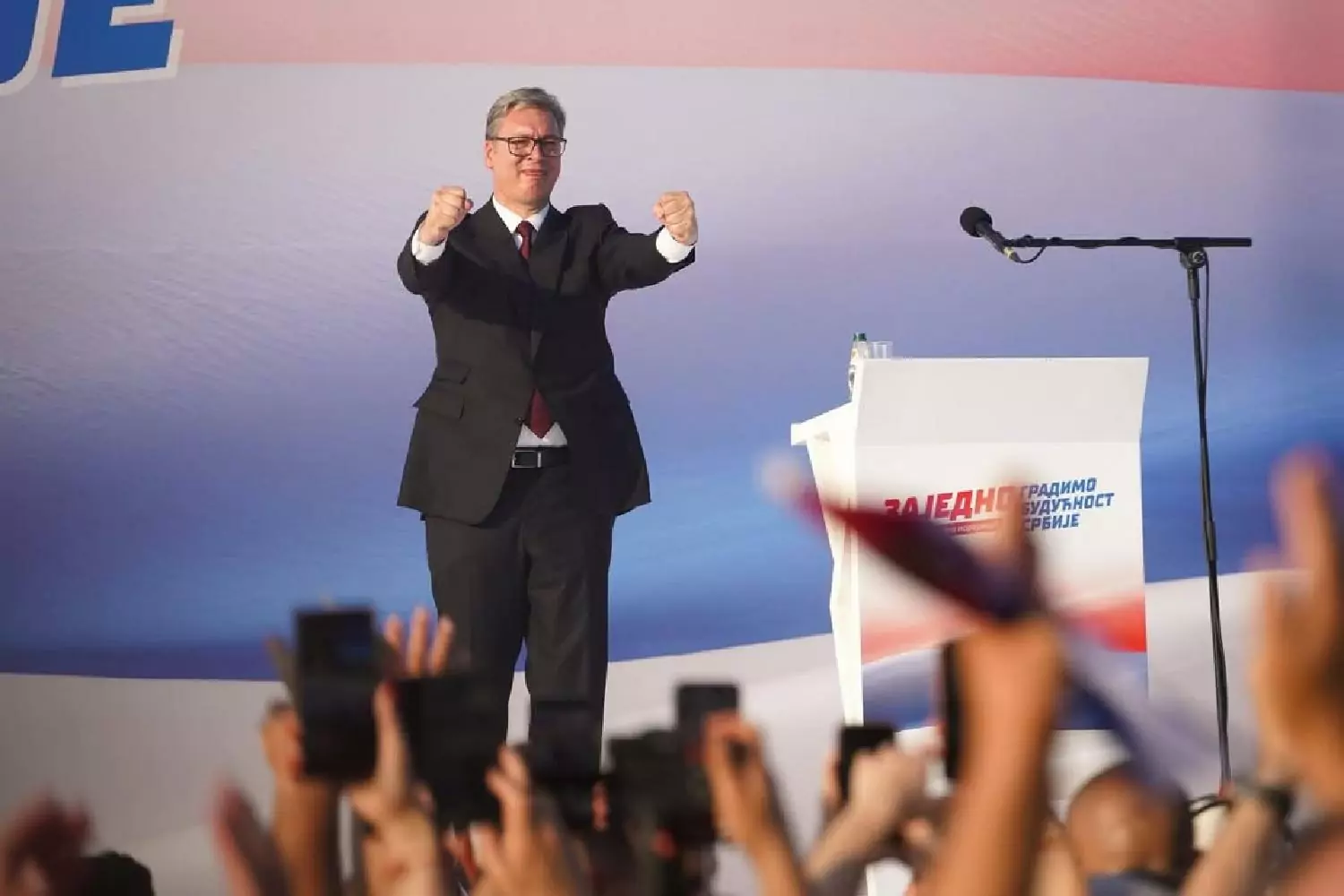
For now, it is not yet known what these funds will be used for, but the loan coincides irresistibly with the time with the announcement of the President of Serbia, Aleksandar Vučić, that in September of this year, he will surprise the people with the distribution of money.
He has not yet disclosed how much and exactly from where he will give the money to the voters before the announced elections, but he did say that every adult citizen will receive the funds and that it will not come from the budget. He vaguely added that the money, which will be distributed to citizens, was "collected through action funds", which is not entirely clear.
"It is an excellent question, whether Serbia's borrowing from July 14 through the so-called private placement of bonds will go to Vučić's announcement about the mysterious aid," broker Nenad Gujaničić told Vreme. "From this perspective, that question seems a bit rhetorical, and it is certainly symptomatic that the state has chosen to take on debt in this specific way."
The calculation is quite simple. Serbia took half a billion euros, and comprehensive state aid, at least until now during the corona pandemic, went to all of the country's five million citizens of legal age. Thus, each of them could receive 100 euros from this new borrowing in September, when the president announced the donation.
There is another possibility, which is to set aside this amount for a package of aid to pensioners, the socially disadvantaged and combatants, which is worth around 600 million euros, and which was also announced for September of this year. Thus, this loan could also go in this direction.
What is wrong with this loan
This is the largest placement of this kind by a country in the region of Central and Eastern Europe in a period longer than a decade. This is also the first time that Serbia has decided to market its securities in this way.
"This is an ad hoc method of borrowing that is rarely used anywhere," explains Gujaničić. "We never did that, but we took loans through the engagement of an investment bank, because that's how we get the best possible price on the market. This type of loan is taken in practice when someone needs to bridge something."
This amount, he adds, is not large from the point of view of the state budget, but it is unclear why state officials boast that they have five billion euros in their account and that we are doing very well, and then take a loan of half a billion.
Gujaničić explains that this money must also formally go through the country's budget, so it remains to be seen how Vučić will justify this source of donation financing to the citizens, if the funds actually end up in their pockets.
According to the European Commission, this borrowing technique is usually used to place small amounts (up to 300 million euros) with one or more institutional investors. In the past, the Commission mainly used this type of bond placement for transactions within its macro-financial assistance program.
Share or shareholder
Aleksandar Vučić stated that the money, which will be distributed to adult citizens, "was collected through action funds for 15 years", but it is not exactly clear which fund is in question.
"We acted wisely and collected money for years, for 15 years this money has been collected through action funds, so we will make all adult citizens happy. It's not God knows what, but it's a sign of attention and an indicator of how the state behaves as a household," he stressed.
Basic role Equity fund was to temporarily take over certain state and social shares resulting from privatization, organize their sale and forward the money from the sale to the budget, writes Danas and adds that, among other things, shares that remained after the partial privatization of social or state capital, shares of people who gave up on their repayment, as well as shares that the Development Fund transferred to it for sale, were transferred to this Fund.
However, the Law on Amendments to the Privatization Agency Act from 2010 stipulates that the Privatization Agency becomes the legal successor of the Equity Fund, while the Equity Fund ceases to operate upon the start of the newly established Equity Fund. Its purpose is much closer to what Vučić describes — to sell shares and use the money to pay citizens.
According to the balance sheet from 2025, according to the data of the rating agency CompanyWall, the total assets of the Equity Fund were worth 36 billion dinars (about 300 million euros), of which about 35 billion dinars are short-term investments, which include the value of all shares that this fund has.
A simple calculation shows that with assets of around 36 billion dinars, the Equity Fund has at least 300 million euros at its disposal, which should be paid out to citizens. If a little less than five million citizens qualify for the payment, each of them could receive a little less than 70 euros. The condition for that is that the paper balances are actually monetized in reality, writes Biznis.rs.
"Helicopter money"
Experts have already appealed that giving money to all citizens is not a good economic measure, because simply not everyone needs help or the same amount of help. This measure is irresistibly reminiscent of partition "money helicopter" from 2020 and 2021, when Serbia, as well as many other countries of the world, reached for this measure in order to pull the economy out of recession.
The term "helicopter money" was not invented by Vučić, but neither were economists during the period coronavirus pandemic. This term was introduced in 1969 by the economist Milton Friedman, and the metaphor refers to the imaginary throwing of money from a helicopter so that citizens would spend it immediately.
Thus, state aid during the coronavirus pandemic in Serbia included multiple payments to citizens, including 100 euros, 30+30 euros, 20 euros, and support for the economy through deferred taxes and minimum wages. Special packages focused on vouchers for the vaccinated and the young.
Real journalism costs money, and we will not be bought by tycoons and corporations. Support us with a one-time or monthly donation. The time for it is now!