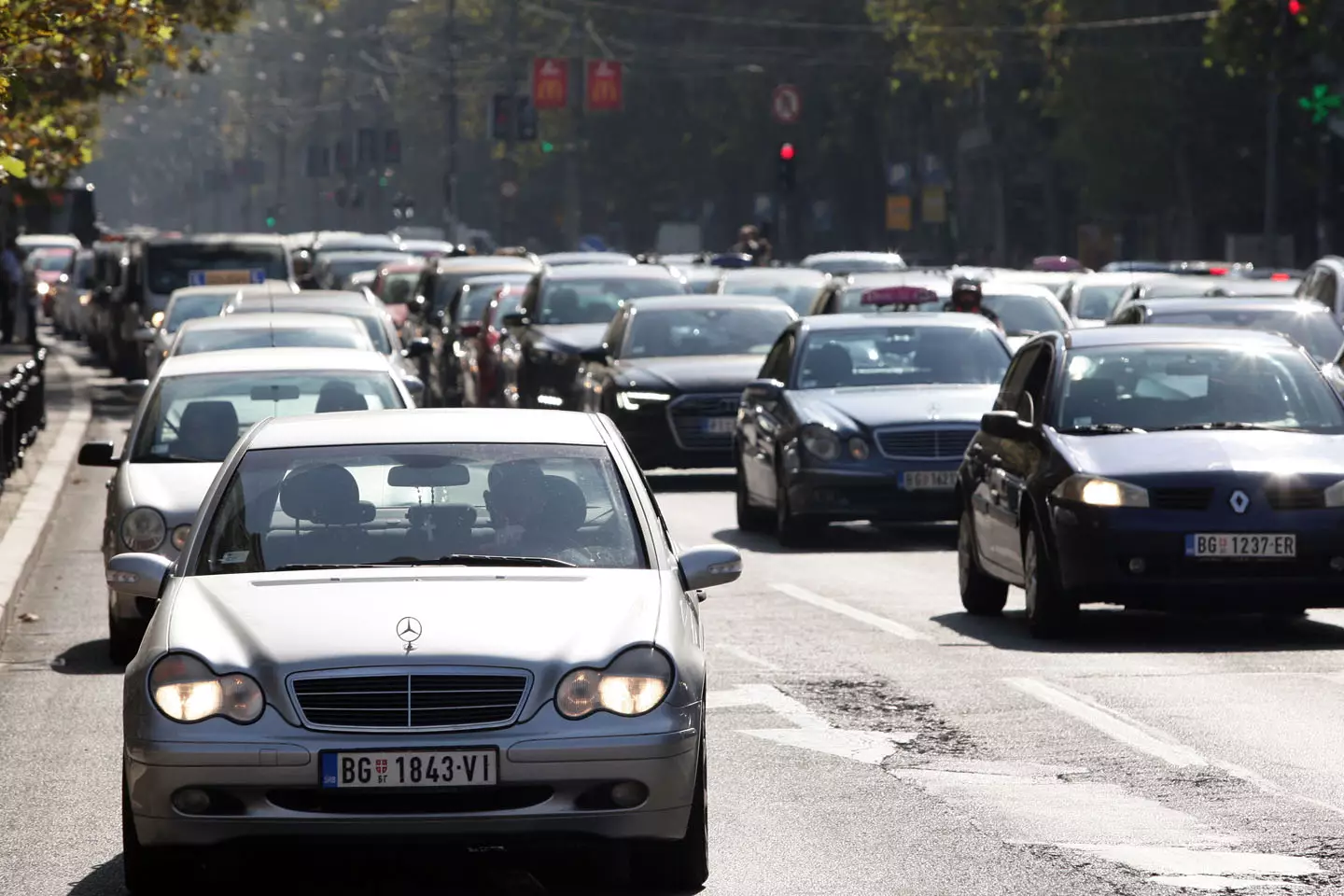
After Montenegro's decision to ban the import of cars with Euro 1 and 3 engines from July 4, Serbia has become the last European refuge for such vehicles. Bosnia and Herzegovina banned the import of used vehicles with this engine standard back in 2019.
Meanwhile, the EU is preparing for a new step forward as it introduces the mandatory Euro 7 emissions standard from November 2026.
During that time, the sale of used vehicles older than 15 years in Serbia is booming - only 17 percent of the total vehicles sold are new.
"For the first four months of this year, 60 percent of the total number of used vehicles sold are the 'worst' ones, in terms of environmental and safety. These are Euro 3 and Euro 4 vehicles, which are prohibited for import in all countries of the region and Europe," Aleksandra Đurđević from the Serbian Association of Vehicle and Parts Importers told RTS.
According to the data published by the Association, more than half of the imported used cars in 2023 had a Euro 3 or Euro 4 engine.
In 2023, 131.905 used vehicles were imported into Serbia, which is 610 less than a year earlier. As they state, a downward trend is noticeable if you look at the numbers from 2021, when 152.803 used vehicles were imported into Serbia.
Of the total number of imported vehicles, as many as 55,4 percent are those with engines that meet Euro 3 or Euro 4 environmental standards - a total of 73.051 vehicles.
Although the Government of Serbia adopted an air protection program in November 2022, which provided for the banning of the import of vehicles with Euro 1 and 3 engines from January 4 of this year, it remained only a dead letter on paper.
"It is necessary to rejuvenate the fleet for safety, health and environmental reasons. We must not allow other countries to get rid of prohibited vehicles, all their waste, by exporting them to our country," emphasizes Đurđević.
Docent from the Faculty of Mechanical Engineering, Predrag Mrđa, states that such cars are leaving the European market for a reason. "We, as consumers, have what we have here," says Mrđa.
An additional problem is that a large number of cars with Euro 3 and 4 standards have been stripped of their exhaust gas purification systems, which ranks them among the biggest air polluters.
And the decision on regular control of exhaust gases and catalytic converters is "pending" at least until 2025.
Even the abolition of the Euro 5 standard is foreseen
As the site says Used cars, at this moment It is impossible to give a forecast. when the ban on importing cars with Euro 3 and Euro 4 engines into Serbia could begin.
This site reminds that the ban on the import of used vehicles that do not meet the Euro 3, Euro 4 and Euro 5 standards is part of the "Air Protection Program in the Republic of Serbia for the period from 2022 to 2030".
As part of that program, even the abolition of the Euro 5 standard is foreseen as of January 1, 2025, as well as subsidizing the purchase of a new or used Euro 6 car, if the owner submits his Euro 1, Euro 2 or Euro 3 diesel for recycling.
The fleet is almost "coming of age"
I a large international survey "Time" from November last year showed that Serbia is an oasis for European old students.
Experts are convinced that Serbia - as well as other poor countries of the Balkans, Africa or Central Asia - will not be freed from the fate of driving European ruins for a long time.
In the middle of last year, the European Commission (EC) proposed that older, worn-out cars, popular "second-hand cars" should no longer be sold or exported outside the EU. But for now, everything is left to the proposal.
"The West wants to be clean and sustainable, responsible for itself, but not for others - it exports dirty technology to pollute until the end of its life." China does the same - it doesn't even respect the minimum standards here," Marko Vujić, an assistant professor at the Faculty of Political Sciences who deals with environmental issues, told "Vreme" earlier.
Why doesn't Serbia ban imports?
According to the Association, the average age of a car in Serbia is 17 years.
The relevant minister, Goran Vesić, stated that the realistic goal is to reduce the average age of vehicles to 2030 years by 14. It is not his right that Europeans export everything and anything here. "They will not ban exports, because that way they provide additional income to the citizens." It makes no sense to export your problems to others in Europe, but that's how it always goes."
But the better question is why Serbia does not ban the import of even the oldest cars?
"We are not a rich enough country to be able to change the regulation overnight and have everyone drive Euro 6 cars from tomorrow," said Vesić. "People need time to get used to it, not everyone has the money to change their car right away."
The Serbian media write every year that the import of Euro 3 and Euro 4 standard vehicles will finally be banned. But they wrote the same last year and the year before last. Allegedly, the measure was discussed several times in the Government, but it was abandoned for fear of angering the poorer electorate.