In a period of only three years, Alta banka underwent a transformation rarely seen on the domestic banking market: from a small bank to a rapidly growing financial group with regional ambitions. Whose capital made it possible
An analysis of the financial statements for 2023-2025 shows that behind the growth of Alta Bank there is a model that depends to a large extent on the capital of the owners - and not on the good performance of the bank. Profit Alta Bank ranged between 1,1 and 1,6 billion dinars in the last three years, with a decline in 2025 despite the growth of income, writes Aleksandra Nenadović for New Economy.
Crucially, in 2023 the bank was delisted and became 100 percent owned by Alta Pay Group. At the time of the exit from the stock market, the bank was not in trouble. On the contrary, the financial results show a profit of about 1,1 billion dinars.
Rapid growth
Already next year, the bank enters the phase of "rapid" expansion. Incomes are growing, and the number of employees is increasing rapidly. But that growth is getting expensive. This is clearly seen in the financial statements - although revenues continue to grow, profits start to fall in the last year. The reason is clear — expenses are growing faster than income. Also, operating cash flow declines, which means that growth begins to consume resources faster than it generates them.
In 2025, the number of employees increased by about 23 percent, wage costs by 46 percent, and the profit margin fell from about 29 percent to 21 percent. In 2025, the bank grew thanks to recapitalization of about 7,8 billion dinars, which exceeds its annual profit many times over. This injection of capital accounted for about four percent of Alta Bank's total assets last year, which means that the growth was not only a result of operations, but additional capital had to be "injected".
In 2025, revenue growth is seen with a decrease in efficiency. Financial data show a profit of about 1,37 billion dinars (in 2024, 1,60 billion dinars), net interest income of about 3,2 billion dinars and net income from fees also about 3,2 billion dinars. Income from fees also includes the famous payment of electricity bills to Elektroprivreda Srbije, which now goes through an account in Alta Bank, which Nova ekonomija wrote about. Elektroprivreda Srbije refused to submit documentation about its business with Alta Bank, which our editorial office requested through a request for access to information of public importance, citing business secrecy.
An unanswered question
The most important conclusion from all financial statements is not profit, but equity. In the period 2024-2025, there will be a significant increase in the bank's capital through the owner's payment. The question arises whether Alta Banka is becoming dependent on equity financing, despite the fact that it is getting large government jobs that pour huge amounts of money into it?
In the same period, Alta banka expands its operations outside of Serbia, by taking over Stopanska banka Bitola in North Macedonia. The key question remains who finances the growth and the most important question that remains open is not in the balance sheets - who is behind the capital entering the system?
Financial statements confirm that capital comes from owners — but do not explain the origin of that capital. Since we know how it is Davor Macura began his work - as the owner of a small exchange that raised enough money overnight to market JUBMES Bank, later renamed Alta, to analysts and regulators, that is exactly the focal point, or at least it should be. However, there is no visible effort by the domestic regulators to engage in a real check of either the banking sector or any other sector. For example, we have been waiting for more than a year for the results of the inspection of the retail sector, which is carried out by the Commission for the Protection of Competition.
What is happening in the country and the world, what is in the newspapers and how to pass the time?
Every Wednesday at noon In between arrives by email. It's a pretty solid newsletter, so sign up!
Five days before the elections, Siniša Mali said that an agreement had been signed regarding the sale of NIS. The MOL immediately denied it, and Malog's office told "Vreme" that "everything is clear".
Siniša Mali claims that the Hungarian MOL signed the contract on the sale of NIS. What does the identity card of this Hungarian giant say? What kind of company is MOL?
The Hungarian company MOL has signed an agreement to take over the majority Russian share in the Serbian Oil Industry, Siniša Mali told Bloomberg. What kind of customer is MOL?
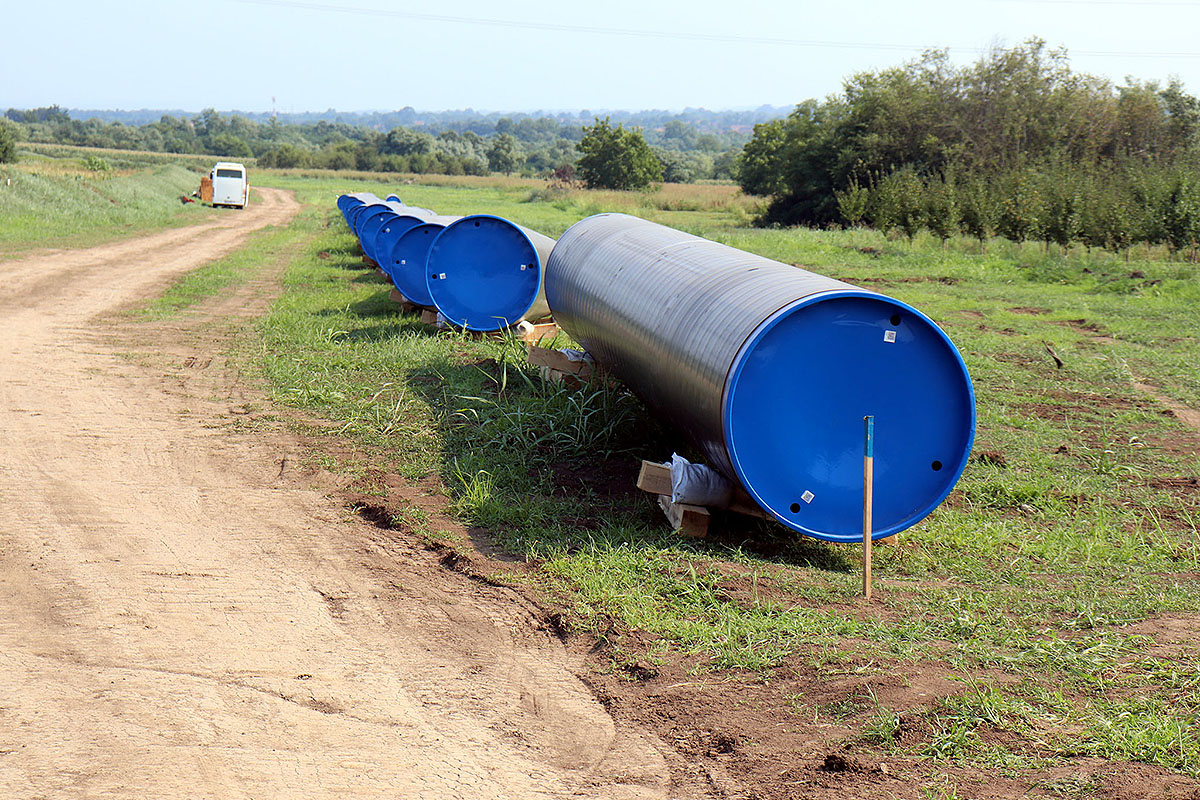
The first pipes through which American gas should flow have arrived in Serbia. The whole project dragged on for years, only to suddenly heat up with an accelerated process this year. The EU is not enthusiastic about the American partners for Serbia either
Highly qualified workers are also leaving EPS in increasing numbers, while problems are piling up in the company: profits were partly achieved thanks to the postponement of necessary investments, while the production of coal and electricity fell
There is, literally, no difference between the one who claims it is day in the middle of the night, or the one who claims to be a giraffe, from the claims we read on billboards: that Vučić is working to unify Serbs and that Serbia is doing better and better day by day.
The pre-election arrests due to the alleged "overthrow of the state" testify to the regime's panic. The bad news for them is - they can't arrest the whole people who decided to defend themselves from progressive beatings and election theft
The ring that tightens around Ćaciland Student list is getting narrower. Because there are more and more spoiled people who see the false prophet for what he is: a street obscener who is fighting Serbia
The archive of the weekly Vreme includes all our digital editions, since the very beginning of our work. All issues can be downloaded in PDF format, by purchasing the digital edition, or you can read all available texts from the selected issue.