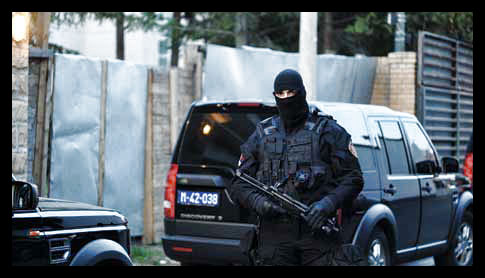
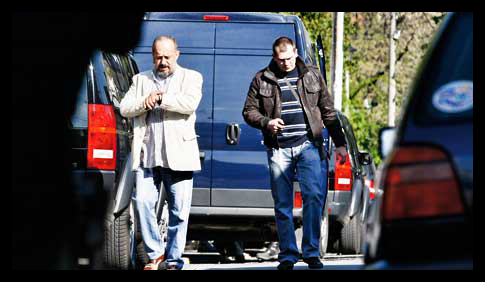
On Monday, April 27 at around one in the afternoon, a strong - too strong, tactically speaking - police force surrounded the famous mansion at Tolstojeva 33 and, with appropriate media fanfare, entered to conduct an informative interview with the citizen Jocić Sreten, also known as Joca Amsterdam, with registration of residence at that address. While the masked special forces wasted their time around, doing what a few ordinary policemen could do just as well (keeping journalists at a proper distance, that is), the police thoroughly searched Milosevic's villa until nine in the evening, when Mr. Jocić was taken to the Belgrade Police Department, where he was handed a decision on police detention for 48 hours. Mr. Jocić, previously known to the prosecuting authorities, is suspected of having organized the assassination of the newspaper publisher from Zagreb, Ivo Pukanić, with an explosive device last October, in which Niko Franić, Pukanić's associate, was also killed. Mr. Jocić refused to talk to the police, saying that the decision on police detention for 48 hours was not delivered to him on time, but only in the evening, so he is now waiting for the outcome of the appeal filed by his lawyer Zdenko Tomanović, who also represents and the Milošević family, i.e. widow Marković. It is unlikely that Mr. Jocić to speak even when the decision on the appeal is made, but that does not change the course of things. On Wednesday afternoon Mr. Jocić should have already been brought before the investigative judge of the Special Department for Combating Organized Crime of the District Court in Belgrade (Special Court), where he will plead to possible charges - if he feels the need. During those dramatic events in Tolstojeva Street, the presence of the very kind and honorable Hadji Dragan Antic, a close friend of various members of the Milošević-Marković family, was noticed. He was visibly worried about something.

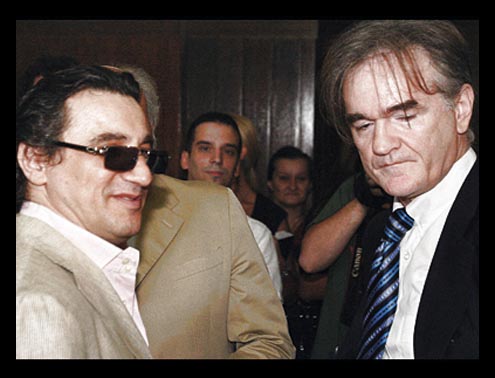
Ghost of Slobodan Milošević - Same lawyer, same house, same friends:
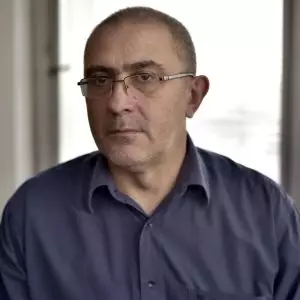
Zdenko Tomanović (above), intervention at Tolstojeva 33,...
"VEILED FACES": It's not that the arrest came as a big surprise: ever since those dramatic events in Zagreb last fall, when first Ivana Hodak (the daughter of the famous lawyer Zvonimir Hodak) was killed, and ten days later Ivo Pukanić, the name of Joce Amsterdam has appeared regularly in various speculations of the Croatian media. These guesses were often imaginative, sometimes mischievous, but they were based on "face connections", as they say in criminal jargon. Sreten Jocić was seen regularly and conspicuously with, for example, Ivor Vucelic, ex-boyfriend of little Hodakov and representative of a certain serious Croatian tourist company in Belgrade. Those contacts did not contribute to the business reputation of the company, let's not go any further... Contacts with some other members of the Croatian jet-set half-world are also mentioned, but without proof (Gen. Zagorac, Hrvoje Petrač, Adv. Hodak).
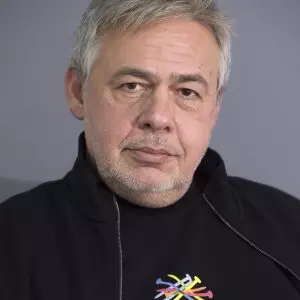
...and Dragan Hadži Antić (left)
When the Croatian police, in close cooperation with ours, caught some of the perpetrators of the assassination of Pukanić, it turned out that one of the key contractors was Boban (also called Cardinal) Đurović, the godfather and confidant of Sreten Jocić. The Croatian public, alarmed by that truly scandalous series of serious crimes, was immediately flooded with media - completely reflexive - speculations on the topic "it's all the Serbs' fault", which happens every time one has to face the basic fact that Croatia not only has its seriously organized crime, but that crime has strong fraternal ties with other similar organizations in the neighborhood, which is known from the beginning. The Croatian police naturally requested certain checks from our MUP on the subject of Joca's godfather Đurović; at the informative interview Mr. Jocić had nothing to say, and they could not call him twice under the same circumstances, according to the law. The ball, therefore, remained in the MUP of Croatia: when they get new elements, ours will call Joca again, under different circumstances. Some media in Croatia began to complain that, again, the Serbs are protecting criminals and not cooperating, although high officials of the Croatian police claimed that the cooperation is going well, better than before.
Link: Assassination of Ivo Pukanić
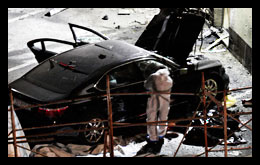
The break and breakthrough in the whole story came last week, when the Croatian police acquired a cooperating witness (there it's called a penitent witness) who got over it and decided that it was better to tell everything - if that's the case. His identity is, of course, a secret, but he seems to know everything. He allegedly pointed to the role of Sreten Jocic as the main organizer and undertaker of the entire operation to kill Ivo Pukanic. The one Željko Milovanović (former member of the JSO, later took refuge in Republika Srpska and operated from there; he is probably still hiding there somewhere), who was thought to be the entrepreneur, according to that statement, he was only a foreman, a foreman who chose and hired direct executors; Joca Amsterdam, as alleged by the cooperating witness, was the main contractor. That sounds more likely than the theory of some media in Croatia that Jocić is the orderer: he had no known motive to kill Pukanić. But it is possible - even probable - that he undertook it as a commercial venture or as a favor or a favor to someone. Jocić had previous business relationships with at least two involved persons: with Boban Đurović and with Robert Matanić, who helped him during his stay in Bulgaria and who is known for living off the lack of evidence. The Croatian police shared their latest findings with their Serbian brothers in Christ: coordination lasted for days with long meetings and comparison of known data and clues. And then everyone together - the criminal police and prosecutor's offices of both countries - made a decision to raise Joca Amsterdam. The joint analysis of the impact of that decision lasted all day on Tuesday, while Joca was detained in 29. novembra street. The legal basis for this move was, according to "Vreme" in the Special Prosecutor's Office, international legal assistance: Croatia submitted to Serbia all the evidence collected against the citizen Jocić for evaluation; since extradition is constitutionally impossible, it is expected that the criminal case and criminal proceedings will be taken over in Serbia, with the closest cooperation with the Croatian authorities and the judiciary. When "Vreme" comes out on Thursday, it is expected that the investigating judge will already make a decision on the opening of the investigation and the first detention of 30 days; it is almost certain, because such moves are not made without good reasons, and this is a well-prepared action. The latest news is that the investigating judge did not even wait for those 48 hours of police detention to expire, but started the hearing on Tuesday evening.
Link: The remains of a burning jeep
THE CASE OF THE GOXY BOMBERS: Sreten Jocić, later called Joca Amsterdam, appears on the criminal scene in Serbia relatively early, in the early nineties. Witnesses and defendants in the trial for the double murder in Olymp on Zvezdara (July 1995), where he was accused of incitement, i.e. ordering, they describe him as someone who "sat with people from State Security", which is how he is remembered. Somewhere around that time, he got started: he lives in Avgusta Cesarac Street in Dedinje (parallel to Tolstoje Street; a habit is a habit); drives an expensive car; his bodyguards are active police officers. He was already hanging around Holland and married a certain Babette there, with whom he also has a child. Later he will say that since school he has "two colleges: for diamonds and for colored stones", or something like that, although he was more involved with some other substances that are not of a stony nature. As he is, he comes into inevitable conflicts with other artists from the wild Belgrade scene of the nineties; small pond, many crocodiles. Legend has it that Joca was farsighted and specialized early on in cocaine; that he caught on time connections with suitable non-governmental organizations from Colombia and from Western Europe and that - thanks to successful business connections - he took an almost monopolistic position as a privileged importer of goods in high demand in certain better-off circles. Somewhere during the period of his business rise, Jocić came into conflict with certain people, which was inevitable then, as we can see from the statistics of unsolved murders in 1990-2000. Goran Marjanović, also known as Goksi Bombaš, complained in the summer of 1995 that Joca was working on his head; Joca complained that Goksi was working on his head. In an attempt to take preventive action, so to speak, Joca Amsterdam hired two of his bodyguards, active police officers, in July 1995 to kill Goksi and one of his friends, Duca, for 50.000 marks, because they wanted to kill him. He also supplied them with "Heckler und Koch" automatic weapons from police warehouses, with instructions to destroy them or throw them somewhere safe after the murder. These two unfortunates find Goksi in the company of the cafe Olimp on Zvezdara and shoot in bursts without much aiming (52 bullets fired): Goksi and his girlfriend are killed, and three people at the table are wounded; one young woman is still paralyzed to this day. The car was also provided by Joca Amsterdam. However, he had retreated to the Intercontinental Hotel - just in case. When they came to collect the money, he tells them that they didn't kill Goxi (he died later in the hospital), nor Duca (he wasn't present that evening); he offers them two wristwatches ("Cartier, keve mi!"), but they refuse. Since they "were penniless" (testimony in court), the two of them go to rob an oil smuggler called - of course - Sheik, from the vicinity of Golupac, carrying the same automatic machines. They succeed, but the police catch them; automatons bind them to Olympus; Joca nicely told them to throw them away... They got twenty years each and are still sitting. Lately, however, they are beginning to claim that they "were under pressure" and are trying to revise the original statements, which is linked to Joce Amsterdam's return to the country.
AMSTERDAM-SOFIA, VIA ZEMUN: Well, now: what happened to Joco in the meantime? He moved away in the direction of Holland; he was doing all sorts of things there that the Dutch police weren't quite able to prove to him. Then he started plotting the murder of a rather fierce state prosecutor in the Netherlands, a certain Ploy, so they discovered him and he fled to Bulgaria in the face of a Dutch arrest warrant. In Sofia - given the notorious corruption of the police and judiciary there - Joca has developed great businesses. He controlled the competition with the help of characters like Robert Matanić, whom he imported from Croatia or Serbia after the need to do something or kill someone. Everything was going so well until 2001, when - according to legend - the late Duća Spasojević, the late Mile Luković and Milorad Ulemek Legija decided to take over that cocaine as well. Rumor has it that they tipped off Joc to the Dutch and Bulgarians with the intention of eliminating him from the chain of intermediaries between Colombia and Europe and thus getting a hold of his percentage. After all, why else did Duća, Kum and other citizens of Zemun travel to Bogota in May 2001? What did Duća tell the prosecutors about it later? The Bulgarians arrest Jocic and extradite him to the Netherlands, although there is (was there?) a warrant from Serbia. The Dutch kept him in prison until 2006 (too short for the accusations mentioned in the Dutch press), when they spectacularly deported him to Serbia. While you said "Pablo Escobar", there's Joce on the loose: the man posted 300.000 euro bail and is defending himself from freedom. That trial for inciting a crime in Olymp in 1995 drags on like a hungry year: this process, this process, and Joca has "epileptic seizures" because he was beaten in a Dutch prison. A man from our Ministry of Justice, who was shown by his colleagues where Joca was in custody in the Netherlands, says that it is "Hyatt" and that the Dutch do not fight in principle. All this did not bother Joca, that he walks around Belgrade in important bars with a dozen bodyguards, that he has two expensive cars, which the police took away from Tolstove on Monday (Cherokee Chief and A8), and that he rents a villa from a widow and orphans for a lot of money .
SECURITY AND PRISON: That Sreten Jocić remained in custody; if someone had asked Sreten Jocić where he got the money for bail and a luxurious life, and whether he might have paid taxes, it is unlikely that Sreten Jocić would have had the opportunity to contract various dubious deals around Croatia - if he did, as will be seen, only slowly . The same applies to those two unfortunates from the Range Rover in Dobanovci: where did you get the Range Rover from? Did you pay your taxes? How much is your salary, fucaro? Here we come to the basic truth: criminals are much safer in prison than in freedom. If you don't believe, read the black chronicles in the newspaper.
Now, while the decision of the investigating judge from Ustanička is awaited, there are ongoing speculations in the media about who could be the investor in the assassination of Ivo Pukanić. Part of the Croatian media out of inertia mentions Stanko Cane Subotić, and because of that campaign about the tobacco mafia from 2001. Here again we have the problem of motives: Cane is a rational man and would hardly engage in "reckless revenge", as it is called in the law. After all, he has already collected a lot of money from Pukanić's "Nacional" in defamation disputes, Italy dropped the prosecution against him for cigarette smuggling, the Russians released him from custody, and our "tobacco mafia" case is progressing somewhat slowly. Ivo Pukanić told prosecutor Šelzi from Bari what he had about cigarette smuggling a year ago in Trieste, and it was documented and entered as evidence in the case. In this light, Canet's motive appears as theoretically possible, but very unlikely; there are better candidates, smart people in Zagreb who know Pukanić's work better will tell you. But about when the investigation shows the first results.
The charred bodies of Goran Marić and Ilija Novović, found in a burnt jeep near Dobanovci, drew public attention to the criminal underworld in Serbia for the umpteenth time. The arrest of Sreten Jocic, better known as Joc Amsterdam, opened the question of the connection, intertwining and power of organized crime in the region. While the states, in the worst economic crisis since the Second World War, are drastically cutting their budgets, and the standard of the population is falling day by day, the mafia's tentacles are penetrating all spheres of society. Organized crime threatens to make senseless overcoming the already numerous obstacles on the way to normalcy in the countries of the former Yugoslavia and becomes the number one security problem. Murders, robberies, the spread of drug addiction, threats to the highest authorities and the like are just the tip of the underworld iceberg. A glimmer of hope in this bleak picture is the final realization by the police in the region that one cannot talk about national mafias and that the fight against organized crime cannot be conducted within national borders.
R.V.