Already after the first reactions of the locals of Lazarevo to the arrest of General Ratko Mladić, it was clear why the most wanted fugitive from this area, accused before the Hague Tribunal of the most serious war crimes, chose this colonist village in Banat, with about 3000 souls, as the place where, according to claims of the authorities, hidden for years. Not only does he have relatives in Lazarevo, only ten kilometers from Zrenjanin, who, surprisingly, until Thursday, May 26, according to the admission of the Minister of Police Ivica Dačić, no one checked, but the residents were ready, as they say, to defend him with their lives . If only they knew that the former commander of the Republika Srpska Army was hiding among them. But - they are not. All but one of them assured the public of this in recent days. Although, many people remember that Mladić, after the war in Bosnia and Herzegovina, came to Lazarevo, moved freely around the settlement, even engaged in beekeeping... It was said, even in recent years, that Mladić could be hiding among his compatriots who had settled in Banat at the time of colonization. Even the Novi Sad newspaper "Dnevnik" wrote in October 2007 that the search for him, then carried out in the abandoned barracks in Zrenjanin, may have something to do with the fact that the general's relatives live in Lazarevo. Branislav Mladić, in whose house, in Vuka Karadžića Street, Ratko was finally discovered and arrested, four years ago denied that he had seen the most wanted fugitive from The Hague, claiming that he was his distant relative and that he had not been in contact with him for many years. .
"Well, we are distant relatives. I only saw him twice in my life, when I was a kid," Branislav Mladić tried to remove the doubt from himself in 2007.
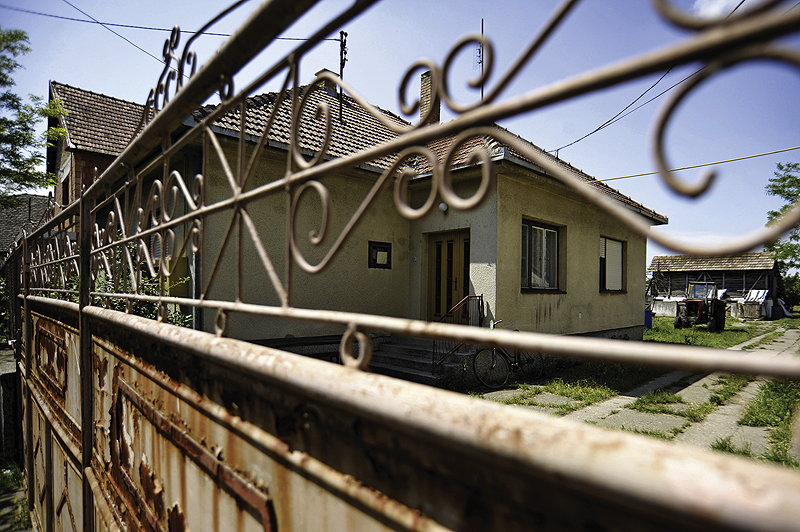
Apart from Branislav, three more families in Lazarevo have family ties with the man accused of genocide in Srebrenica and other crimes. Branislav Mladić's brother, Dragan, lives in Iva Lola Ribara Street, the main village street, at the very entrance to this inhabited place, Dragan's son Nebojša Mladić, with his family, has a house in Sava Kovačevića Street, and Zoran Stanojčić, whose mother is from Mladić , is the head of the local office in Lazarevo. Dragan is retired, Branislav works in agriculture, and Nebojša is employed in a factory in Zrenjanin. Members of the Security and Information Agency broke into all of their houses on Thursday, in the early hours of the morning, in search of the fugitive general. He was found with Branislav, or Branko, as the neighbors in the village call him.
A few hours after learning that the man the whole world had been buzzing about for years had been discovered in their village, the people of Lazarev began to gather in front of the currently most famous house on the planet, the one where the Serbian authorities caught Ratko Mladić. They gathered in order, as they said, to express their revolt against the arrest of a "Serbian hero" and "defender of the Serbian people", but also to defend their compatriot Branislav Mladić from the aggressive press teams that arrived in the peaceful and flat Banat from all over the world. Insults were hurled at the speaker, a television camera was damaged, and the drunken youth went to the village church to pray for the health of the first soldier of the Republika Srpska. The Zrenjanin police detained six people that evening for disturbing public order and peace, and that was the end of it. A day later, the situation in the village was calm. Reporters from Germany, England, Switzerland, Slovakia, Hungary, Croatia continued to arrive in front of the house in Vuka Karadžića Street, running after Branislav Mladić, who, after being released from detention, where he spent several hours, returned to his usual work in the fields. But he was not in the mood to talk to journalists.
Thus, Lazarevo, which until a few days ago was known for Partizan football player and Serbian national team player Nenad Bjeković, and high-quality gherkin cucumbers, the trademark of local farmers, became famous in just one day as the place where the most wanted fugitive from The Hague was hiding, a man who for 5788 days evaded justice. Even the well-known internet encyclopedia Wikipedia expressly included Mladić in addition to Bjeković among the two famous names associated with this village. It was enough for many media houses to take up the history of Lazarevo, the structure of the population... So the historical material was restored. By the way, Lazarevo was founded by the Germans in 1800, and at first it was called Lazarfeld. The village was liberated from the fascists on October 2, 1944, and the very next day it changed its name to Lazarevo, as it was called from 1922 to 1941. After the Second World War, through planned colonization, Lazarevo was settled by families of veterans from the Socialist Republic of Bosnia and Herzegovina, mainly from Romania, from Visegrad region, from around Trnovo and Kalinovik, and somewhat less from around Doboj, and from Bosanska krajina, from Mrkonjić town and Šipovo. The organized arrival of the first colonists was on September 18, 1945, when 60 families arrived, on November 19, a second group, also of 60 families, and a third – of 100 families on December 29. During April of the following year, there was a "train without a timetable" here Another 120 families arrived. Thus, after liberation, 340 families acquired a new home in Lazarevo.
Their heirs still maintain close relations with their compatriots from eastern Bosnia, where Ratko Mladić was born. Every year, in September, the Day of the immigration of colonists from Bosnia is celebrated here, and for decades past, gatherings of members of hunting associations from Sokolac and Višegrad with hunters from Lazarevo have been organized regularly. The special ties between the "fraternal" places were also pointed out at the end of last year, on the feast of Our Lady, the glory of Višegrad, when the delegation of Lazarev, headed by archpriest Ivan Popov, stayed in that eastern Bosnian city. At the time, the local self-government there also promised help for the continuation of the construction of the Lazarevka church. Those where residents can pray for the health of the arrested general today. Which they do.
(The author is a journalist from the Novi Sad newspaper "Dnevnik")
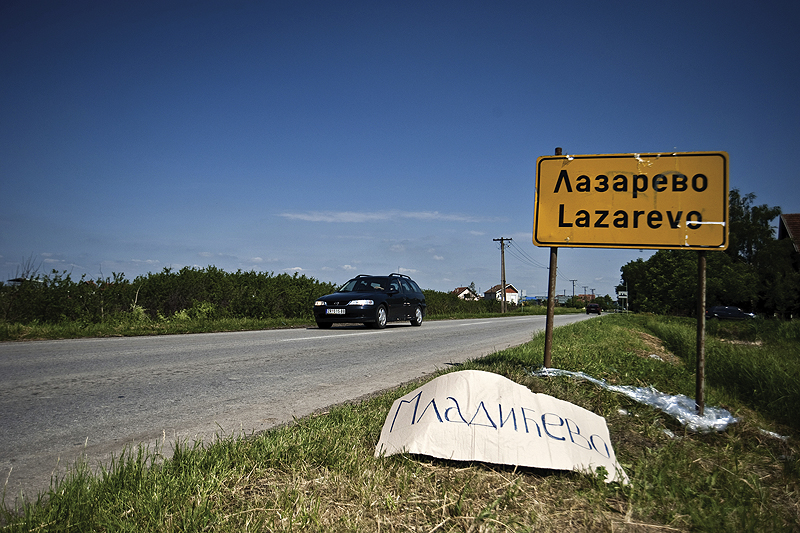
The people of Lazarev, revolted by the state's decision to deliver the general of the Republika Srpska Army to the Hague Tribunal, announced the launch of a petition demanding that their village be renamed Mladićevo or Ratkovo. As a sign of support, as a sign that they did not betray him. And they are precisely afraid that someone, especially their comrades in Mladić's native village of Božinovići, near Kalinovik, will think that someone from Lazarev has disowned him. For now, however, the question is whether the intention to change the name of the village will be implemented.
"The procedure for changing the name of the village is quite serious. First, it is necessary to launch an initiative, and then the city assembly, if there is a majority in favor of such a thing, calls a referendum in which the majority of the total number of registered voters must declare in favor of changing the name of the place. If that is also fulfilled, then the decision goes to the Ministry of State Administration and Local Self-Government for confirmation," explains the President of the Zrenjanin City Assembly, Aleksandar Marton, and wonders why the name of the village, which has been going on for centuries, would be changed in the first place because of a political moment.