In the past 20 years, China has lent $1,34 trillion to developing countries, making it the world's largest creditor, according to a study by the Aid Data Research Laboratory.
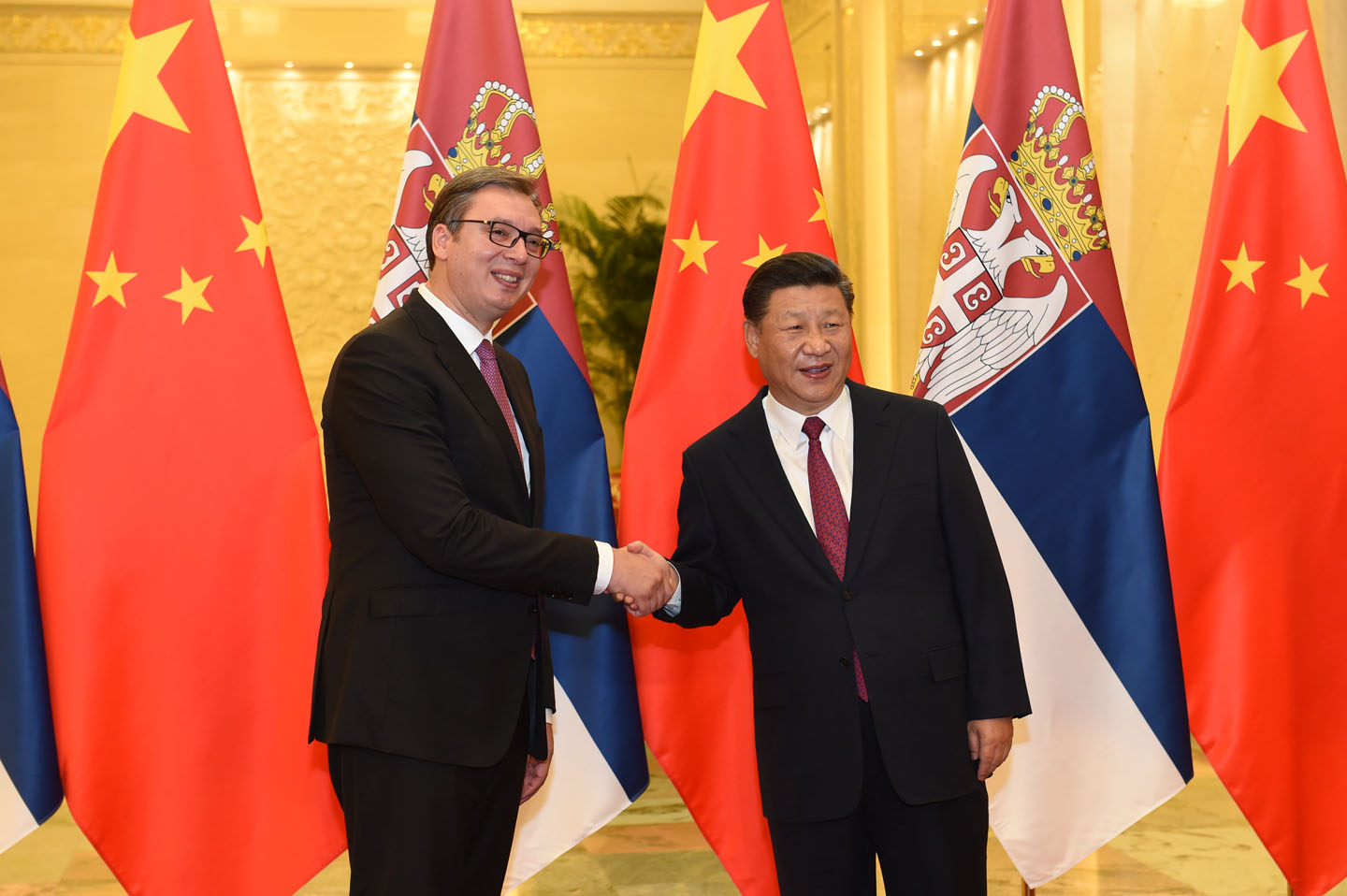
Among the countries that are on the list of debtors of China is Serbia. Serbia's debt to China has increased 12 times in the last ten years, data show Radio Free Europe (RSE) received on request from the National Bank of Serbia (NBS).
Ten years ago, the debt was 305 million euros, and now it is 3,7 billion euros.
For the past decades, loans have been taken for infrastructure projects, which have been under the scrutiny of the European Union (EU) from the very beginning due to a lack of transparency.
"You have to be careful"
According to Branimir Jovanović from the Vienna Institute for International Economic Studies, this situation is not yet worrisome, but "one should be careful".
"The main problem with Chinese loans are certain hidden clauses that can have a high price," Jovanović said for Radio Free Europe.
The EU is the largest investor and the most important foreign trade partner of Serbia, which has been a candidate country for membership in the Union since 2012.
In parallel with its European path, Serbia was laying the foundations for a strategic partnership with Beijing - among other things, through loans for roads, railways and other facilities that citizens will repay over decades.
The largest part of the debt is due to loans from the Chinese Export-Import Bank.
Chinese loans currently, according to NBS data, make up 8,4 percent of Serbia's total external debt. This means that for every 100 euros owed to foreign creditors, the country owes eight euros to China.
Loans under unknown conditions
The data was obtained by analyzing nearly 21.000 Chinese projects taking place in 165 countries.
The loans are mostly given under unknown conditions and are almost entirely indirectly or directly related to the financing of China's big "Belt and Road" project.
Many countries take loans and manage to turn them into profitable economic solutions, but some underdeveloped countries, according to a similar study by the Associated Press, such as Pakistan, Kenya, Zimbabwe, Laos and Mongolia, are significantly burdened by paying back Chinese debt. In this way, huge amounts of foreign exchange reserves and empty state coffers are drained away from them, in which there are not enough funds left for the normal functioning of the state.
The data shows that many countries set aside more than a third of their total revenue for debt repayment, half of which is borrowed from China. Due to the financial impasse of loans taken for the construction of roads, ports, mines and power plants, Zimbabwe and Sri Lanka could not even pay the interest on the debt to China.
What is Serbia paying off loans for?
Serbia, as can be seen from the budget, is currently paying a loan for the Zemun-Borča bridge in Belgrade, the ring road around Belgrade, the highway that will connect Belgrade and Čačak in central Serbia, the new block of the Kostolac B thermal power plant and the high-speed Novi Sad - Ruma highway, known as "Frushkogorsk Corridor".
As can be seen from the budget, until 2039, the section of the Preljina-Požega highway and the section of the Novi Sad-Subotica railway within the international railway Belgrade-Budapest will be paid off at the latest.
The authorities in Serbia justified taking Chinese loans instead of European loans with flexibility and easier availability.
Among the debtors and the USA
US President Joe Biden and his Chinese counterpart Xi Jinping are meeting in California, and US officials say they do not expect much progress to be made during the talks that would dramatically improve relations between the two countries.
Namely, trade relations have been quite strained lately, and since their last meeting, in November 2022, in Bali, nothing significant has happened to change that.
The US debt to China is estimated to be around $971,8 billion and that debt comes mostly in the form of US Treasury securities (bonds issued by the federal government).
Some analysts and investors fear that China could take advantage of this and potentially harm the economic growth of the United States of America.
Director of National Intelligence Avril Haines warned recently that if the United States were to default on its debts, Beijing and Moscow would use the opportunity to spread narratives about America's inability to function as a democracy.
"I think our analysts would agree that it is almost certain that China and Russia will try to take advantage of such an opportunity," Haines said in her recent speech to the Armed Services Committee.
Japan, the leading holder of US debt which amounts to about 1,2 trillion dollars.
BG/FoNet/Free Europe/Investopedia
Read daily news, analysis, commentary and interviews at www.vreme.com