Chinese President Xi Jinping landed at the Nikola Tesla Airport, after being met by MiG-29 aircraft in Serbian airspace. In addition to the Serbian delegation, he was welcomed by numerous members of the Chinese delegation who arrived earlier.
The President of China is accompanied by his wife Peng Liyuan, and they were welcomed by the President of Serbia, Aleksandar Vučić, with the highest state honors. After Xi Jinping set foot on Serbian soil, the song "Igrale se delije" was first heard.
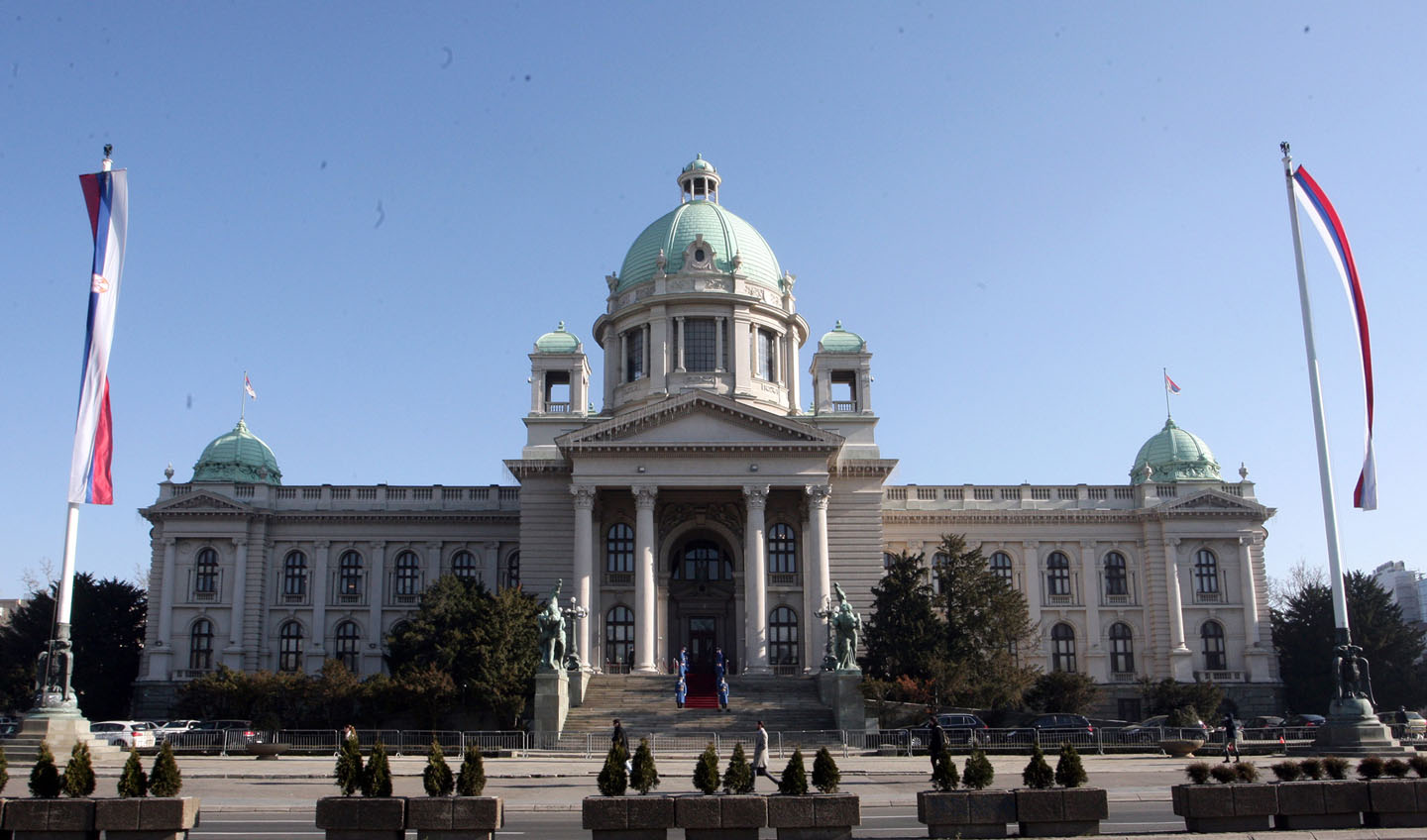
A big ceremonial welcome, after the one held at the airport, is planned for Wednesday in front of the Palace of Serbia at 10 a.m., which will certainly cause the closure of the most important roads in the Serbian capital due to security measures.
A large delegation
Deputy Prime Minister and Minister of Finance Siniša Mali, together with Minister of Trade Tomislav Momirović, waited for the first guests from China and greeted them at the airport. He is coming to visit Belgrade Chinese President Xi Jinping who will lead a delegation of 400 people in Serbia.
Xi Jinping, who has not visited Europe for years, chose France, Serbia and Hungary as his destinations during the current tour. A five-day tour he started with a visit to France on May 5, he will visit Belgrade today, and after that he will visit Budapest.
The President of China, as previously announced, was accompanied by a member of the Main Committee of the Political Bureau of the Central Committee of the Communist Party of China (CPC), Director of the General Office of the CPC Central Committee Cai Qi, as well as a member of the Political Bureau of the CPC Central Committee and Foreign Minister Wang Yi, reported is China International Radio.
Major security measures were taken for Si's arrival in Belgrade, so his delegation will be secured by 3.400 policemen, Tanjug learns.
Along the highway in Belgrade, Chinese and Serbian flags have been placed, and a ceremonial welcome of the Chinese delegation, numbering 400 people, will be organized the next day in front of the Palace of Serbia, and more than 30 agreements are planned to be signed.
What unites us?
The Vice President of the Government of Serbia, Aleksandar Vulin, at the promotion of cultural exchange between China and Serbia on the topic "What mountains and rivers separate, friendship unites", organized by the Chinese Media Group, said that the friendship between Serbia and China is steel precisely because it was "made in fire".
According to Vulin, Serbs and Chinese are separated by everything, but what unites them is the most important thing - the decision to be free, as well as the commitment to the most important feature of nations and people - freedom.
Vulin pointed out that Serbia will never forget the sacrifice of Chinese citizens who died together with the citizens of Serbia during the NATO bombing.
"Their sacrifice is greater because they didn't have to be with us, and they chose to share our most difficult moments," Vulin said.
Cultural cooperation
The Minister of Culture of Serbia, Nikola Selaković, said that Serbia and China, thanks to the meeting at the highest level, have a great opportunity to further strengthen the domain of cultural cooperation.
The minister welcomed the cooperation of the national media, the premiere of the "Ancient Chinese Wisdom" series, the initiation of joint filming of documentaries and other activities in this framework, and pointed out that this best testifies to the diversity and enormous potential of cooperation.
Selaković emphasized that the last century passed under the motto "the media is the message", which means that the media are becoming a key and indispensable part of globalized life, a machine that creates the message it transmits.
"Cultivating the media as a public good, we know that at their core is culture, as the power of creativity and inspiration, a condition for them to act for the benefit of humanity." Looking at the bigger picture, we have to maintain focus on the most important values," said Selaković, who took over from former minister Maja Gojković earlier today.
"Taiwan is China", "Kosovo is Serbia"
Bearing in mind the good relations between Russia and China as well as the support that China gives to Serbia in connection with Kosovo, it is not surprising that the words used by Aleksandar Vučić to mark the anticipation of the Chinese president a few days ago - Taiwan is China.
On the eve of the Chinese president's visit, Vučić told Chinese CCTV that he China is Serbia's best partner in achieving national goals and he assessed that Xi's visit to Belgrade comes at the right time, that he is very happy about the talks he will have with the Chinese president and that there are many topics he will discuss.
He stressed that Serbia is fully committed to Xi's visit and believes that it will bring benefits and be in the interest of both the Chinese and Serbian people.
Previously, Vučić met with Xi in October last year in Beijing, during the third "Belt and Road" forum, when 18 agreements were signed, including the Serbia-China Free Trade Agreement, which should soon enter into force.
According to the interpretations of the relations between the two countries, the fact that the Chinese president is coming on the day when NATO bombed the Chinese embassy in Belgrade sends a message that the country's relations with the West are not at a good level at all.
"This is the second visit of the Chinese president to our country in less than ten years and, given that he is not overly inclined to travel to Europe, it is truly an exception," Miljan Mladenović, researcher of the "New Third Way", told Danas.
The visit of the Chinese president - feeding anti-European voters in Serbia
In a political sense, he adds, the visit of the Chinese president should be viewed primarily through two prisms: it will be an opportunity to feed the anti-European voters in Serbia, who consider Xi Jinping, along with Putin and Orban, among their favorite world leaders, as well as an opportunity to show the European Union that Serbia has other possibilities.
Analysts, by the way, assess that Xi Jinping's visit to Serbia wants to show that China still has a strong influence in Central and Eastern Europe. The two countries are brought closer by Serbia's policy - military neutrality and non-alignment of foreign policy with the European Union in relation to China and Russia, as well as a common attitude towards the issue of territorial integrity, writes Danas.
The American agency Associated Press thus writes that Xi Jinping will spend most of his five-day European tour "in two small countries with autocratic leaders who are considered friendly to China and close to Russian President Vladimir Putin, in a region that Beijing uses as a foothold for economic expansion in Europe." .