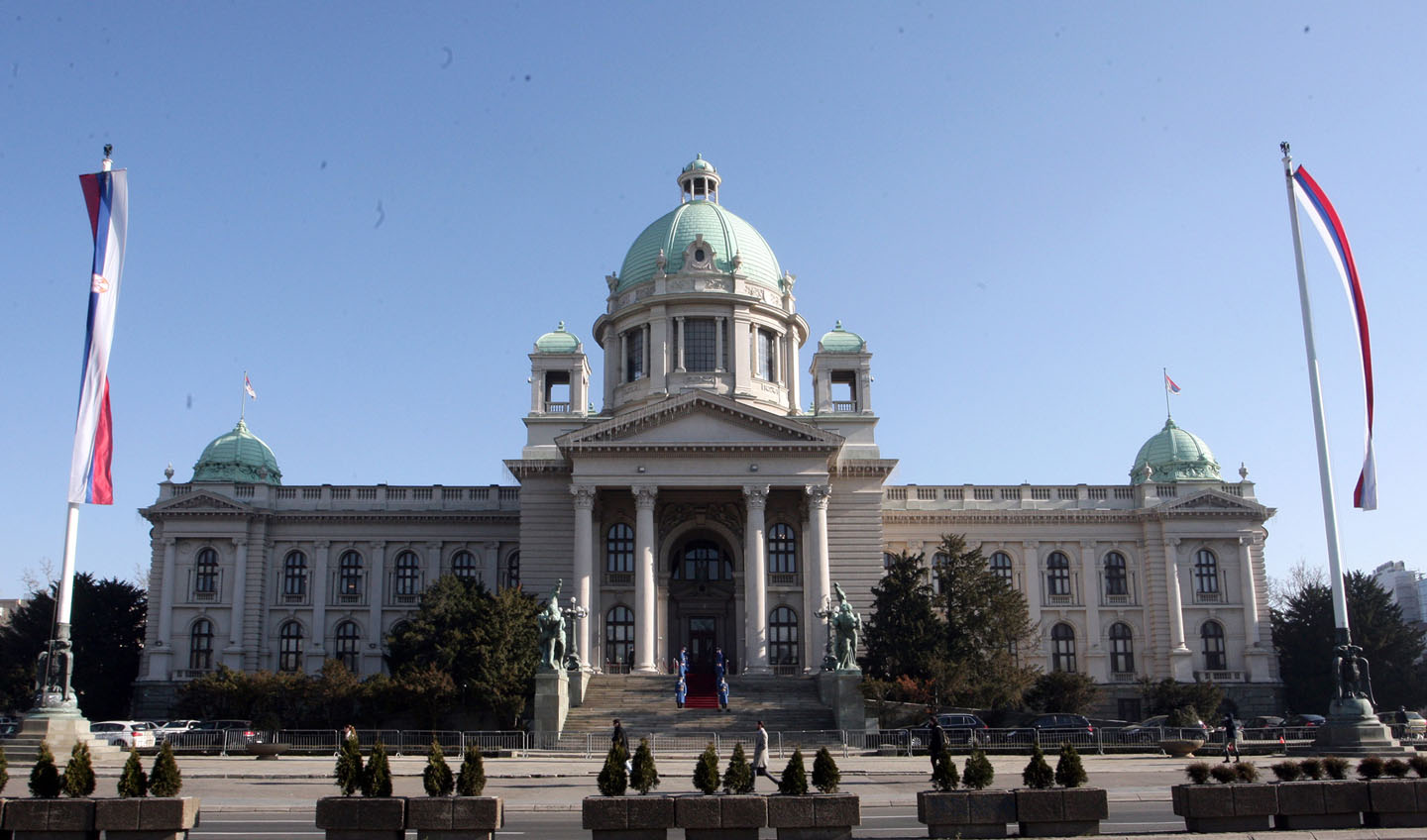
The President of Montenegro, Jakov Milatović, is making his first official visit to Belgrade, and since there are several open issues in the relationship between the two countries, it is considered that this visit represents a new chance to move the relations between Serbia and Montenegro from the "dead point".
Before his two-day visit to Belgrade, Milatović said that the focus will be on "the complete normalization of relations with Serbia as an important economic partner", that among the key issues will be the issue of ambassadors who have not existed in the two capitals for a long time, as well as that he will invite the Serbian president Aleksandar Vučić to come to Podgorica.
Milatović stated that the most important segment of his visit to Belgrade will be the reestablishment of diplomatic relations at the level of ambassadors, since neither Serbia has an ambassador in Podgorica, nor Montenegro an ambassador in Belgrade.
"The emphasis will be on other topics as well: economic cooperation, joint infrastructure projects, common path to the European Union, but the topic of ambassadors is a prerequisite," stated Milatović.
EU in the first place
This will be Milatović's first official bilateral visit after his trip to Brussels and EU and NATO institutions, which political scientist Vladimir Pavićević sees as a good sign that the Montenegrin president is focused on "honest improvement of relations".
"That is natural, when you know how intertwined the relations between the citizens of Serbia and Montenegro are. "It is very good that Milatović chose Belgrade for his first visit, and this is welcomed by a huge number of Montenegrin citizens, especially those who for a long period fought for the disempowerment of the former regime of Milo Đukanović," says Pavićević.
Miloš Bešić, a professor at the Faculty of Political Sciences, also says that it is indicative that Milatović first went to Brussels and then to Belgrade.
"It sends a political message that the European Union is important to them first, and the relationship with Serbia second, so we will have the opportunity to see what the meeting will look like," says Bešić.
For Pejović, Milatović's statement about the "normalization of relations" is not a surprise, when all aspects of the relations between these countries are taken into account.
However, he says that he is not sure that this visit will significantly improve bilateral relations if Serbia remains on the position that the dismissed ambassador of Serbia, Vladimir Božović, is the only solution for that position, and Milatović does not give up his opinion that a new ambassador in Podgorica needs to be appointed.
The issue of Kosovo
Nebojša Lazarević from the Center for European Policies does not think that there will be any significant change in the foreign policy of Montenegro.
"If someone expects that Montenegro, for example, will recognize Kosovo or that it will change its attitude towards NATO, it will certainly not happen. But what characterized the previous government, so to speak, was the constant production of conflicts, I think we can forget that," said Lazarevoć.
Miloš Bešić believes that there will be progress in many areas, but that, despite everything, "the question of all issues" is still Kosovo and Metohija.
"It is a big problem from the point of view of the current president of Montenegro, considering that a good part of the population is Serbian-oriented, and is very focused on the issue of Kosovo in such a way that he is dissatisfied with the recognition of independence, which puts Milatović in an unpleasant situation," says Bešić.
He adds that the degree to which the authorities in Serbia insist on the issue of Kosovo can determine the dynamics of future relations between the two countries.
Montenegro and Serbia have made the most progress in European integration in the region. Bilateral visits can give impetus to the road to Brussels.
"I do not believe that anyone will enter into such a complex, institutionally legal arrangement to receive a single state, such as Montenegro with 600.000 citizens." "Those without one or two more states, for example Serbia and North Macedonia, will not expand the European Union," Lazarevic said.
The meeting of the two colleagues in two days was preceded by similar messages from Villa Gorica and from Andrić's wreath - there were plenty of frictions, the European future of the Western Balkans is what everyone is waiting for.
BG/Euronews Serbia/RTS
Read daily news, analysis, commentary and interviews at www.vreme.com