
Election 2026.
REC determined the final number of voters in the elections
The Republic Election Commission (REC) made a decision today on determining the final number of voters in Serbia

There are many hints from the SPS that this party will go to the elections independently, but it is possible that they will do without the innkeeper - Aleksandar Vučić. At the same time, there is a silent war going on among the socialists about the attitude towards the progressives
Vice president for a year and a half already Socialist Party of Serbia Branko Ružić acts as a kind of internal party dissident. He criticizes President Aleksandar Vučić, respects the student protests, asks that the SPS not be a "replica" of the progressives...
A recent episode in Knić, where a couple of local socialists refused to cooperate with SNS, she revealed that Ružić he also has some kind of support in the party. "Factions," some would say, or "currents."
This is all before the elections, which are judged to be decisive, while polls predict that an independent SPS could exceed the three percent threshold and, perhaps, be the tip of the scales.
According to the New Serbian Political Thought survey published by "Vreme", the independent SPS can reach 4,9 percent. According to Crta, the party is at 3,8 percent.
Now the president of the Executive Board of the Main Board of the SPS, Vladan Zagrađanin, also spoke, who on the one hand reiterated his support for the leader of the Socialists, Ivica Dacic, but also reminded that Dacic himself advocated independent participation in the elections.
The resident of Zagradan told the newspaper Nova that there were five hundred people at the session of the Main Board in July, who unanimously supported Dacic's statement: "We are going to the elections independently."
That is, in a small standard coalition with United Serbia and the Greens of Serbia.
The first operative of the party also says that local committees should submit lists of candidates for MPs, as well as proposals for candidates for the president of Serbia, by August 25.
"We haven't talked to SNS. I really don't know if we will," added Zagrađanin.
Speaking about the statements of his party colleague Ružić, who called on the socialists to draw "clear red lines" towards the SNS, Zagrađanin said that Ružić has the right to an opinion, but that decisions are made exclusively by party bodies.
"There are no factions here, there is nothing like that," said Zagrađanin. "So, every decision was made absolutely unanimously, without a single reservation, not even a reservation."
Although experts believe that in the end President Aleksandar Vucic will decide whether the SPS will go independent or not, his coalition partner Ivica Dacic said at the end of July that the SPS is already preparing for the elections, suggesting that it will go independent.
But also that "it is in the best interest of Serbia" that cooperation with SNS be continued after the elections. "But that will again depend on the people. There is no coalition and cooperation if you don't get the support of the citizens first," emphasized Dacic.
Commenting on the situation in Knić for Vreme, Ružić reiterated the position that it is difficult to talk about a "coalition" at all, but rather about subjugation.
"I can only evaluate the current processes in Knić through the prism of a general lack of self-respect, renunciation of original principles and masochism that are present in not a small number of local self-governments, but it is even more alarming that such tendencies exist at the very top of the SPS," he said.
When the line is drawn, the leading socialists seem to be in line for an independent election, but they differ greatly in their attitude towards the SNS.
To some, Ružić's statements still look like a play in which he and Dacić participate with the aim of the party of "eternal power" remaining so. Ružić denied this in an interview for "Vreme" in April last year:
"I would like to dispel that urban legend, because many people think that we have a secret agreement, so we act strategically. It is also difficult to convince our coalition partner that such a thing does not exist, but I responsibly claim that there is no agreement, nor would I make such deals because it would be dishonest. I say everything I say because I need to make it public."
As Slobodan Georgiev analyzed for "Vreme", socialists have a unique experience of marriage with two Serbias - the democratic one until 2012, and the authoritarian one after this year. "It gives them the ability to see where they have a better chance of survival."
Although they were an inseparable part of the government, they paradoxically became more receptive, wrote Georgiev: "Coexistence with the progressives made them beautiful, as strange as it sounds, because it is almost impossible to compete with the loyalists in inaction and indecency."
It remains to be seen whether and how it will be cashed in at the new elections. According to Ružić's calculation, up to seven percent of the votes can be obtained - if red lines are drawn towards the progressives.
Only in August: Save three thousand dinars on the annual subscription to the digital edition of "Vremena"! Take advantage of the discount here and support independent journalism.
The Republic Election Commission (REC) made a decision today on determining the final number of voters in Serbia

A citizen of Belgrade whose polling station in Banja Luka was changed in the voter list without his knowledge claims that the Ministry did not correct his data and that the deadlines have expired. The elections are on October 25 and he still doesn't know where he will vote.

The pardon procedure implies the appropriate role of the Minister of Justice, who should initiate the procedure or submit an opinion on the pardon, says prosecutor Radovan Lazić.
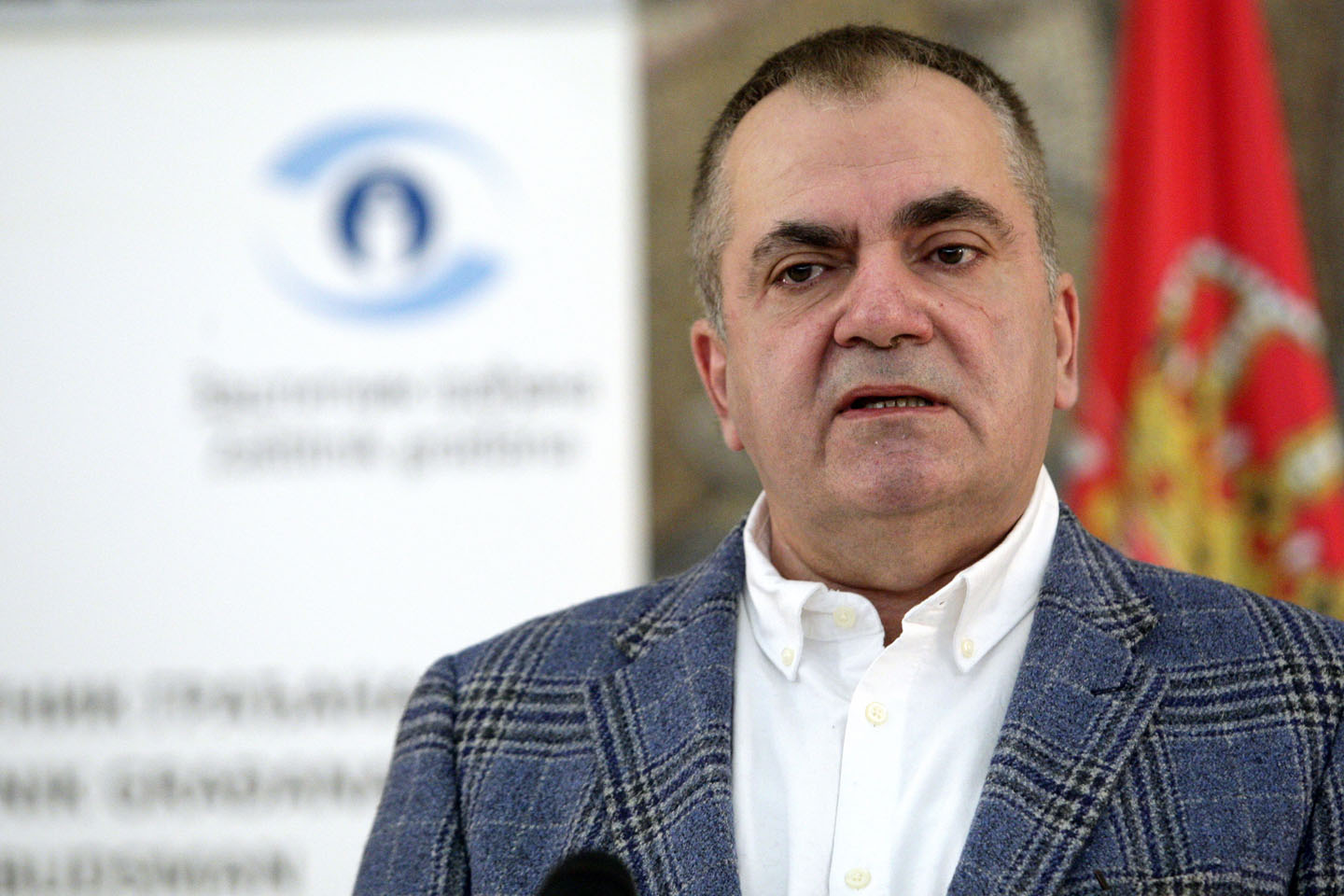
Phone numbers 064 876 85 05 and 011 2068 100 will be available 24/7 for reports and addresses to citizens, and the possibility of direct addresses at the premises of the Protector of Citizens is also provided.

NUNS demands an urgent investigation due to the threats sent to two Radar journalists who wrote about the Sky correspondence in which Aleksandar Vučić is mentioned. The association states that the threats also mention violence against children of journalists and warns of impunity

There is, literally, no difference between the one who claims it is day in the middle of the night, or the one who claims to be a giraffe, from the claims we read on billboards: that Vučić is working to unify Serbs and that Serbia is doing better and better day by day.

The pre-election arrests due to the alleged "overthrow of the state" testify to the regime's panic. The bad news for them is - they can't arrest the whole people who decided to defend themselves from progressive beatings and election theft

The ring that tightens around Ćaciland Student list is getting narrower. Because there are more and more spoiled people who see the false prophet for what he is: a street obscener who is fighting Serbia

The archive of the weekly Vreme includes all our digital editions, since the very beginning of our work. All issues can be downloaded in PDF format, by purchasing the digital edition, or you can read all available texts from the selected issue.
See all