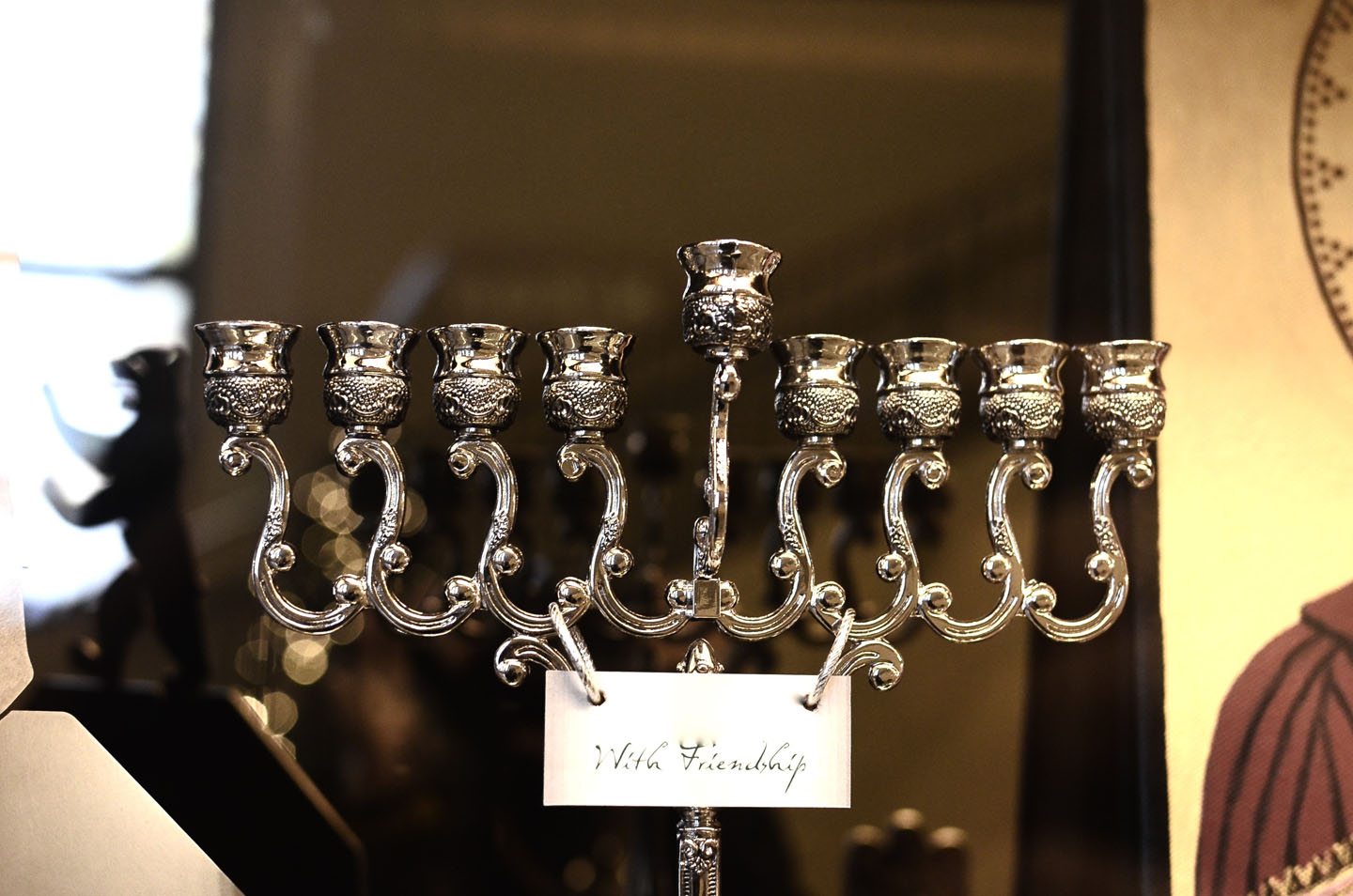
Hanukkah or Hag Haurim, the Jewish holiday of freedom and light, will begin tonight at sundown, and will last until December 26. Hanukkah is celebrated in memory of the three-year war of liberation, that is, the liberation of Jerusalem in 165 BC, when "the lamp was lit again, and the idols were thrown out of the Temple." During the eight days of this holiday, Jewish families light eight candles on an eight-branched candlestick.
Rabbi Isak Asiel of the Jewish community in Serbia says that the lighting of candles signifies a struggle that the Jews began in the second century BC against the Greek civilization. "The Greeks saw that the Jews drew strength from their learning from the Torah and forbade the study of the Torah, keeping the Sabbath and circumcision and introduced a statue of the god Zeus, which was the complete antithesis of the polytheism of the time. The Greeks tried to melt them down, but they didn't succeed," he explains. He adds that "small Judea managed to overcome a powerful empire and when they entered the temple they found oil in an unopened jar which miraculously made the candlestick that was in the temple burn for eight days". "We have been celebrating the holiday ever since. We light candles for eight days, one candle on the first day, and one candle each day. The reason is that in holiness we always ascend and never descend. The bottom line is that a small flame can flare up at a time when you think total darkness has engulfed you," says Asiel.
He also notes that this is a joyful holiday, during which children receive a small gift every day. "In the Bible, the number seven is the perfection of the physical world, and the number eight is always the spiritual realm," explains the rabbi. The customs for this holiday include eating something made with oil - donuts or latkes, a potato dish. Isaac Asiel told everyone that one should never despair, because if there is a glimmer of hope left, it can flare up.
MT/FoNet