Hungarian Prime Minister Viktor Orban for the last 12-13 years, after the meeting in Moscow with Vladimir Putin in 2009, he has been leading a strongly pro-Russian policy. After that meeting, he reversed his previous attitude towards Russia by 180 degrees. While he was in the opposition, for example, he most harshly condemned the then Prime Minister Ferenc Đurčany for his association with Vladimir Putin (Ferenc once hosted him in his house and prepared a dinner for him) and called it a "betrayal of Hungarian national interests". But Vladimir and Ferenc and Viktor were also different at that time.
Having come back to power with a spectacular two-thirds majority in 2010, he already had the ground prepared in Moscow, and many bitter failures in the west contributed to his turn to the east. The newly elected prime minister then rushed to Brussels to seek understanding for a budget deficit far greater than the European Union standard of 3 percent, but was coldly rejected by the head of the European Commission at the time, Jose Manuel Barroso. Orbán then gave a leg to the IMF, took much more expensive loans from the East and "nationalized" the private pension fund.
The dispute with the Union reached its first culmination when the new Law on Media was adopted, which turned state, and not only state, media into a propaganda service of the regime, which was a precedent in the EU. The punishment was mild, the propaganda has been functioning smoothly since then.
There are regular meetings with Putin, the most tangible result of which is the agreement on the extension of the Paksh2 nuclear plant and a Russian loan of 10 billion euros. Construction has not started to date, because not all plans have been approved (allegedly the land around the Danube is not stable enough for such construction).
Many independent observers do not stop being surprised by the increasingly close relationship between Orban and Putin: is the Russian president blackmailing him with something, holding him in his fist? Or is Viktor so disappointed in the West, that he leads his country and the future of the country, which he leads with a steely will, to the East. "There is life even outside the Union", Orban declared a long time ago and made the country a member of the Council, which includes Azerbaijan, Turkmenistan, Turkey, etc.
The Fidesz government has extremely cold relations with neighboring Ukraine. Budapest allegedly defends the interests of the Hungarian minority there (about 100 Hungarians live in Ukraine) and punishes Kiev wherever it goes because of the recent Law on the Languages of National Minorities, which, the Hungarians claim, discriminates against minority languages. That is reason enough for Orbán to veto any attempt by NATO to hold a summit with Ukraine.
The icing on the cake is his policy in the Western Balkans, which is subordinated to Moscow's geopolitical interests.
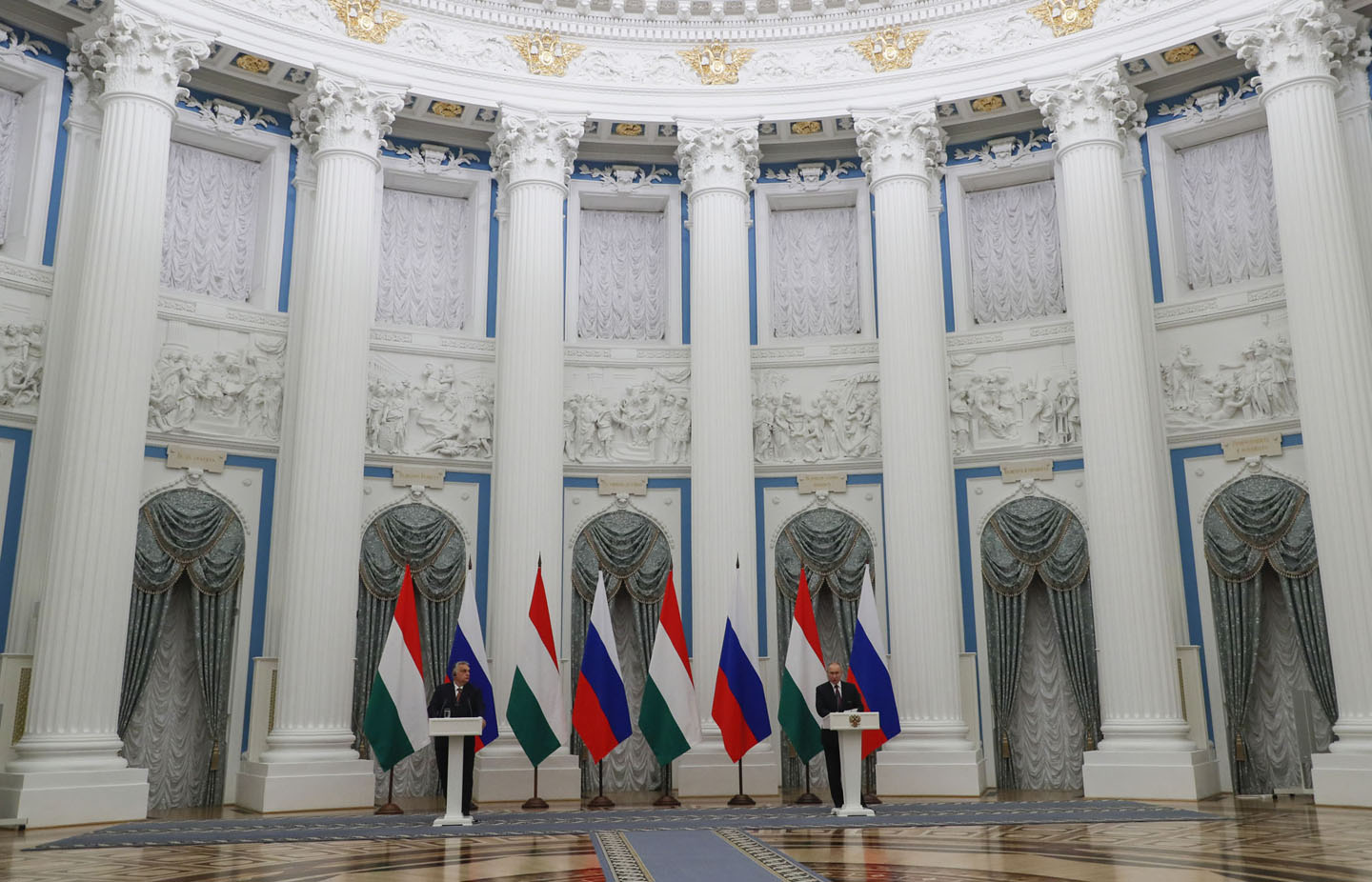
After such a prehistory comes the current Ukrainian crisis. Orban was ready for another risky move, so at the beginning of February in Moscow, he accepted the role of a useful idiot when, at a joint press conference, he listened to the anti-Western tirades of Putin - the prime minister of a NATO and European Union member country - without any objection.
And then, after all that, on Tuesday comes the harmonization of Hungary's positions with 27 EU members on sanctions against Russia. At the preparatory meeting, at the ambassadorial level, the Hungarian representative was not allowed to vote for sanctions, but asked to consult with Budapest. And Orbán agreed.
A little more than a month before the parliamentary elections, he did not dare to isolate himself even more in the Union. About 70 percent of Hungarian voters are still in favor of the EU.
Read daily news, analysis, commentary and interviews at www.vreme.com