
Election 2026.
REC determined the final number of voters in the elections
The Republic Election Commission (REC) made a decision today on determining the final number of voters in Serbia
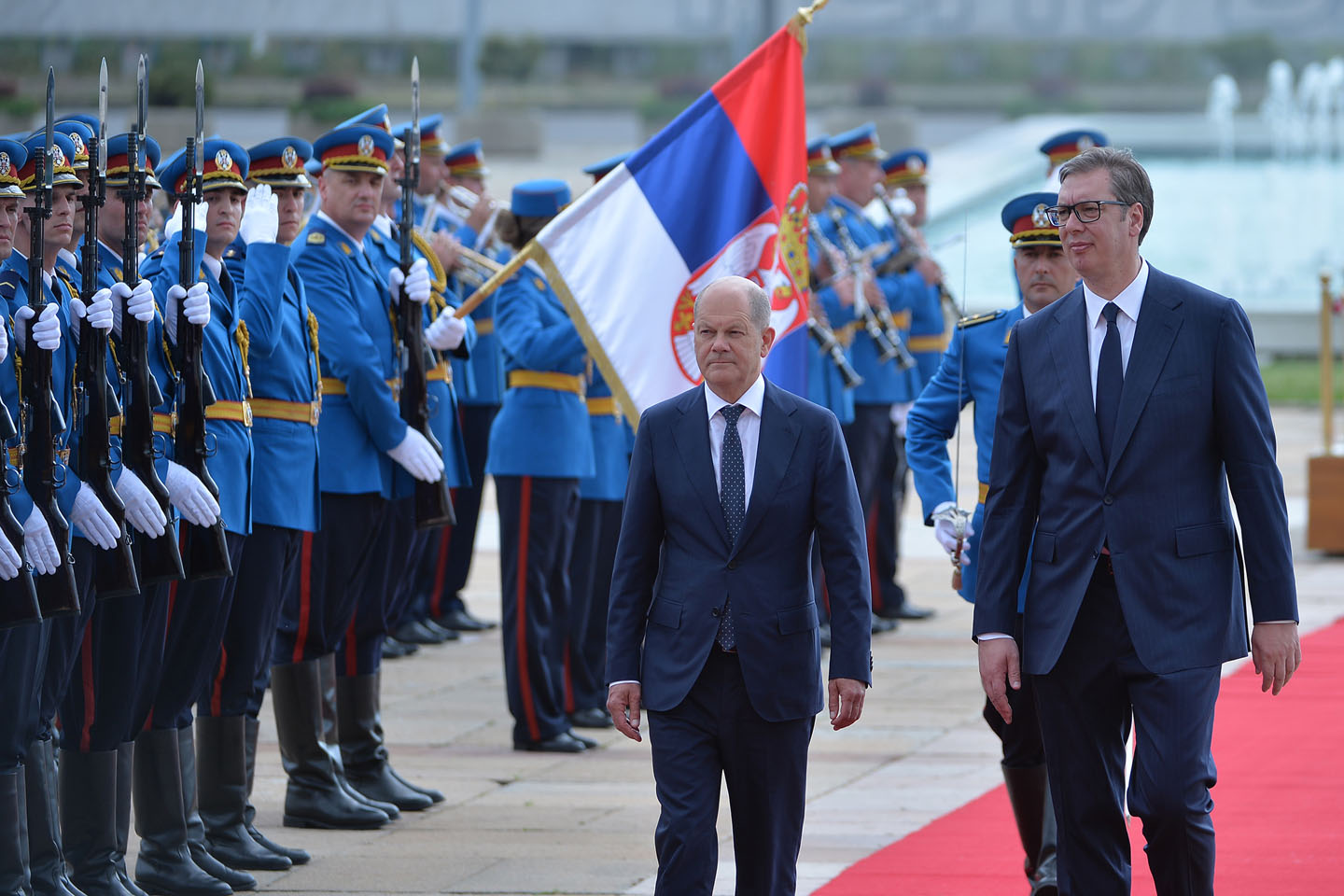 Photo: Zoran Zestić/Tanjug
Why doesn't Germany mine its own lithium if it is such a "treasure for the German automotive industry"? This question is asked by the German press analyzing Chancellor Olaf Scholz's support for the Serbian project "Jadar".
The newspaper "Cajt" published a very extensive report from Serbia, written by journalist Franciska Činderle. It begins with a meeting with the Filipović family, who, as stated, have been living in the Jadra valley for five generations. "The area is known for good drinking water, pig farming and agriculture." And maybe soon by the largest lithium mine in Europe", writes the author, and reports Nanny Vela.
The text then reminds that "the European Union, which wants to be a pioneer of climate neutrality, is very dependent on raw materials from China." Beijing management has been following a clear strategy for years, entering into long-term contracts with mining companies in Australia and Chile, and controlling large parts of the supply chain, right down to the finished battery. Europe now wants to do something to counter that."
That's why, "Cajt" writes, "German Chancellor Olaf Scholz traveled to Serbia in mid-July, together with the Vice President of the European Commission, Maroš Šefčovič, to sign an agreement on strategic partnership in raw materials with that country." European, and especially German, car manufacturers want to reduce their dependence on China with the help of mines in Serbia," writes the German newspaper and specifically mentions the Mercedes-Benz company, whose representatives were also in Serbia at the time.

Quarrelsome village
"The mine will be built not far from Gornji Nedeljice, a small village with about 800 inhabitants where the Filipović family also lives," the German newspaper said. But, "the lithium problem drove a wedge into a small village." Neighbors who once celebrated weddings and other celebrations together no longer speak to each other and call each other traitors. It is said that even two priests of the Orthodox Church had an argument over whether lithium should remain in the ground or be exploited."
"The village seems to be divided into two groups." Those who agreed with Rio Tinto and sold them their houses and fields, and those who refuse. The Filipović family belongs to another group. The company, they say, has not yet made an offer to them, but it is clear that they will reject it. 'We will not sell our fields. They can only take them from us by force,' says Zoran Filipović.
The promises of Rio Tinto
The dispute over lithium is causing unrest in the entire country, writes Zeit. "A few years ago, large demonstrations against the mining project were held in Belgrade and other cities of Serbia. After Chancellor Scholz's visit in mid-July, tens of thousands of people took to the streets again. Many fear that the mine could contaminate drinking water in the region and cause damage to the environment."
"We have to talk about this project on the basis of facts," says Emil Atanasovski, the representative of Rio Tinto whom the journalist spoke with in Belgrade. He claims that "no one is forced to sell their house" and promises: "After 40 years, we will return the land to the people as it is today."
However, as the German newspaper writes, "Serbia is anything but a pioneer in the energy transition." The country generates most of its electricity from coal, and investment in power plants has often come from China. On the streets, you often pass billboards of the natural gas company Gazprom, which appeal for Serbian-Russian friendship. And now, of all places, that country should become the engine of European electromobility?"
This is what Rio Tinto representative Atanasovski hopes for. He tells Zeit: "We want to build the most modern lithium mine in Europe." It will raise the standards for all mines in Europe."
Why doesn't Germany mine lithium itself?
"In the Jadra valley, however, people do not understand why they should pay the price for new technology." 'Why doesn't Germany mine lithium itself?', asks Vladimir Filipović.
Zeit writes: "It is true that Germany has lithium deposits, but to date there is no mine, there are only so-called research projects, including those in the Ore Mountains in Saxony or in the Altmark (in Saxony-Anhalt). There, too, resistance to mining is growing, among other things due to concerns that drinking water and soil could be contaminated."
"This is exactly what worries the people of the Jadra Valley," writes Zeit, but also adds that Rio Tinto "promises the people of the Jadra Valley that they will be able to continue cultivating their fields around the mine." The company "rules out the possibility that the toxic discharge wastewater into the rivers and that the fields will no longer be able to be cultivated, as the residents fear."
"Cajt" also discussed the plans with experts from the German Federal Institute for Geology and Natural Resources. Their assessment is that "the mining process in an underground mine is in principle comparable to other underground mines, for example to the mining of potash in Germany." And there, agriculture can still take place on the surface, above the underground mines and near the mines," state German experts and emphasize: "Each mine is ultimately an industrial facility where appropriate measures must be taken to protect the environment."

The EU and Germany are "opening up to blackmail"
The mining project in Serbia also has another, political component, writes Cajt. And he asks the question: "What is the price that Germany and the EU pay?" Then he states: "President Aleksandar Vučić rules Serbia more and more authoritarian, similar to Viktor Orbán in Hungary, but with the difference that Serbia is not part of the EU, but a candidate for membership. Strictly speaking, the state should initiate reforms, but the opposite is happening. The last parliamentary elections in December 2023 took place in the shadow of accusations of vote manipulation."
The author asked Vedran Džihić, a political scientist from the University of Vienna, for a comment on this issue. He says: "Olaf Scholz is making the same mistake in Serbia as Angela Merkel once did with Russia." They rely on change through trade and hope to be able to tie the authoritarian regime to the West through close economic ties. But that is a fallacy. You are opening yourself up to blackmail," warns Džihić for Cajt.
Confirmation from Mercedes
"In any case, Vučić can gain a lot and can increase his reputation throughout Europe," the paper writes and states that "'Crème de la crème of European business' came to sign the contract on raw materials, including representatives of Mercedes-Benz."
The representative of Mercedes confirmed for Zeit that the German car company is already in negotiations with Rio Tinto. She did not want to comment on the details, but said that it was about "the possibility of obtaining lithium from a Serbian mine in the Jadar area."
"It is quite possible that Mercedes-Benz will at some point power its cars with lithium, which is located deep under the fields of the Filipović family." For now, they are still sitting under an oak tree in their yard, at a table with homemade plum wine and fig jam, discussing what to do next. Rio Tinto offered farmers in the valley loans to buy agricultural equipment, and promised to buy their crops. But the people of Filipović do not believe that they will be able to eat those vegetables in the future," the German newspaper Zeit concludes its report from the Jadra Valley.
"Dirty Job"
Lithium in Serbia is also a topic for the Berlin newspaper "Tagescheitung", which in its column "Debate" carries an article by Alexander Rotert. He is said to be "a political scientist who has been researching the former Yugoslavia since 1991, worked for 20 years for the UN, NATO, OSCE, OHR and the EU, mainly on peace enforcement in the Western Balkans, and as a lieutenant colonel he recently worked as an advisor for intercultural operations Bundeswehr for Foreign Missions".
In the text entitled "The Fatal Policy of Appeasement", Rotert, among other things, assesses that "Scholz's lithium agreement is wrong, because Belgrade has started to implement Milosevic's Greater Serbia plan".
"All the arguments presented by the proponents of this 'dirty business' can either be refuted or are false, because Serbia's lithium reserves represent about one percent of the world's. The EU could import lithium from 'unproblematic', democratic countries such as Australia. Therefore, he does not have to support one of the last aggressive autocrats in Europe," writes the author.
And more: "Germany could also mine its own lithium reserves, but that would probably be inadvisable given the environmental pollution and upcoming elections." But Serbia seems very far away and Berlin obviously doesn't care about the very active and brave Serbian environmental activists."
"Great Serbian Plan"
For the author, it was "an interesting and calm reaction of the Russian ambassador to Serbia, Aleksandar Bochan Harchenko, to the German-Serbian lithium agreement: 'I have never heard anything from the President of Serbia, Aleksandar Vučić, that would lead us to assume that Serbia will change its policy.' So much for those who think they can buy the Government of Serbia," Rotert writes, noting that "there are still German and European government representatives who are of the opinion that Vučić is the guarantor of stability in the Balkans and that he should be supported."
In his commentary, the author recalls the wars of the 80s that "were started by Vučić's predecessor and former boss, the President of Serbia, Slobodan Milošević." He states that, although "as in any armed conflict, there were war crimes on all sides, all sources, from non-governmental human rights organizations such as Amnesty International or Human Rights Watch, to the United Nations Commission of Experts on War Crimes and the U.S. intelligence services of the CIA, came to the conclusion that during the war over XNUMX percent of war crimes in Bosnia were committed by Serb perpetrators, with the intention of "cleansing" the conquered areas of non-Serbs. Those 'ethnic cleansings', i.e. mass murders, including genocide, were not a 'by-product' of aggressive warfare, but its goal," the German political scientist believes.
He also asks the question: "Why is this still relevant 30 years later?" And he answers it like this: "Because the Serbian government in Belgrade started implementing Milosevic's Greater Serbia plan."
Finally, Alexander Rotert's conclusion reads: "All this should make Chancellor Scholz think about who he makes 'deals' with and what is at stake."
Source: Deutsche Welle
The Republic Election Commission (REC) made a decision today on determining the final number of voters in Serbia

A citizen of Belgrade whose polling station in Banja Luka was changed in the voter list without his knowledge claims that the Ministry did not correct his data and that the deadlines have expired. The elections are on October 25 and he still doesn't know where he will vote.

The pardon procedure implies the appropriate role of the Minister of Justice, who should initiate the procedure or submit an opinion on the pardon, says prosecutor Radovan Lazić.
Phone numbers 064 876 85 05 and 011 2068 100 will be available 24/7 for reports and addresses to citizens, and the possibility of direct addresses at the premises of the Protector of Citizens is also provided.

NUNS demands an urgent investigation due to the threats sent to two Radar journalists who wrote about the Sky correspondence in which Aleksandar Vučić is mentioned. The association states that the threats also mention violence against children of journalists and warns of impunity

There is, literally, no difference between the one who claims it is day in the middle of the night, or the one who claims to be a giraffe, from the claims we read on billboards: that Vučić is working to unify Serbs and that Serbia is doing better and better day by day.

The pre-election arrests due to the alleged "overthrow of the state" testify to the regime's panic. The bad news for them is - they can't arrest the whole people who decided to defend themselves from progressive beatings and election theft

The ring that tightens around Ćaciland Student list is getting narrower. Because there are more and more spoiled people who see the false prophet for what he is: a street obscener who is fighting Serbia

The archive of the weekly Vreme includes all our digital editions, since the very beginning of our work. All issues can be downloaded in PDF format, by purchasing the digital edition, or you can read all available texts from the selected issue.
See all