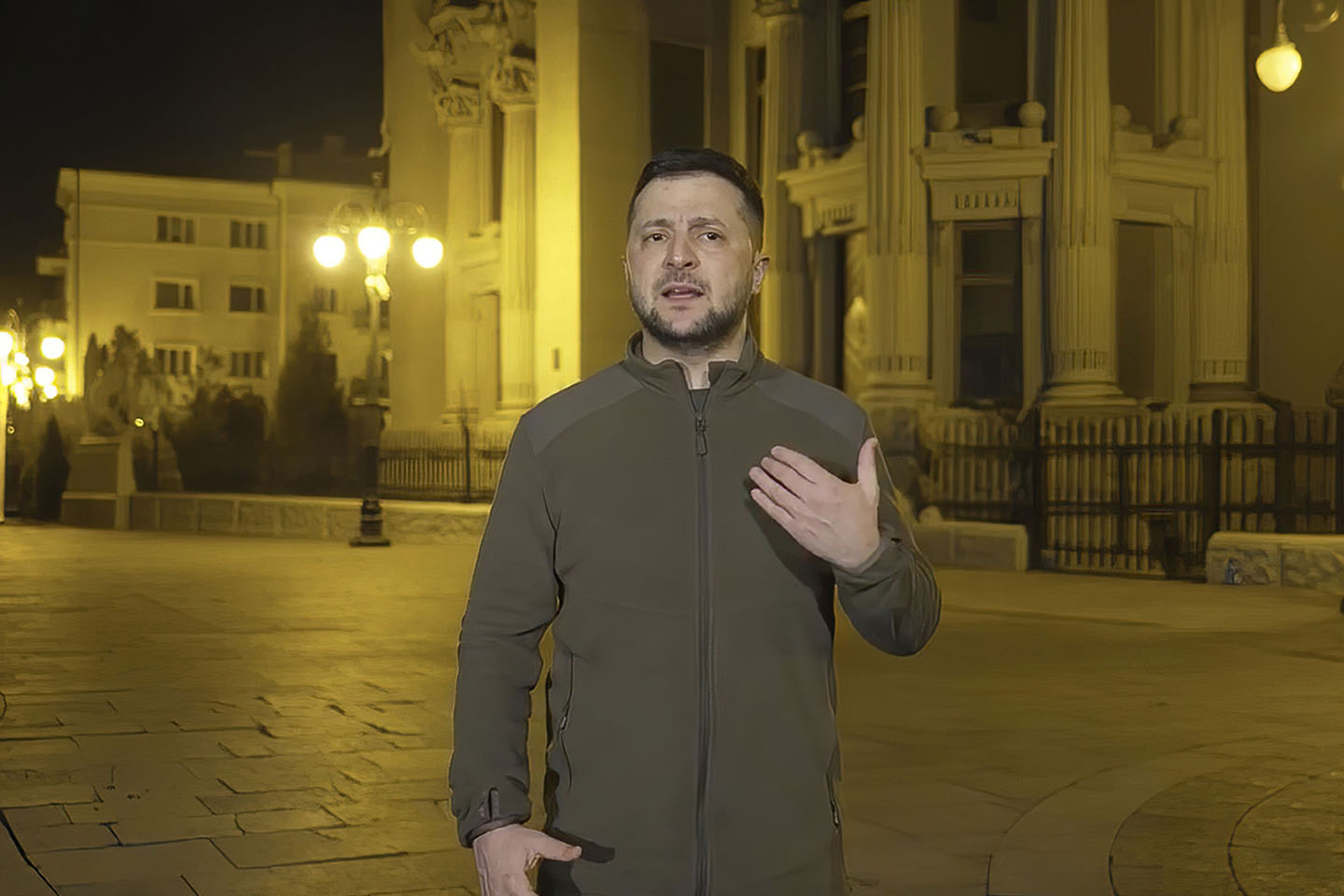
A day after Ukrainian President Volodymyr Zelensky signed the request to join NATO, neither Washington nor Brussels has yet received a clear position on this.
Many in the American administration are of the opinion that Ukraine should be supported in the field in all possible ways, and that membership in NATO can wait for another time. Even the Speaker of the House of Representatives, Nancy Pelosi, did not answer the questions of the journalists on Saturday specifically about the attitude towards the request of Ukraine. She briefly said that she would strongly advocate for security guarantees to Kyiv.
Ukraine's admission to NATO requires a unanimous decision of all 30 member states. It is believed that Turkey would be against it. However, according to NATO rules, accelerated membership as requested by the Ukrainian president is not possible.
Formally, a NATO member can become "any European country that is able to advance the principles and contribute to the security of the North Atlantic area".
NATO has its Membership Action Plan. This plan helps potential members prepare for membership and meet the key requirements by providing them with practical advice and just the help they need. The key requirements for accession are political, legal and military in nature.
If Ukraine were to become a member of NATO, for which there is not enough enthusiasm as things stand now, it would mean a direct conflict between NATO and Russia. According to the rules of the Alliance, if a member state is attacked, the others are obliged to react directly.
While Ukraine's membership in NATO is wavering, Western officials were more than clear about their stance on the annexation of four regions in Ukraine to the Russian Federation in "referendums" held last week. The fact that Russia sees those territories as part of its state opens up space for the Russian authorities to use all possible military means in the war against Ukraine.
SP/ RTS / Euractiv
Read daily news, analysis, commentary and interviews at www.vreme.com