
Subscribe to the digital edition
Read daily news, analysis, commentary and interviews at www.vreme.com
 Photo: Wikipedia.org
The Cuban Missile Crisis is the only situation in which the leaders of the two superpowers consciously contemplated a direct military confrontation that could escalate to all-out nuclear war.
Sixty years ago, in October 1962, the USA and the USSR confronted each other in a way that could lead to nuclear war, thus the end of modern civilization. Fortunately for us, that didn't happen, but the questions of how we got there and how we got out remain relevant to this day. In addition, there are dominant narratives, myths about certain actors, generally accepted "facts", factors that could lead to a nuclear apocalypse, of which even the main actors (Kennedy, Khrushchev and their collaborators) were not aware.
There have been other situations where we could have experienced a nuclear disaster (probably the most dangerous in September 1983 when Stanislav Petrov, a Soviet lieutenant colonel, saved us), but the Cuban Missile Crisis is the only situation in which the leaders of the two superpowers consciously considered a direct military confrontation that could escalate to general nuclear war.
In general, the description of the crisis and its resolution is quite well known thanks to memoirs, historians, published documentation, documentaries and feature films. From all this, the long-dominant interpretation crystallized, according to which Kennedy initially took the position that the Soviet nuclear missiles in Cuba were an unacceptable change to the previous status of the nuclear balance between the USA and the USSR, and that he took careful steps which, through a combination of firmness and restraint , led to a diplomatic compromise and the elimination of nuclear missiles from Cuba. At the same time, in the dominant American interpretation, this was a triumph for Kennedy, because he forced the USSR to retreat with bold and wise decisions.
This narrative, however, does not contain the full truth of what happened…
Read on full text by Ivan Vujačić in the weekly "Vreme" from Thursday (October 27)
Subscribe to the digital edition
Read daily news, analysis, commentary and interviews at www.vreme.com

The student plan calls for six months of voluntary military service, better conditions for members of the military, investment in equipment and the defense industry, an investigation into early deaths and numerous other changes.

The student list is asking for an investigation into the origin of the fake document, which threatens with the confiscation of pensions and prison sentences. The Ministry of Finance confirmed that the statements in the document are false

The students in the blockade of DUNP reported to the disciplinary prosecutor two Novi Pazar judges for attending the SNS pre-election rally. They say that such behavior undermines the independence of the judiciary
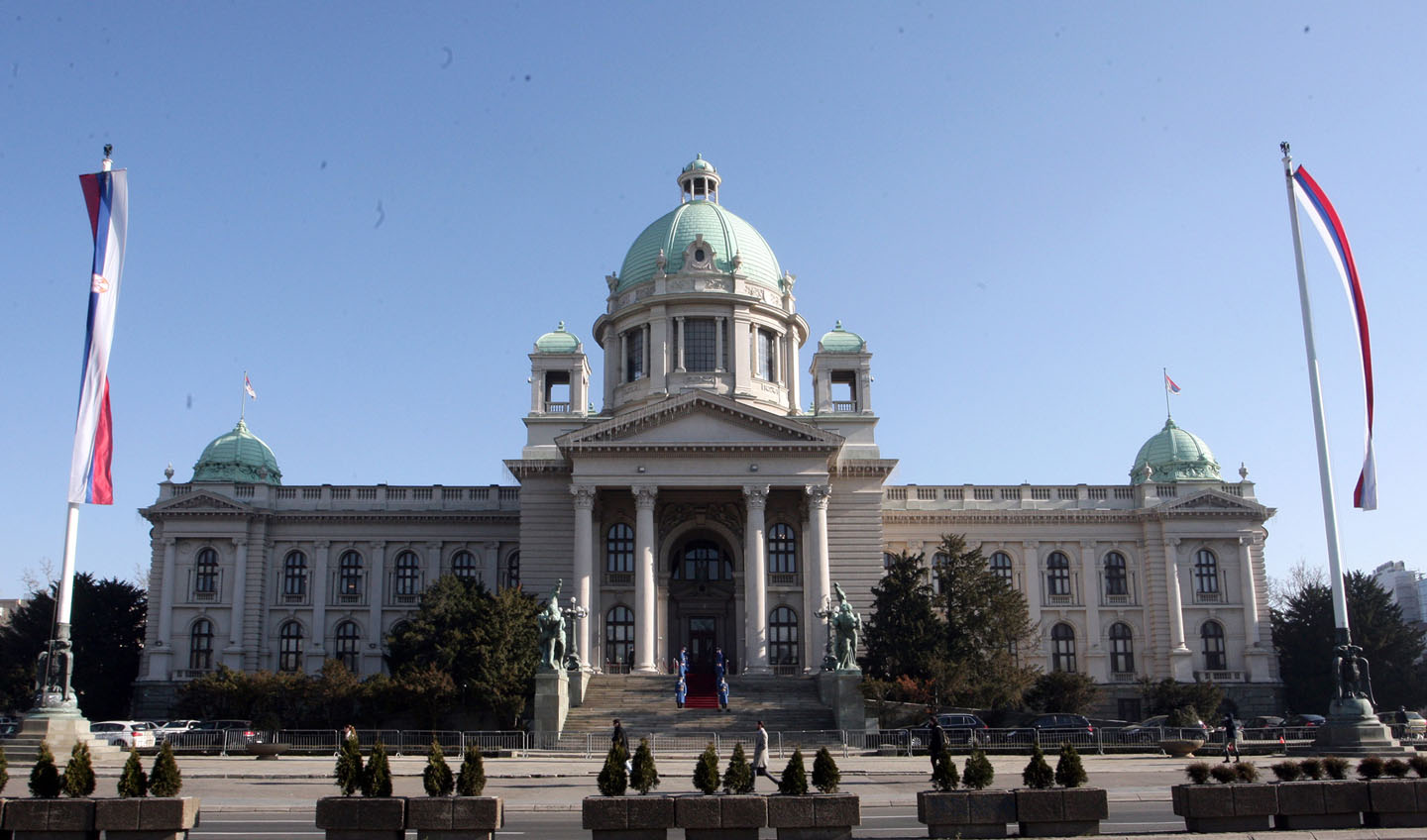
Consultations are being held in the House of the National Assembly on Friday before the constitution of the new convocation

Nenad Stefanović filed a disciplinary complaint against Branko Stamenković, claiming that his public appearances damaged the reputation and trust in the work of the public prosecutor's office. Among the disputed statements is the one that Stamenković gave to the weekly "Vreme", talking about the "para-prosecutor system" in Belgrade.

At the moment when the institutions of the Republic are destroyed, when Vučić's octopus is still alive, when people are disgusted by the injustice and the stench left behind by the Essenes regime, we have, as Machiavelli said, only civic virtue as the fuel with which we can return to the beginning

The four independent members of REM are an example of perseverance and civic responsibility. Rodoljub Šabić even, upon leaving the premises of REM, after the sentencing of the Informer, experienced that the Essenes insulted him, hit him with their hands and feet. But that too will soon be over

Vučić pardoned the batterers and Dijana Hrkalović. The election winners should abolish the sultan's power that allows one man to run afoul of the entire judicial system

Interview: Branko Stamenković, public prosecutor of the Supreme Public Prosecutor's Office
A black picture and the breakdown of the rule of law subscribeThe archive of the weekly Vreme includes all our digital editions, since the very beginning of our work. All issues can be downloaded in PDF format, by purchasing the digital edition, or you can read all available texts from the selected issue.
See all


In the fall of 1962, the world watches helplessly as a Cold War nuclear poker game in which the chip equals one megaton of trinitrotoluene. The Soviet government is secretly building bases in Cuba and deploying missiles with nuclear warheads within range of Washington and half of the US strategic bomber bases. US President John F. Kennedy rejects military pressure to bomb Cuba immediately and orders a naval blockade. American bombers are in the air. Russian ships are approaching the blockade line of which they were not informed... Exactly half a century has passed since the thirteen-day Cuban missile crisis in October 1962, when atomic Armageddon was narrowly avoided, the last battle before the end of the world

How Barack Obama and Raul Castro are trying to solemnly end the Cuban Missile Crisis, which broke out the year Obama was born. For the start of the fanfare, there will be a wait for the roasting

There is no war objective large enough to justify the immediate death of tens and hundreds of thousands of people – to say nothing of the long-term consequences. The case is such that it applies on the side of the one who is hit by it, but also on the side of those who would use the atomic bomb. Can he prepare for the end of the world and what would happen then?

