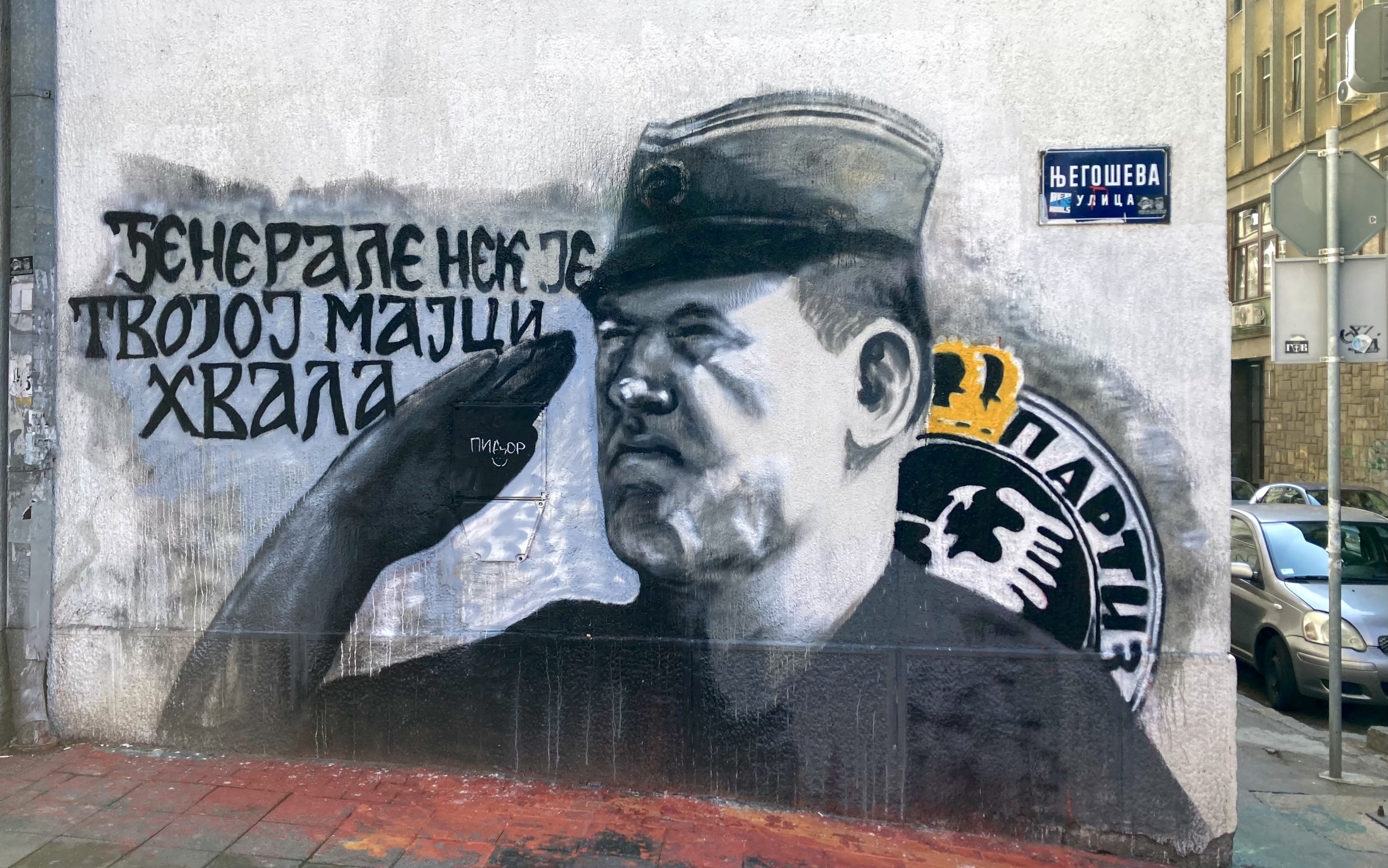
If anyone happened to wonder what happened to the mural of Ratko Mladić in the center of Belgrade after all the hubbub at the end of last year: there it is in all its glory, big and immaculate in Njegoševa Street on the corner with Aleksa Nenadović, the general saluting from the wall to passers-by, to the people , to God, but how did anyone understand the artist's message.
Let's remind: several human rights activists were disgusted that a mural of the former commander of the RS armed forces, who was sentenced to life imprisonment by the Hague Tribunal for the genocide in Srebrenica and other war crimes, adorns a central Belgrade street. Human rights activist Aida Corovic On November 9, she bought eggs and threw them as a sign of protest at the figure of the retired general in prison. At the same time, plainclothes policemen rudely jumped her and dragged her into custody. Activist Jelena Jaćimović was also detained.
The opposition politicians, almost all the media that are not under the control of the regime, and non-governmental organizations that were not founded by parties in power, rebelled against that. Protests against the mural and counter-protests for the preservation of the mural were organized, different messages from Njegoševa spread throughout Beorada and Serbia.
The scandalization of those who see Ratko Mladić as a war criminal, and in the mural a mockery of Serbia, was mainly organized on the media and social networks. There were very few people at the street protests on that occasion.
They painted over the mural overnight, and Mladić's devotees repaired it during the day, and so on in a circle, at some point the Communal Police ordered the facade to be painted, which was done, but it didn't last long.
The government mostly pretended to be silly and dead, it did not want to object to the organized groups of supporters of Ratko Mladić, who were linked to football hooligans.
A local, communal problem eventually grew into a national and international issue: those from Brussels, Strasbourg and Washington also spoke out, some Western governments were appalled that a country that is a candidate for membership in the European Union is cultivating a mural of the war criminal Ratko Mladić. .
It is even The European Parliament adopted the resolution which states: "The role of hooligan groups in protecting the mural of a convicted war criminal is condemned Ratko Mladić in Belgrade and corresponding incidents that exposed the close ties between hooligans and the police. Concern is expressed over the apparent unwillingness of the authorities to ensure the permanent removal of the mural contrary to the wishes of the tenants and a formal municipal decision.”
And nothing. Here is the mural where it was months before and after Aida Ćorović noticed it. In the end, those who cared more drove theirs out. And which ones protected by the state.
Read daily news, analysis, commentary and interviews at www.vreme.com