Serbian and Albanian society is poisoned by hatred. Serbs and Albanians would kill each other a little, do a little ethnic cleansing if only the foreigners would let them settle their accounts in peace. Which is why there is no reconciliation or at least easing of tensions
When it is Snezana Paunovic, Minister of Administration and Local Self-Government in the Government of Serbia, said that ethnically cleansed Kosovo in 1998. that it was in place Slobodan Milosevic, the former head of her party, joined the long list of officials who spread and legitimize hate speech.
"The image of the enemy is the most powerful weapon," reminds Zorica Maros, professor of moral theology in Sarajevo. This hits the essence of hate speech: its origin is in constructing enemies and dehumanizing others. That image can be a preparation, as well as a justification, for past and future violence.
Photo: Tanjug/Miloš MilivojevićRegret for missed ethnic cleansing: Minister Snežana Paunović
Analyst Agon Maljići told Radio Free Europe last November that mistrust between Serbs and Albanians is currently at its highest level since the end of the war. The causes, as he states, are not exhausted only in the unilateral moves of the government of Aljbin Kurti and Banjska. The fault also lies in the fact that both Aleksandar Vučić and Aljbin Kurti systematically work to portray the other side as bad and negative as possible, because it serves them to mobilize the domestic public, that is, their electorate.
However, it is not just about the duo who are still at the head of Belgrade and Pristina, even though they are facing serious crises in their backyards. Even a cursory look at statements from the past few years, followed by the fact that no one has suffered consequences for them, reveals the extent to which societies have been poisoned.
Kosovo without Serbs
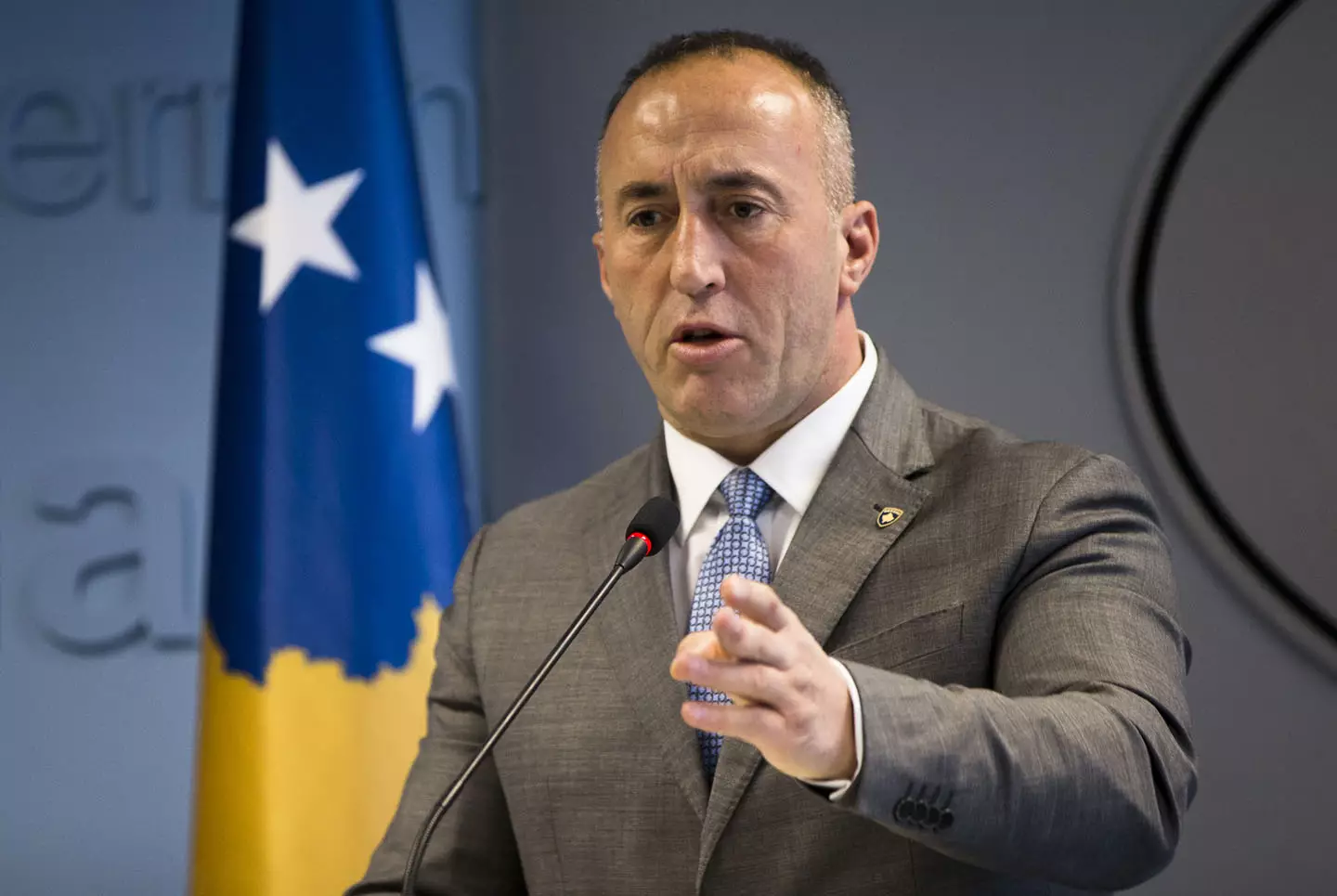
In January 2017, Ramush Haradinaj he was first arrested in France on an Interpol warrant for Serbia on charges of war crimes, and then he was released from custody to await the final decision on extradition there.
Photo: AP Photo/Visar KryeziuRamush Haradinaj
However, at the beginning of April (the decision came three weeks later) his brother Daut Haradinaj, then a representative of the Alliance for the Future of Kosovo, issued an open threat. While a guest on the show "Infobox" on TV Dukađina, he said that the move of the international community, if it decides to extradite his brother, will result in ethnic cleansing.
"They can throw us into a war, nothing else. I don't know about others, but I know about myself - if they make a mistake and do that, then be ready for more serious issues. If you want an ethnically pure Kosovo without Serbs, then let's joke," were the words of the Kosovo MP.
We killed you a little.
In October of the following year, 2018, a draft amendment to the Law on Official Holidays was presented to the competent parliamentary committee in Pristina, on the occasion of which Srpska lista requested that February 15, the day when the First Serbian Uprising and Serbian Statehood Day, and June 28, Vidovdan, be included in the official holidays.
And while for most of the Albanian MPs that proposal represented, as they said, a "provocation" and an "insult", Milaim Zeka, a journalist by profession, and at that moment a member of the Social Democratic Initiative, went a step further: "You (Srpska lista) say that your proposal is not provocative, I say that it is very provocative. It is too provocative and too offensive for the Albanians living in Kosovo when your compatriots come from Belgrade with pictures of Milosevic and Mladic, who carried out massacres, killed people - the Albanians killed too, it was a war. You killed 14 thousand of us, we killed 1400 of you, we couldn't do more, but we would make sudjuk out of you."
Anniversaries - a time to hate
The anniversaries of crimes and sufferings, victories and defeats, are days in the entire region when hate speech flourishes, when as a rule one's own group is presented as infallible, morally superior and absolute victim, while those "others" are assigned the role of criminals only.
An exemplary example of such a narrative was also seen on the twentieth anniversary of the March violence (March 16-18, 2004). Thus, March 16, 2024, was marked by the leaders of Self-Determination as the day(s) of the Albanian tragedy and peaceful protests, for which the Serb criminals and the international community that did not protect the Albanians are to blame. The ruling party stuck to the claim that three Albanian children drowned while fleeing from the Serbs, while their official statement explicitly characterizes that tragic event as murder.
Photo: FoNet/Office of the Ministry of Foreign AffairsNikola Janković's house in the village of Busince in Kosovska Kamenica
On the other hand, after investigating this event, the international prosecutor concluded that the evidence does not support the existence of a well-founded suspicion that a criminal offense has been committed.
Furthermore, data from Human Rights Watch and the Fund for Humanitarian Law showed that in the wave of violence, around 286 Serb homes were destroyed, burned or damaged, and more than 35 churches, monasteries and cemeteries, while over 4.000 Serbs were expelled from Kosovo.
Nineteen people lost their lives - eight Serbs and 11 Albanians, who died in a direct confrontation with the American and French KFOR troops while they were trying to stop the riots.
In its report, HRV also unequivocally concludes that the media reports at the time, which blamed Serbs for the drowning of the children, were incorrect. A later OSCE report stated that the Albanian media then reported emotionally, unsubstantiated and one-sided, inflaming already existing fears and prejudices.
And this year, on March 17, Faton Peci, the mayor of South Mitrovica, in the same spirit, visiting the graves of Albanian boys, declared: "With great pain we remember their barbaric drowning by Serbian criminal gangs, which touched the hearts of all Albanians."
Media poisons
A German saying goes that the media can be knights of peace or arsonists. Serious research, but also a cursory look at the covers, portals and diaries, unequivocally confirm that the role of arsonist has become dominant in the entire region.
How it looks in practice is shown, for example, by the analysis of Biljana Simeunović Batić from 2021, which dealt with media treatment of minority and vulnerable groups. Analyzing the content of three daily newspapers in Serbia, she notes that texts with stereotypical depictions of ethnic minorities occupy a high second place in terms of frequency (10,9 percent). Readers' comments go far beyond stereotypes, exposing deep prejudices and open hostility – primarily towards Albanians and Croats.
In the report covering the period from 2022 to 2023, author Ana Anđušić states that a total of 523 cases of hate speech were recorded at the regional level. The largest number related to ethnicity (28.1 percent); while, of all the countries in the region, ethnic hatred in relation to hate speech directed at other groups was the most dominant in Kosovo (35 percent), recorded where, as Anđušić writes, "targets were marginalized communities living there such as Serbian, Roma, Ashkali and Egyptian."
Photo: AP Photo/Darko VojinovicKosovska Mitrovica
It further states that the main sowers of hate speech in the region are the media and users of social networks (28,4 percent each), followed by politicians, state officials and political parties (20,4 percent).
Recent data say: from the beginning of 2024 until July 2025, 102 cases of open hate speech were registered in Serbia; in third place are those based on ethnicity and race. Of that number, almost every fifth case was directed against Albanians.
What does the court know?
Finally, when it comes to Albanians, it doesn't matter whether the topic is a sports match, a cultural event, the acquisition of weapons or political turmoil, the Belgrade tabloids "Informer" and "Večernji Novosti", and not only them, use the word "Šiptar" almost every day. They do this despite the fact that through several court rulings in Serbia, the use of this term has been marked as hate speech.
And the practice of ignoring the court starts from the very top, as evidenced by the example of Aleksandar Vulin. And from the position of the Minister of Defense, he called the Albanians the Shiptars, so, for example, in May 2019, he said that he was in favor of "demarcation with the Shiptars as soon as possible and as safely as possible."
Just six months earlier, acting on the lawsuit filed by Anita Mitić (a former activist of the Youth Initiative for Human Rights) against the tabloid "Informer", the Court of Appeal confirmed the first-instance verdict defining the use of the word "Šiptar" as hate speech. The explanation of the verdict states: "The term 'Shiptar' is considered a politically incorrect and offensive content in the Serbian language for members of the Albanian nationality living in Kosovo and Metohija. Also, calling a Serb 'Shiptar', according to the court's opinion, is the same as labeling someone who fights against the national interest."
The word "Šiptar" has become a sign of extreme, negative otherness in contemporary Serbian public discourse. It is unmistakably an insult, both when it is directed directly at Albanians and when it is used in internal political and social calculations. This is the case in the stands and on the streets, at protests - regardless of whether they are organized by the government or its opponents - and on television shows.
Irrationality on all sides
As a reminder, also in May 2019, the then Prime Minister Ana Brnabić called Pristina's political leaders - people from the forest: "What scares me the most is that you are dealing with irrational people, with the worst kind of populists, with people who have literally come out of the forest." (It is interesting, when it comes to the use of the word as in the mirror, in the first characterization, that domestic and foreign political analysts state that during Vučić's reign, populism became the central characteristic of the political style of government).
Later, she said that she simply does not know how to call "those people, so that everyone understands who we are dealing with", and that she would like professors to lead the negotiations from the other side, adding that she has Albanian friends.
In those days, after the action of the special units of the Kosovo Police in the north of Kosovo, on May 28, a significant photo appeared on the Instagram profile of the "Kosovo Defense Forces" (which presents itself as an official page dedicated to the military and police forces). It shows two policemen under Kosovo flags, while a man lies on the ground next to a Serbian flag. Next to the photo, a message was written in the Albanian language: "On the ground, skis, because there is no game with us here."
Just as "Šiptar" is an insult in Serbian public space, so the word "škija" is a derogatory term for Serbs.
We are victims.
And Minister Paunović, from the beginning of this text, calls Albanians Šiptarim. By the way, before she sat down in the ministerial chair and made a statement about ethnic cleansing, the general public heard about her in 2021. It was then discovered that, as a member of parliament, she charged around 12.000 euros for travel expenses on the route Peć-Belgrade, because Peć was listed as her place of residence in her papers.
As "Vreme" writes, before assuming the ministerial position, she received two salaries - a parliamentary salary and the one for the position of director of the Peć Pharmacy Institution, despite the allegations that this health institution does not actually exist as of 2021
And she, like Ana Brnabić, says that she had an Albanian friend, which directly reminds of the well-known platitude that racists use to defend their views with the excuse: "I'm not a racist, I have black friends."
Photo: Jelena ZorićGraffiti of the Serbian Brigade in North Kosovska Mitrovica
However, Belgrade's reaction to her statement is also illustrative. Her party leader Ivica Dacic assessed the attacks on Paunović as shameful and hypocritical, emphasizing that those who accuse her of allegedly calling for ethnic cleansing are simultaneously silent about the ethnic cleansing of Serbs from Kosovo and Metohija. Is SPS starting its pre-election campaign with these performances?
The President of Serbia called the statement "careless and insufficiently responsible" - that is, not even irresponsible - adding that it does not reflect the will and policy of the President and Government of Serbia: "We must be responsible, our policy is dialogue, compromise, talks, and never ethnic cleansing." He added that "Snežana herself is a victim of ethnic cleansing."
Finally, the minister later stated that her words were taken out of context, that she was emotional, that Serbia has been the victim of ethnic cleansing many times, and that's why they associate ethnic cleansing with the people (?!), and that now she too is a victim of persecution. Namely, her explanation is that she actually meant the deportation of Albanians, "just" that.
In other words, when hate speech is heard in public, which could hardly be more explicit, what happens? First, there is the rapid making of a victim of oneself. Then follows the judgment that only one's own group is the real victim. And the absolute victim has the right to be emotional and insufficiently responsible. Finally, the final relativization and normalization of that speech takes place.
When lamenting persecution or something worse is commented on with the phrase that "ethnic cleansing is not our policy", it sounds as if the discussion is about failed economic measures or bad tax policy, not about human lives.
The text was originally published on the portal KoSSev
Only in August: Save three thousand dinars on the annual subscription to the digital edition of "Vremena"! _Take advantage of the discount hereand support independent journalism.
What is happening in the country and the world, what is in the newspapers and how to pass the time?
Every Wednesday at noon In between arrives by email. It's a pretty solid newsletter, so sign up!
The third primary public prosecutor's office in Belgrade announced that in the pre-investigation procedure it requested data from Italy about the real estate of Aleksandar Šapić in Trieste, reports RTS
A group of dismissed employees of the provincial administration filed a criminal complaint against the President of the Provincial Government, Maja Gojković. The application refers to cancellations and the costs of business trips, reports N1
The owner of the Novi Sad company GAT, Dejan Slijepčević, surrendered after being on the run due to suspicion of abuses in connection with public procurement in Leskovac worth more than 80 million dinars.
The Council of the Faculty of Sport and Physical Education dismissed Patrick Dred from the position of Dean of the Faculty of Sports and Physical Education, reports portal 021.rs.
The president of the Democratic Party, Srđan Milivojević, claims that a "situation center for hybrid threats" was formed in the Security and Information Agency two years ago. Students, journalists, activists and opposition politicians were monitored from that center, he says. The center reportedly stopped working on November 19
Why did an unusual group of people led by Aleksandar Vučić, at the constitutive session of the Assembly of Serbia, go berserk because of yogurt spilled on the head of a member of parliament, a "reputable artist" and, of course, a woman?
How Aleksandar Vučić convinced the public that progressives are not worthy of the position of vice-president of the National Assembly and how its president - Aleksandar Čupić - explained to him theoretically and practically what parliamentarism is in front of everyone
For years, European conservatives patronized the SNS and turned a blind eye to violence and corruption. Now, after the electoral defeat of the progressives, they are being let down the drain. Too late, but still…
The archive of the weekly Vreme includes all our digital editions, since the very beginning of our work. All issues can be downloaded in PDF format, by purchasing the digital edition, or you can read all available texts from the selected issue.