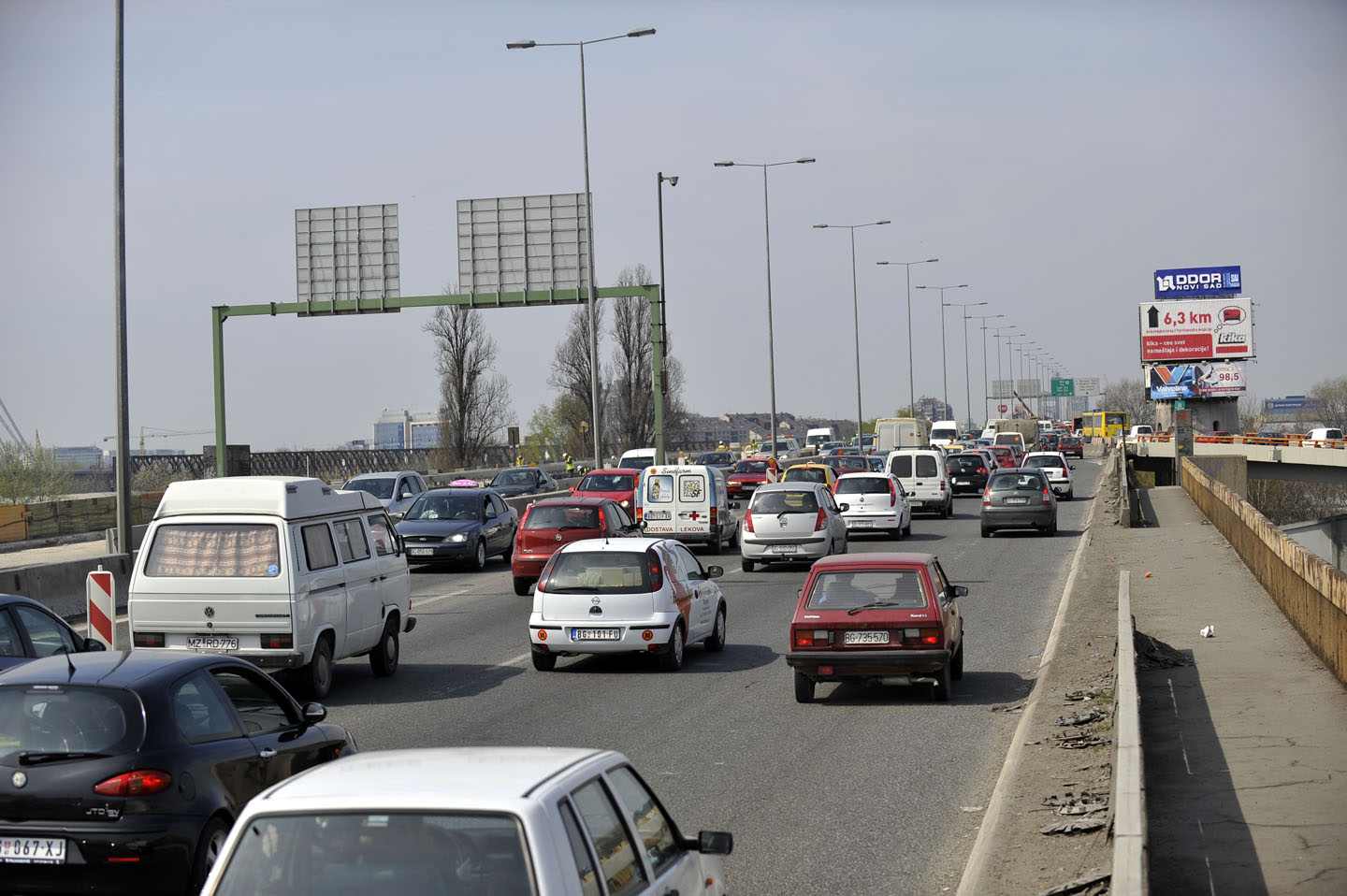
During the past week, the European Commission put forward a proposal that older, dilapidated cars should no longer be sold or exported outside the EU, for safety and environmental reasons.
The news made drivers wonder how much this proposal could affect the prices and availability of used vehicles in our country. As explained by the public relations manager of the Used Cars website, Petar Veličković, the problem is that we do not know what the EU will specifically refer to under the term "worn-out cars". Nor what are the criteria for classifying a vehicle as being at the "end of its life", as announced by EU officials.
"Until we get that information, there will be a huge space for different interpretations, which can upset our drivers, because after all, close to 150.000 used cars are imported into our country every year. Of course, there would be a big upheaval on the market if the export of used cars from the EU to so-called third countries that have traveled more than 200.000 kilometers or that are older than 15 years, for example, were banned.
However, the question is what are the chances of such a thing happening, because such cars are still mostly in roadworthy condition. Therefore, at this moment it is really not realistic to expect major changes on the domestic market when it comes to prices, caused by announcements from the European Union", says Veličković.
It's time for change
According to the data of the website Used cars, customers are most often looking for "used cars" that were produced from 2007 to 2010.
"We will not be able to import most of these vehicles, not because of the potential ban on exports from the EU, but also because of the announcement of new regulations that will be applied in our country," says Veličković.
Our interlocutor recalls that the Ministry of Construction, Transport and Infrastructure announced that the import of used cars with Euro 2024 and Euro 3 standards will be prohibited from the beginning of 4.
"This means in practice that if these provisions really start to be applied from January 1, we will not be able to import vehicles that were produced after 2009." And that's not all. Already from the beginning of 2025, it is planned to introduce the Euro 6 standard in Serbia, which means that we will have to import more 'younger used cars' that were produced after 2015. Therefore, old, used 'used cars' from Europe will not be available to us primarily because of our regulations", explains Veličković.
He also believes that one should be realistic and say that it is time to make these changes. According to Veličković, Serbia is today the only country in the region that allows the import of used cars with the Euro 3 standard, which are 20 years old or more, by its regulations.
"In addition, our country is unfortunately at the bottom of the European list in terms of the average age of the vehicle fleet, which is 17,3 years. There is no doubt that our average driver will not care that he will not be able to buy old imported 'used cars', but on the other hand, the trade in such vehicles, which are already registered in Serbia, and there are tens of thousands of such cars, will not be prohibited," says Veličković.
Six million vehicles reach the end of their life every year in Europe
The Commission proposes a regulation that would replace the existing directives on end-of-life vehicles and on the possibility of reuse and recycling. The new regulations, according to the Commission, would lead to an annual reduction of CO2 emissions by 12,3 million tons by 2035, better valorization of 5,4 million tons of materials and increased reuse of key raw materials.
"Implementation of the regulation will result in long-term energy savings in the production phase, reduction of dependence on imported raw materials and promotion of sustainable and circular business models," said the website of the European Commission.
The regulation would bring economic, environmental and social benefits to the EU, but it would also contribute to greater road safety in third countries by preventing the export of old cars. Every year more than six million vehicles reach the end of their life in Europe.
The automotive industry is becoming the largest consumer of key raw materials for the production of e-motor permanent magnets in Europe. Therefore, it is crucial for the transition to zero-emission vehicles to strengthen the EU's resilience to disruptions in the supply chain and reduce its dependence on the import of these raw materials.
According to the proposed new regulation, car manufacturers will have to provide clear and detailed instructions for dismantling vehicles and how to replace and remove parts and components during use and at the end of the vehicle's life. At least 25 percent of the plastic in new cars will have to come from recycling, and of that amount, at least 25 percent must be recycled from end-of-life vehicles.
The scope of these measures will be gradually extended to new categories of vehicles such as motorcycles, trucks and buses, thus ensuring more comprehensive coverage.
The Commission's proposal is currently under consideration by the Council of the EU and the European Parliament.
Sanja Zrnić
Read daily news, analysis, commentary and interviews at www.vreme.com