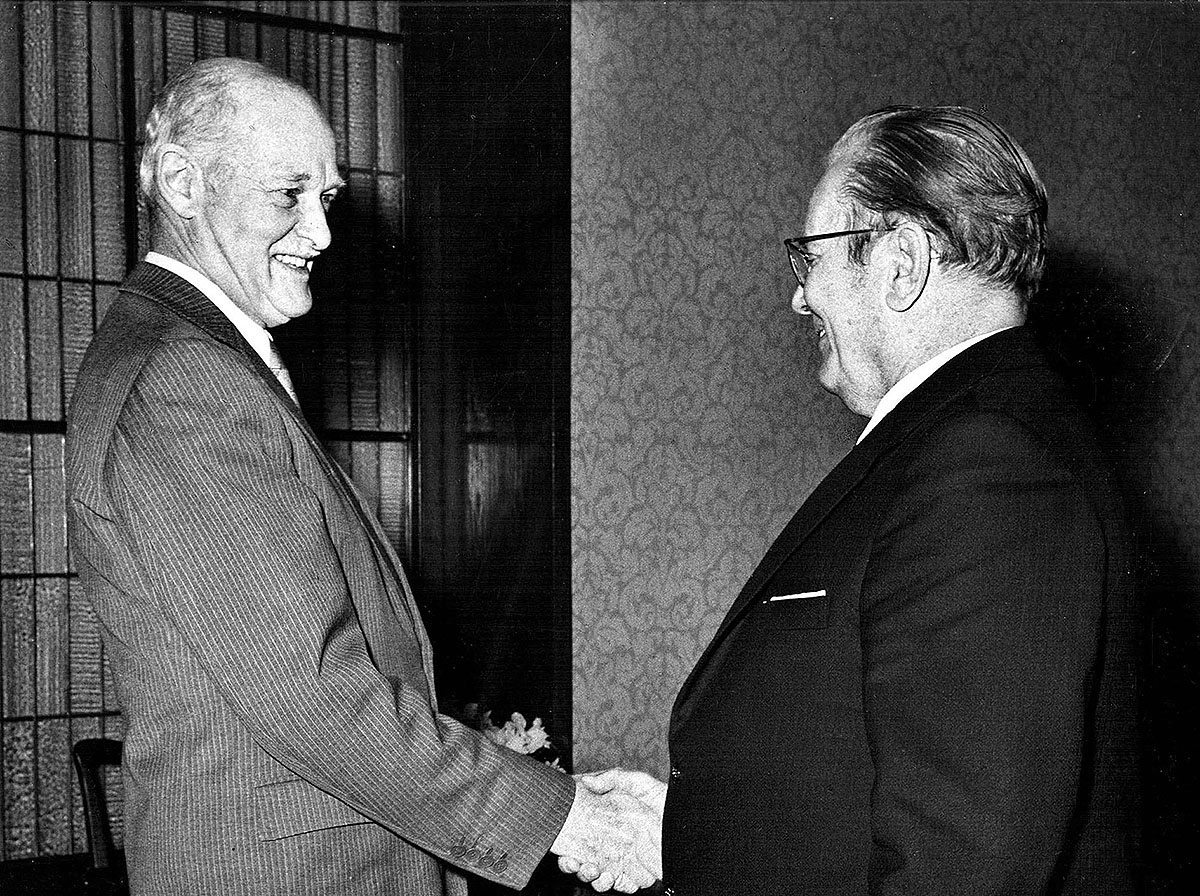
George Kenan spent two years in Belgrade, from 1961 to 1963, but even then he was a leading American foreign policy thinker. They attribute to him that, as the creator of the "restraint strategy" (containment strategy), was also the "inventor" of the Cold War, which he never accepted, nor did he approve of its militarized forms. But he is certainly the man who, of all modern diplomats, was the closest to creating the doctrine, especially since he clearly indicated in 1947 that the USSR would disintegrate due to its own internal contradictions. How great ironies can be in life is evidenced by the fact that after only four months in 1952, Stalin expelled Kenan as ambassador from Moscow, and he became the protector of Stalin's daughter Svetlana when she fled to America in 1967.
Because of all this, not a day passes without one of the American experts or politicians wishing for a new "grand strategy" that would provide answers to questions about today's American position in the world, and wondering what Kenan, as the greatest authority on Russian and Eastern European issues, recommended to work in the Russian-Ukrainian conflict, and would you repeat how we are in a new Cold War? All this is just another confirmation of Kenan's diplomatic greatness, but also a testimony to the absence of desire and hearing to follow his advice.
Kenan's entire action goes against the factors that led to the outbreak of this global crisis, which, by all accounts, will radically change the world we have known so far. Kennan is the creator of the "strategy of containment" of the Soviet Union, but he has always been an opponent of the militarization of that strategy, which was carried out by his successor in the State Department, Paul Nice.
"NATO expansion would be the most fatal mistake of US policy since the Cold War," Kennan wrote in 1997. That would "inflame nationalist, anti-Western tendencies in Russian opinion, return the Cold War atmosphere to East-West relations, and make it much more difficult, if not impossible, to achieve further reductions in nuclear arms," Kennan wrote. That's exactly what happened.