
Election 2026.
REC determined the final number of voters in the elections
The Republic Election Commission (REC) made a decision today on determining the final number of voters in Serbia

Citizens of Serbia protest against electoral irregularities day after day. Among them are young people who are announcing blockades in Belgrade for 24 hours today at noon. In addition to Belgrade, protests began to be organized in other cities as well
Citizens of Serbia are protesting day in and day out due to assembly irregularities and the fact that competent state institutions are pretending to be deaf and dumb. Since Monday (December 18), they have been on the streets every night. In addition to the protests organized by the opposition list "Serbia against violence", students also started to "self-organize" and demonstrate. Apart from Belgrade, protests are also held in other cities.
Last night, a protest was held in Zrenjanin under the slogan "Come out and say stop theft". As the reason for the gathering, the organizers cited "election theft" and "bribing voters" to vote for the Serbian Progressive Party. They supported the protesting students in Beorgad, demanded the release from prison of all those detained for participating in civil protests and called on their fellow citizens to join the large protest at the Teraziska fountain in Belgrade on Saturday, which ProGlas is calling for.
The eleventh protest of the opposition was held last night, and today at 12 o'clock the students announced the beginning of 24-hour blockades, which will begin with a gathering in front of the Ministry of State Administration and Local Self-Government at the intersection between Birčaninova and Knez Miloš.
After the 24-hour blockade, young people will join the big protest that is being organized on Saturday at 12 noon near the Terazije fountain.
Associate professor at the Faculty of Political Sciences, Dušan Spasojević, told "Vreme" that it seems that this is now the phase in which the opposition, civil society, ProGlas and students are examining the readiness of citizens to take to the streets and try again to exert extra-institutional pressure.
He also states that one part of the problem is certainly the holidays and the festive atmosphere, and another is that the citizens spent the entire spring and summer on the streets, and that this drained the batteries of social activism a little.
"The next few days are very important for how the citizens will react to this rally on Saturday and to what we see slowly happening all over Serbia", Spasojević points out and adds that it is still too early to assess the capacity and readiness of the citizens. to react to the situation.
These days, we can often hear comparisons with 1996 and 1997, when there were daily protests over the theft of local elections.
Dušan Spasojević says that there are similarities and differences, but that in both cases it is about election irregularities.
However, in 1996, electoral irregularities were obvious and easily proven, while now it is a matter of "well-founded suspicion" that has yet to be formally proven."
"The second thing is that in 1996 the opposition explicitly defended the election victory, while now it is not clear to us what the election results would be in some fairer and more normal conditions, that is, what is the extent of the theft," explains Spasojević.
The government's attitude towards protests is also different, to what extent force is used and whether repression is used only when they have some kind of excuse or reason, or they will use it every day, which in 1996 only encouraged protests.
"Now the tactic is to let the protests fade away and die out by themselves, as in previous cases," concluded Spasojević.
The young people gathered and drafted a concrete demand, and due to its non-fulfillment, they organized blockades on Monday and Wednesday, and announced a new 24-hour blockade on Friday at noon. Until the May protests, as Spasojević states, it was constantly said that the streets were more or less middle generation, highly educated, urban. What is new now is that a group of students and younger activists has appeared.
"I think it takes time for them to get some kind of legitimacy to organize themselves and start influencing their generation to a greater extent", says our interlocutor and adds that we are already seeing it in these protests, but that nothing is built overnight. .
"I don't think that any big student movement can grow out of this now," he concludes, "but what we are seeing now could be the seed of something similar."
The Republic Election Commission (REC) made a decision today on determining the final number of voters in Serbia

A citizen of Belgrade whose polling station in Banja Luka was changed in the voter list without his knowledge claims that the Ministry did not correct his data and that the deadlines have expired. The elections are on October 25 and he still doesn't know where he will vote.

The pardon procedure implies the appropriate role of the Minister of Justice, who should initiate the procedure or submit an opinion on the pardon, says prosecutor Radovan Lazić.
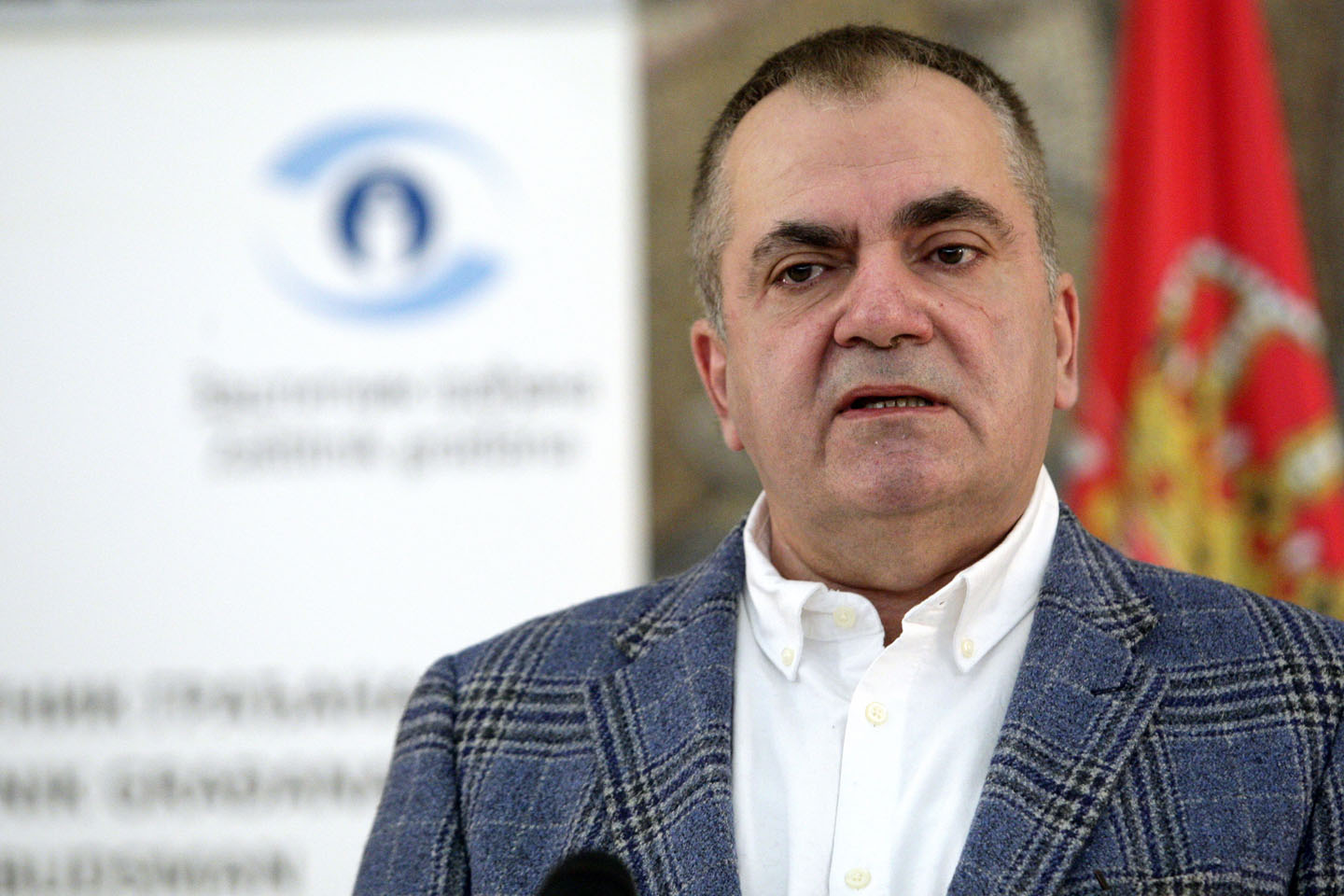
Phone numbers 064 876 85 05 and 011 2068 100 will be available 24/7 for reports and addresses to citizens, and the possibility of direct addresses at the premises of the Protector of Citizens is also provided.

NUNS demands an urgent investigation due to the threats sent to two Radar journalists who wrote about the Sky correspondence in which Aleksandar Vučić is mentioned. The association states that the threats also mention violence against children of journalists and warns of impunity

There is, literally, no difference between the one who claims it is day in the middle of the night, or the one who claims to be a giraffe, from the claims we read on billboards: that Vučić is working to unify Serbs and that Serbia is doing better and better day by day.

The pre-election arrests due to the alleged "overthrow of the state" testify to the regime's panic. The bad news for them is - they can't arrest the whole people who decided to defend themselves from progressive beatings and election theft

The ring that tightens around Ćaciland Student list is getting narrower. Because there are more and more spoiled people who see the false prophet for what he is: a street obscener who is fighting Serbia

The archive of the weekly Vreme includes all our digital editions, since the very beginning of our work. All issues can be downloaded in PDF format, by purchasing the digital edition, or you can read all available texts from the selected issue.
See all