On December 17, 2021, the Russian Ministry of Foreign Affairs published its draft agreement with the United States of America and NATO on mutual security guarantees. Therefore, Russia and NATO would undertake not to deploy medium and short-range missiles in areas from which the missiles can reach the territory of the opposing party.
The draft published by the Russian Ministry also states that NATO should undertake to exclude Ukraine and the Balkan countries from joining the alliance and to give up military activities in Ukraine, the countries of Eastern Europe, Transcaucasia and Central Asia.
In the proposal of the Ministry of Foreign Affairs of the Russian Federation, it is stated that "the relations between NATO and Russia are in a long-term crisis", that the decisions of the NATO summit in Brussels in 2018 were aimed at the "military-political containment" of Russia" and that NATO is grouping troops in near the Russian borders in the countries of Eastern Europe and the Baltic states, that he is transferring heavy military equipment, that he has significantly increased the number and intensity of exercises, and that Sweden, Finland and other partner countries are increasingly involved in the military activities of the alliance.
The document of the Russian MFA further emphasizes that a decision was made to establish new joint commands of coalition forces in Norfolk (USA) to ensure the security of transport corridors in the North Atlantic and Arctic regions.
It is noted that the duration of the stay in the Black Sea by the ships of the naval forces of the non-Black Sea countries of the alliance, primarily of the United States, and that the NATO air forces continue to patrol the Baltic airspace in an increased composition, and that the anti-missile defense complex is deployed in Romania, and that a similar complex is planned to be put into operation in Poland.
In the document of the Russian MFA, it is said that such NATO military preparations cannot remain without an adequate Russian response.
The "continuous inclusion of the Balkan countries in NATO" with the aim of "driving" them into the bloc at all costs and "ignoring legal norms and the opinion of a significant part of the population when closing the issue of the state name North Macedonia, and forcing the membership of Bosnia and Herzegovina in NATO" are emphasized. the creation of the 'Kosovo Army' while supporting the 'Kosovo Forces', all of which only worsens the existing contradictions and seriously destabilizes the situation in the region."
Russia suggests that its own security should not be strengthened at the expense of the security of the other party and refrain from "any use of force or threat of force". All states that have been members of the North Atlantic Treaty since May 27, 1997, would, according to that agreement, undertake not to deploy their armed forces and weapons on the territory of other European states. This would exclude the "deployment of land-based missiles of medium and short range in areas from which they are able to target targets on the territory of the members of the opposing parties".
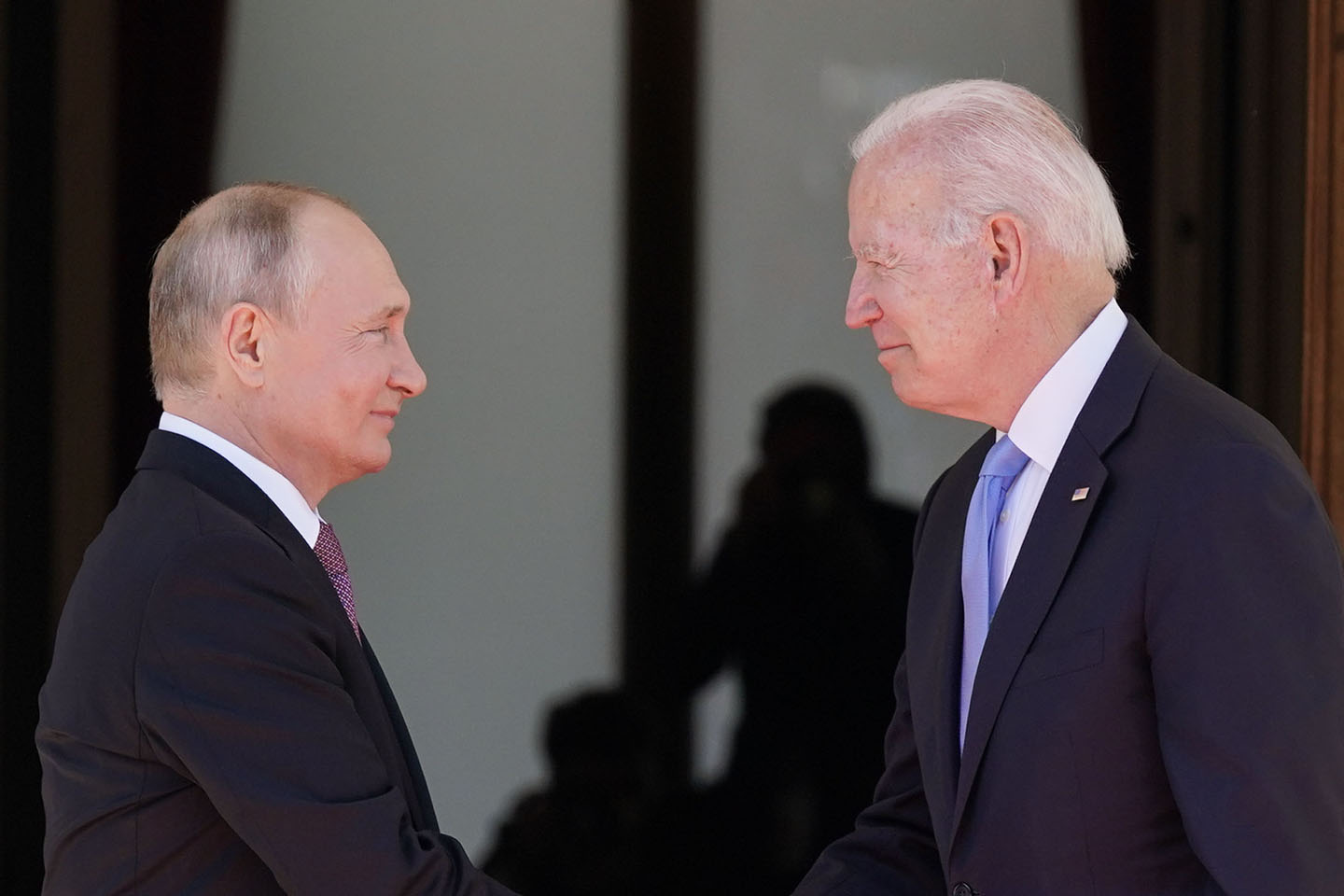
These are the most precisely defined public so-called "Putin's red lines" that were discussed during the last summit via video link between Vladimir Putin and US President Joseph Biden. After that summit, Biden declared that he does not recognize "Putin's lines", and NATO Secretary General Jens Stoltenberg said that NATO expansion is a matter for sovereign states.
It remains to be seen what kind of reactions the Russian proposal published as a pretext for dialogue between Russia and NATO, on which Putin and Biden have allegedly reached an agreement, will meet. Until now, this topic has been marked by Cold War rhetoric.
MM
Read daily news, analysis, commentary and interviews at www.vreme.com