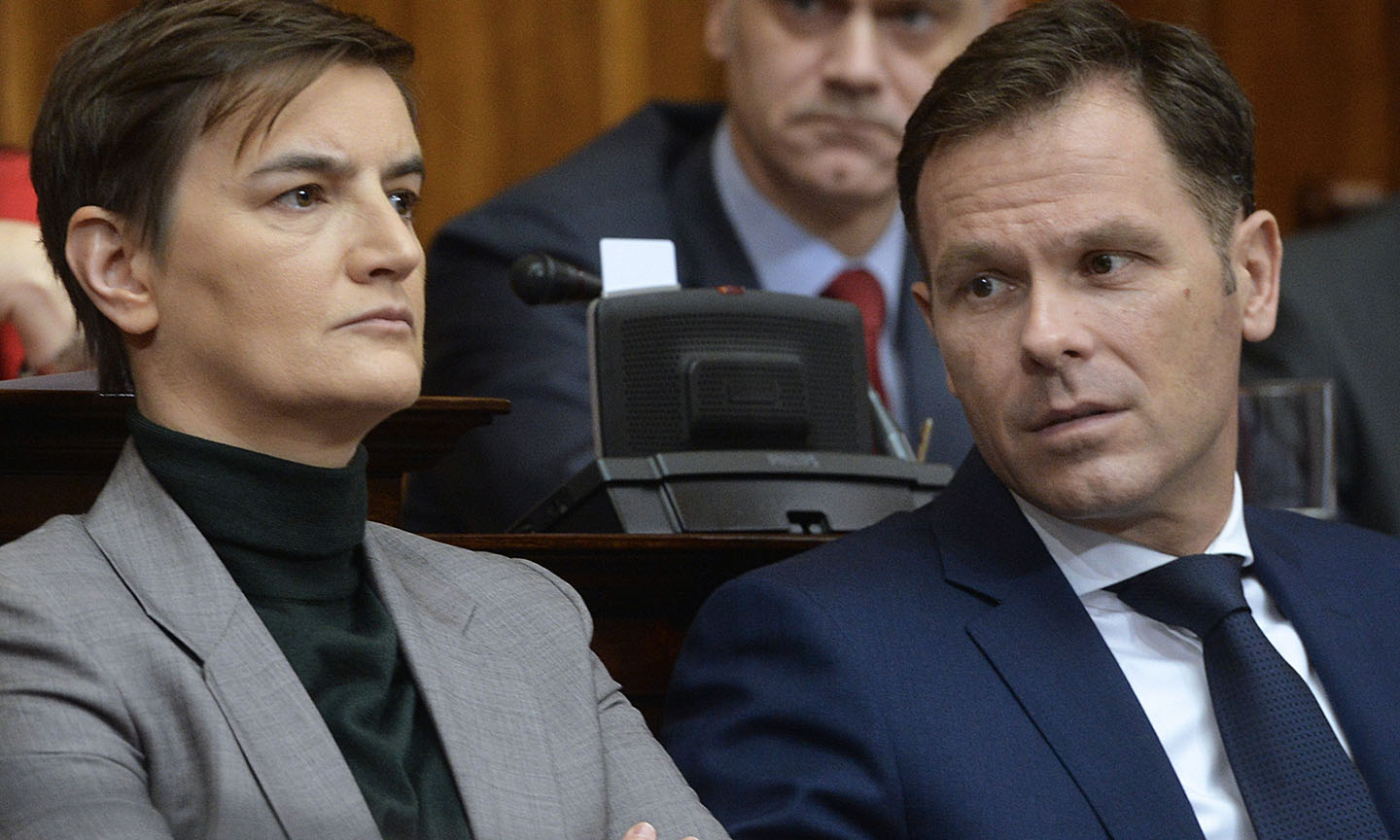
Judging by the statements of Prime Minister Ana Brnabić and Minister of Finance Sinisa Malog during the debate on the budget in the Parliament, the economic situation in the country is more than good. However, things are not looking good at all, as soon as Serbia was forced to conclude a binding "stand-by" arrangement with the International Monetary Fund (IMF) and agree to monitor the budget spending in order to be able to borrow 2,4 billion euros.
The biggest problem for the Government is how to ensure the financing of the budget for the next few years: in 2023 alone, principal and interest must be paid to creditors in the amount of 655 billion dinars (5,5 billion euros) without covering the budget deficit. When taking into account the need to finance a deficit of 264 billion dinars (2,2 billion euros), this means that in 2023, Serbia will have to borrow a total of 919 billion dinars (7,7 billion euros).
High interest on government bonds
Gone are the days when the state could issue ten-year euro bonds with an interest rate of 1,2 to 1,5 percent per year. A few weeks ago, Serbian bonds were quoted on the financial markets with a yield of 8 percent to 8,5 percent per year; upon the news that an agreement was reached with the IMF, interest rates fell to 7,2 percent per year, which is still 6 percent more than just a year ago.
Under those conditions, for borrowing 7,7 billion euros, the state would have to pay about 550 million euros per year in interest. It is an enormous cost: this year, the state will pay only one billion euros in interest for the entire debt of 32 billion euros. The sudden growth of interest costs would put a heavy burden on the budget - that's why the state was forced to borrow 2,4 billion euros from the IMF at a low interest rate, but the price is that the budget was put under its control.
Under the supervision of the IMF
The IMF, as far as is known, insists that the public debt (including restitution costs) does not exceed 60 percent of the national product (without these additional costs, it amounts to about 57 percent). This means that the state will have to "fasten" and reduce expenditures.
The government has thus abandoned the construction of a series of highways: Belgrade-Zrenjanin, Pančevo-Bubanj Potok (sector C of the bypass around Belgrade) and "Vožd Karađorđe", and other planned projects will be reduced. Only 60 million euros will be allocated for the famous "National Stadium" in the next two years, which is only enough for expropriation and preparatory works. The subway project will fare somewhat better, for which as much as 250 million euros will be allocated, and the republic will also finance the Sava bridge in Belgrade, even though it is a city road and should be financed exclusively by the city of Belgrade (which also applies to the metro).
Inflation eats up salary and pension increases
The state has significantly limited expenditures for salaries and pensions. Salaries in the public sector will increase by only 12,5 percent, which represents a real drop with inflation that reached 15 percent on an annual basis in October. Pensioners will fare a little better, who will receive a cumulative pension increase of 20,8 percent, which is little consolation since at the beginning of this year, pensions were increased by only 5,5 percent, so with inflation of 15 percent, pensioners became significantly poorer during the year.
The 20,8 percent increase in pensions was made possible by the government's failures, but by a sad fact: the number of pensioners decreased in the previous three years by almost 5 percent due to increased mortality as a result of covid, which opened up space for this much increase.
A drop in economic growth by 7 percent
The largest part of the deficit (1,2 billion euros out of a total of 2,2 billion) goes to the energy sector. The uncertainty in the energy sector is so great that despite the announced electricity and gas price increases of 8 percent and 11 percent in January, the state will subsidize EPS and Srbijagas with 1,2 billion euros from the budget. Only at the end of next year, those expenses will (perhaps) decrease if EPS puts into operation the new thermal power plant Kostolac B3 at the end of next year and if it opens new gas deposits in the Kolubara basin.
Although the Government during the debate on the budget in the assembly tries to present the economic conditions in the country as better than they are, there is no doubt that storm clouds have settled over the Serbian economy: the social product tends to fall; year-on-year growth in the third quarter was only 1 percent (lower than the National Bank's estimates), and compared to the second quarter, GDP fell by 0,7 percent.
In the third quarter of the previous year, the GDP growth rate was almost 8 percent, which means that the growth rate plummeted by 7 percent in just one year. Nothing better indicates that we are in for a tough year.
Read daily news, analysis, commentary and interviews at www.vreme.com