

Kosovo
Donald Trump nominated the US ambassador to Kosovo
Trump nominated Mihail Bogacek as the new US ambassador to Kosovo, so the US will again have an ambassador to Kosovo after December 2024

Back then, when it was born, many believed that the Internet would be a land of endless freedom of expression. Those were long ago, pioneer, infantile days. The matter changed, the devil took the joke, internet revenge ensued. The so-called toxic content has led to a breach of trust in state institutions and the media, threatened free elections, made it difficult for citizens to make decisions based on valid information and, paradoxically, hindered freedom of expression. According to one survey, 83 percent of European Union citizens believe that atomized media engineering threatens democracy
The July and August riots in the United Kingdom are unfortunately just one of the proofs that misinformation can cause serious riots and mass violence even in - at least that's how it seems from our point of view - an orderly state with strong democratic institutions and control mechanisms, a long tradition of media freedom and ethics, even a high level of the so-called media literacy, i.e. critical perception of info-content. The crime that motivated him is truly terrible: in Southport, England, three girls were killed at a dance school, and ten other people (eight of whom were children) were seriously injured. After it was announced on social networks and in the "alternative" media that the killer was a migrant and a Muslim, violent xenophobic protests followed, initially in this small town, and then spread throughout the country. We watched gruesome scenes of violence on television and social networks.
Although the perpetrator of the initial crime is a minor, the London court decided on an unusual move, to say the least. He revealed his full identity. The goal was to give a prompt response to media speculation and misinformation, and prevent further unrest. He was neither a migrant nor a Muslim. And he is a British citizen. His parents are originally from Rwanda and are also British citizens. According to the competent authorities, the riots were organized by supporters of the English Defense League, known for their anti-immigrant and Islamophobic views, and their targets were, above all, refugee accommodation facilities and mosques.
The United Kingdom is no longer part of the European Union, we all know that. However, it should be remembered that the famous Brexit, that is, the process of the exit of the UK from the EU, is to a fine extent based on misinformation, half-information and xenophobic spin. Media manipulations, according to experts, were the tip of the scales that won the close and uncertain game. Instead of - as hoped - the result of the referendum being a consequence of serious and well-known British debates, the campaign for it contained many irrational, propaganda elements that split society along various lines. Evil spirits have been let out of the bottle, for the sake of political goals primarily of "nationally conscious", nationalist and ultra-right parties and organizations. And they certainly had a part in the last riots. Some Britons will say: it wasn't Brexit itself that was the problem, but the body of madness that followed it.
THERE ARE NO SAFE STATES ANYMORE
We cite the United Kingdom as the cradle of media freedom and ethics only as an example. It is common knowledge that there is almost no country in the world that is safe and immune to possible riots behind ultra-right and xenophobic organizations and groups, as well as fake news. We have seen such things in Europe since the beginning of the migrant crisis in 2010, which, with certain ups and downs, continues until today. The crisis led to a significant growth of the right in Europe, and not only in Europe. Some things that we could only encounter in nightmares are now an established reality.
There is no doubt that the massive and uncontrolled arrival of numerous migrants represents a great challenge even for the most developed countries, but it is also a fact that refugees are ideal for creating moral panics, conspiracy theories, and the production of fears of the "other" on which the right always successfully rides. The matter has been known for centuries: "wild men" are coming who will take away our national identity, jobs and women. It is quite clear that it is not migrants but interest groups and "alternative" media, including social networks, that have led to serious destabilization within democratic states, and even threatened the institutional order in some of them.
As we said, migrants are an ideal group that can be used for media engineering and to collect political points, and also have some direct economic benefits (some ultra-right media make a good profit from so-called toxic content). But we generally live in a world of disinformation, half-information, conspiracy theories and spin, phenomena that rock even the most resilient societies.
Let's remember, for example, that during the pandemic we witnessed an infodemic, a flood of the most incredible madness and misinformation that endangered people's health, but also added fuel to the fire of mistrust in institutions and governments. That mistrust also extended to those, let's call them traditional, media that report according to professional standards. This is a side effect of media "deviations": citizens stop trusting the "serious" media because they think that they are hiding something from them, lying in cooperation with governments or, say, the "pharmaceutical mafia", or about migrants. For example, in Germany, the right-wing would invest their entire savings so that "serious" media do not report or selectively inform about "numerous forms of migrant violence".
A logical question arises as to who is behind the flood of false or distorted information. The answer is certainly complex. We have already said, there are ultra-right parties and organizations, various Trumpoid political speculators for whom they are a tool in the political struggle. Americans and Europeans are undoubtedly right, and there is a lot of evidence for that, that some countries, such as Russia and China, are behind it, and are waging special wars against liberal democracies. It cannot be said that the West does not reciprocate, at least a little. But there are also those "inside" who make direct or indirect profit through media engineering. For example, during the infodemic, some used the opportunity to sell alternative medicines. Some individuals have made a big influence on conspiracy theories and become popular. It is politically incorrect to say so, but in the world of social networks there are also a large number of mentally unstable people who enjoy spreading conspiracy theories.
There is a paradox that makes the job of the "conspirators" easier. Many people take misinformation for granted even if they know or can know that it has no connection to reality. "How false information when they say everything that I think," are the words that a father says to his daughter in one caricature. Some philosophers will even say that humanity was not ready and ripe for the freedoms that the Internet brought with it.
HOW EUROPE REACTS
And back then, when it was born, many believed that the Internet would be a place of endless freedom of expression. That it will not be necessary to regulate it in any way. Those were long ago, pioneer, infantile days. The matter changed, the devil took the joke, internet revenge ensued. The so-called toxic content has led to a breach of trust in state institutions and the media, threatened free elections, made it difficult for citizens to make decisions based on valid information and, paradoxically, hindered freedom of expression: according to one survey, 83 percent of EU citizens believe that atomized media engineering threatens democracy.
Because of all that has been said, in recent years the EU has adopted various laws, directives and acts that try to create a balance in the media sphere between freedom of expression and protection against abuse on the Internet. It is not an easy task in a complex community in which not only the interests of member states but also various lobby groups are intertwined. Recently, the European Act on Media Freedom came into force, and previously we had other acts that also led to a thorny road. This and other acts do not only treat disinformation, but also other phenomena that are directly or indirectly related to disinformation.
For example, it is clear that many media, even the "mainstream" ones, are just tools in the hands of the political and economic elites. Therefore, media transparency should be increased so that citizens can be aware of where the information comes from. Proprietary media concentration should be prevented and media pluralism should be ensured. There is of course also the safety of journalists, which should be strengthened; there are also mechanisms against SLAPP lawsuits, which threaten the survival of the media; there are also various other internet abuses that threaten the most vulnerable... And there is ordinary political instrumentalization that is also present in some EU countries. The most indicative case is, of course, our friendly Hungary, where, according to relevant research, Vučić's henchman Orban controls 80 percent of the media. That's why Orbán reacted strongly to the European Act on Media Freedom: "Another proposal from Brussels that is against freedom: the establishment of complete control over the media. We in Central Europe have seen such things in the past. It was called Cominform and Reichspreskamer (Press Chamber of the Third Reich). Never again!”
Of course, the big question is to what extent European media regulation will achieve success and stop media abuses that are dangerous for, as they say, free societies. It seems that it only partially cures the causes of serious political and social aporias, and more the consequences. Leftists say that citizens have been angry for a long time, because of huge social differences, because even before the flood of misinformation, they believed that the authorities were not working in their interests, but in the interests of multinational companies, ignoring workers' and citizens' rights. In addition, it is believed that "political commissars" have collapsed certain institutions.
WHERE ARE WE?
This text was created as part of a project implemented by the Prague-Brussels organization "Europeum" and supported by the Ministry of Foreign Affairs of the Czech Republic. It included a study visit by a group of journalists from Serbia and Bosnia and Herzegovina to Brussels and Prague, where we talked with media experts, journalists and European officials about the mentioned problems and some other things.
I don't know how colleagues from Bosnia and Herzegovina, but we from Serbia were not overly afraid that misinformation would threaten our society, because we certainly have neither society, nor institutional order, nor media freedom.
Trump nominated Mihail Bogacek as the new US ambassador to Kosovo, so the US will again have an ambassador to Kosovo after December 2024
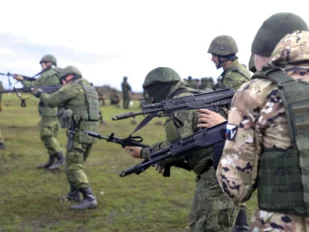
Largest ever leak of Russian casualty data shows more than 400.000 Russians killed in Ukraine war

At least 11 people died in two chain collisions on the Trakia highway in Bulgaria. 86 vehicles were involved, and around 50 people were injured

The global race in the development of artificial intelligence has boosted Chinese exports. Increasing dependence on foreign markets is straining Beijing's relations with its trading partners
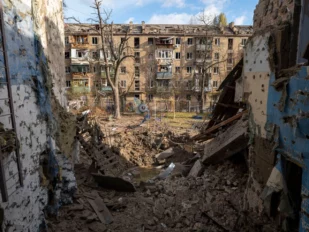
New negotiations between Ukraine, the USA and Russia are planned for November 10 and 11 in Abu Dhabi. This is the first meeting in this format after nine months

At the moment when the institutions of the Republic are destroyed, when Vučić's octopus is still alive, when people are disgusted by the injustice and the stench left behind by the Essenes regime, we have, as Machiavelli said, only civic virtue as the fuel with which we can return to the beginning

The four independent members of REM are an example of perseverance and civic responsibility. Rodoljub Šabić even, upon leaving the premises of REM, after the sentencing of the Informer, experienced that the Essenes insulted him, hit him with their hands and feet. But that too will soon be over

Vučić pardoned the batterers and Dijana Hrkalović. The election winners should abolish the sultan's power that allows one man to run afoul of the entire judicial system

Time explores: The construction of the St. Sava Temple
Did the money paid by the Government to SPC end up in Moscow through Alta Bank? subscribeThe archive of the weekly Vreme includes all our digital editions, since the very beginning of our work. All issues can be downloaded in PDF format, by purchasing the digital edition, or you can read all available texts from the selected issue.
See all



