Three famous people Ukrainian politicians are called to end the war through negotiations with Russia. Among them is Oleksii Goncharenko, a member of the Ukrainian parliament from the "European Solidarity" party, who wrote on social networks: "The reality looks like this right now: we are losing the war. We are losing a huge number of people. We lack money, not only for financing the war, but also for the very functioning of the country."
Goncharenko proposes to negotiate with Moscow on neutrality and giving up membership in NATO, the lifting of sanctions, the status of the Russian language and the church in Ukraine, as well as the status of Donbass: "Dying together with the whole country because of NATO membership is absurd in my opinion."
Danilo Hetmancev is a member of the ruling party "Servant of the People" and the president of the parliamentary finance committee. On the same day, he wrote on social networks that "starting negotiations and peace must be our highest priority", and that the final terms of peace would have to be confirmed in a referendum. Mayor of Kharkiv Igor Terekhov criticized the political logic according to which war is the only possible option. At the same time, he emphasized that peace must rest on Ukraine's ability to defend itself and concrete guarantees from its partners. writes DW.
What do the president and the opposition say?
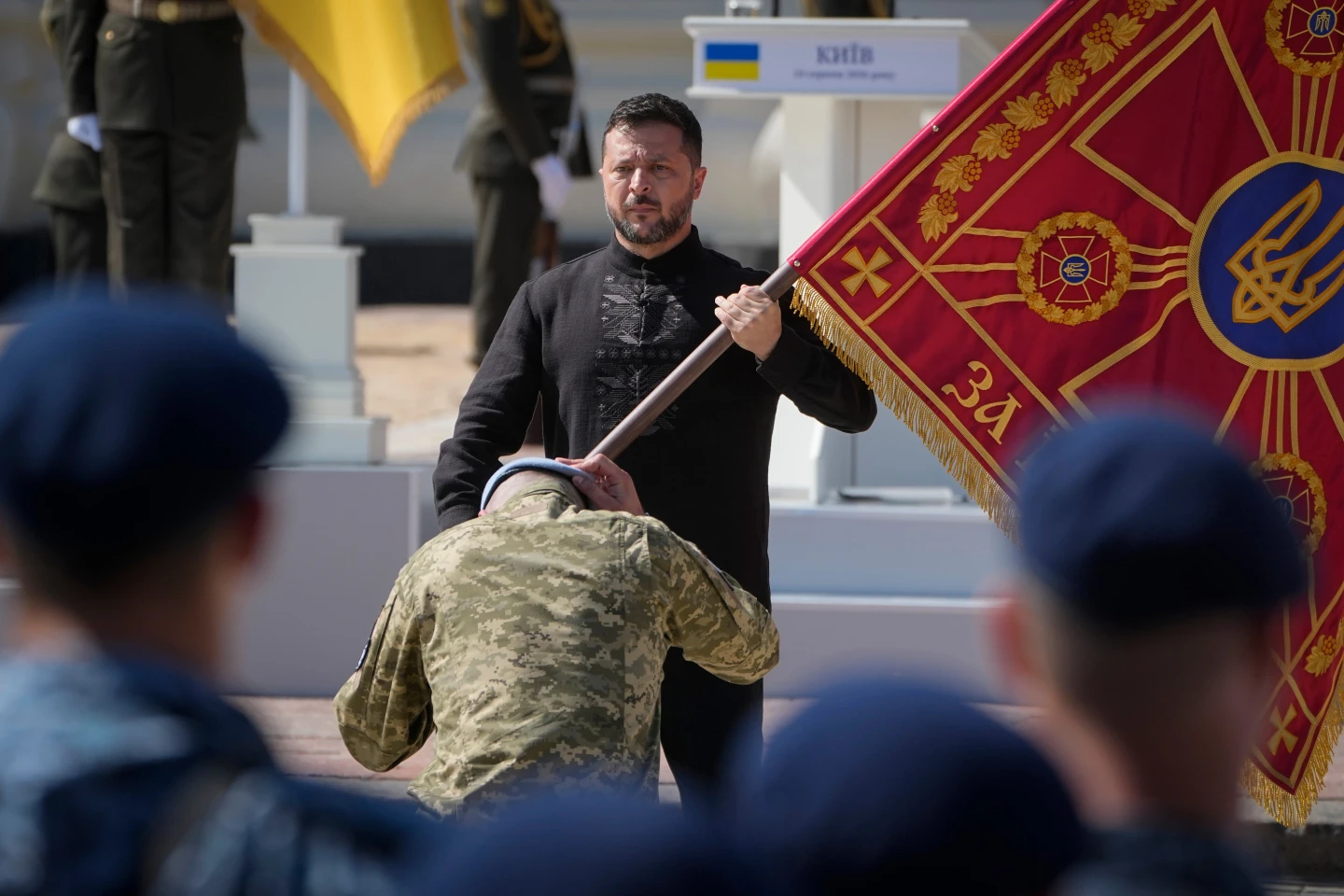
Soon came the words of warning from the President of the State, Volodymyr Zelensky. He reminded the deputies that they are responsible for the internal unity of the country and that they must not spread panic. "No matter how hard it is for us, we must not submit to Putin and Russia, because that will break Ukraine," said the Ukrainian president.
The opposition parliamentary faction "European Solidarity" immediately excluded Goncharenko from its ranks. His "views on ending the war and the future security architecture of Ukraine deviate from the view of 'European solidarity' and its ideological principles," the faction announced. Among the non-negotiable values are a strong army, Ukrainian as an official language, an independent Ukrainian Orthodox Church, as well as membership in the EU and NATO.
A "trial bubble" for election preparation?
The time in which the calls for peace were made is not accidental, believes Professor Oleksij Haran from the Kyiv-Mohyla Academy. "A hard winter is coming, people are exhausted and everyone is talking about negotiations - both Ukrainian representatives and US President Donald Trump," the political scientist explains in an interview with DW. Some politicians are already in a hurry to reap the political rewards in the upcoming elections. Haran does not rule out the possibility that these calls are "trial balloons" to test how society will react.
Political scientist Ihor Chalenko from the Ukrainian "Center for Analysis and Strategies" observes the statements of Ukrainian politicians primarily in the context of possible negotiations in Abu Dhabi. There, the trilateral technical meeting should discuss sectoral ceasefires and the activation of Trump's peace plan. Some of these politicians have good contacts with the US president's team, says Chalenko. He believes that it is in Trump's interest to achieve a quick result, even before the congressional elections on November 3. "All this is primarily aimed at organizing such a meeting in order to involve Russia in the negotiations," Chalenko believes. At the same time, the statements of Ukrainian politicians examine the extent to which the public is ready for compromises.
What do Ukrainians think about the negotiations?
According to a mid-September survey by the Kyiv International Institute of Sociology (KIIS), 75 percent of Ukrainians support negotiations with Russia to end the war, while 21 percent reject them. KIIS emphasizes that the question referred only to the possibility of negotiations and not to concessions. As many as 69 percent of respondents would support an immediate cease-fire along the existing front line, provided that Ukraine does not recognize the occupied territories as Russian, continues to strengthen its army and strives for rapprochement with the EU and NATO. 62 percent of them are ready to endure the war for as long as necessary, while in Kyiv that percentage is as high as 72 percent. As many as 79 percent believe in Ukraine's victory, although the share of those who fully believe in it has fallen from 60 to 47 percent since the end of July.
"The statements of certain politicians do not reflect the opinion of the majority of Ukrainians," says Anton Hrushecki from KIIS. However, part of the population is ready to accept capitulation. About a year ago, about 20 percent of respondents supported the Russian peace plan, which included the withdrawal of Ukrainian troops from the Donbass and demilitarization. "But that's a minority," emphasizes the sociologist. Most are pragmatic and ready for difficult compromises, but not for capitulation.
Is Russia really ready for negotiations?
Russian President Vladimir Putin recently dismissed proposals for a mutual cessation of attacks on energy facilities and civilian shipping as "nonsense." "Russia's unwillingness is a fundamental fact," political scientist Chalenko emphasizes. He believes that the division of the public into "war" and "peace" currents is artificially imposed. "There is no larger group advocating eternal war. Ukraine's position will be reduced to the line of contact and security guarantees, which is already a concession, and it cannot be greater than that."
And Professor Haran emphasizes that Ukraine's current position is a bitter compromise. "Now we are talking about freezing the conflict. That is already a huge concession," he says. The majority of Ukrainians are ready for that, but no majority could be found for the withdrawal of Ukrainian troops from Donbass or the recognition of the occupied territories as Russian. Such statements only cause harm, Haran believes. "The problem is not negotiations and compromises, but the fact that Putin wants to put us in a situation where we will give in during a difficult winter. What Goncharenko and others are saying now only encourages Putin," warns Haran.
Can the attrition scenario work?
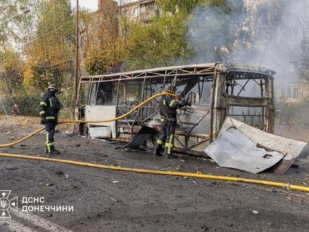
Moscow is trying to achieve its goals with massive attacks on the Ukrainian energy sector, data centers, warehouses and bridges in the capital Kyiv, as well as on the metallurgical industry, explains political scientist Chalenko. "In this way, he wants to strengthen that part of the population that demands an end to the war at any cost. As soon as the resistance of society weakens, greater concessions will be demanded from the Ukrainian authorities."
Anton Hrushcecki draws attention to the fact that the real mood of people on the street is increasingly different from what is seen on social networks, where there are many bots and where emotions are strongly manipulated. "The average citizen is much calmer, even when it comes to difficult issues. The compromises that Ukrainians are ready for must not be unilateral concessions or look like capitulation of Ukraine. Ukrainians still want to fight for true peace."
Election time! And someone has to report to you independently. That's why it's in October annual subscription the digital edition of "Vremena" even 2.500 dinars cheaper. Choose now!