
The World
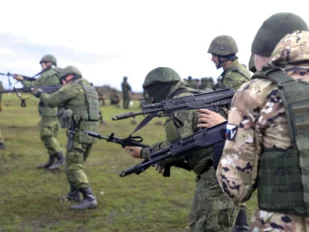
Data leak: More than 400.000 Russians killed in war in Ukraine
Largest ever leak of Russian casualty data shows more than 400.000 Russians killed in Ukraine war

The war in Iran has opened cracks in the US military-industrial complex. As Donald Trump pushes for faster production increases, arms manufacturers face capacity constraints, sluggish investment and an uncertain budget framework
American president Donald tramp he recently hosted the CEOs of seven major arms manufacturers at the White House. It was part of his administration's attempt to strengthen the sector while fighting the war Iran intensifies.
The conflict has shown that there are tensions within the US arms production sector, that there are concerns about the US stockpile of long-range missiles and air defense interceptors, as well as about the sector's ability to increase production in the event of a prolongation of the conflict, reports Deutsche says.
At the meeting, Trump discussed "production and production schedules" with Lockheed Martin, RTX, BAE Systems, Boeing, Honeywell Aerospace and Northrop Grumman.
There are reports, however, that negotiations between the Pentagon and the largest arms manufacturers in the United States on new production have not been completed as quickly as the White House would like amid existing tensions.

Byron Capan, an analyst at Washington-based Capital Alpha Partners, says major US arms manufacturers are under constant criticism for being "risk averse" and focusing on returning dividends to shareholders rather than reinvesting.
"There has been criticism that the largest arms manufacturers in the United States are lethargic, that they did not anticipate needs, invest and take risks," Kapan tells DW.
Before the US began bombing Iran, tensions simmered between the Trump administration and America's largest arms manufacturers. Trump has regularly criticized those companies, because, in his opinion, they prioritized dividends to shareholders and salaries of managers over investments in infrastructure and production.
He also criticized those who do not meet production deadlines and exceed budgets. Previously, he said of the company RTX (formerly Raytion) - which is the main producer of missiles and air defense interceptors used by the US military in the Iran conflict - that it is "the slowest in increasing the volume, and the most aggressive in spending on its shareholders, and not on the needs and demands" of the US military.
The president threatened to cancel state contracts with that company if it did not increase investments in factories.
In January, Trump issued an executive order stating that arms companies "are not allowed to pay dividends or buy back stock in any way until they can produce a superior product on time and on budget."
The Trump administration is also currently in a bitter dispute with artificial intelligence company Anthropic, a supplier to the US military, over its refusal to allow the military unrestricted access to its Claude chatbot.

In particular, Trump accused companies of spending too little on expanding factory capacity in favor of "quieting" investor concerns with mechanisms such as stock buybacks.
Share buybacks occur when companies use realized profits to buy back their own shares, thus reducing the number of publicly available shares and potentially increasing the value of the remaining individual shares.
The wars in Ukraine and Gaza have increased demand from US allies for US-made weapons, and Trump has previously criticized firms for not meeting demand fast enough.
"We have a lot of people who want the F-35 fighter jet, and it's taking too long to get them delivered to allies or to us," Trump said. "The only way they're going to be able to supply them is to build new factories. And they don't want to build new factories because it's expensive."

Philip Shears, a fellow at the Center for a New American Security's Defense Program, says investment in the U.S. arms industry is increasing, particularly in munitions and air defense. However, he warns that it will take time for those investments to materialize into increased production rates.
"Building new plants or increasing raw material stocks can take years, and we've seen that with many plants still under construction after the start of the war in Ukraine," he told DW.
Shears believes that a significant part of the blame for any slow production should be attributed to the US government due to its constant failures to reach a budget agreement in time due to political conflicts.
"If the U.S. government wants the arms industry base to grow rapidly, it must pass and approve budgets in time so that contracts can be signed and resources allocated. And so that the industry can be incentivized to act," he said, adding that "the consistent failure to pass a budget on time has become a geopolitical own goal of potentially historic proportions."
Byron Callan says the Trump administration's desire for arms manufacturers to invest in increased production could be threatened by a budget issue.
Polls currently show that the Democrats have a good chance of regaining control of the US Congress in the midterm elections in November.
"That could then really limit defense spending," he says. "This is an unpopular war, and if the Democrats win, there will be more spending outside of defense, on things like health and infrastructure."
The US has set aside $850 billion for defense in its 2025 budget, and that amount should rise to $900 billion in 2026. Trump has pledged to make it $1,5 trillion in 2027, causing alarm among many experts who have questioned the sustainability of the U.S. debt in its current form.

The arms sector is also now preparing for the possibility that the war in Iran will take much longer than anticipated.
When the war in Iraq began in 2003, Kenneth Adelman, the US ambassador to the UN during the administration of President Ronald Reagan, firmly believed that it would be a quick and easy victory for the US.
However, the way that war dragged on and became a quagmire for the US military changed his political perspective and despite still being a Republican, Adelman is now a vocal critic of Trump. He tells DW that he thinks the Iranian conflict could take on a similar dynamic.
"Iran has been planning this for a long time," says an experienced diplomat. "It's already taking longer than the Pentagon planned. And I don't believe the Pentagon is planning these things after what I saw in Iraq."
A protracted conflict would likely mean an increase in orders for America's leading arms firms, as well as a rise in stock prices.
The Trump family has increased its own defense investments. A few days ago, the president's sons, Eric and Donald Jr., invested in a new drone company to take advantage of the ban on new Chinese drones in the US.
Since the start of the war on February 28, the value of American stocks in the arms industry has fallen. Although the Dow Jones Industrial Average jumped briefly at the beginning of the conflict, it has since fallen again by about three percent.
ISource: Deutsche Welle (DW)
Real journalism costs money, and we will not be bought by tycoons and corporations. Support us with a one-time or monthly donation. The time for it is now!
Largest ever leak of Russian casualty data shows more than 400.000 Russians killed in Ukraine war

At least 11 people died in two chain collisions on the Trakia highway in Bulgaria. 86 vehicles were involved, and around 50 people were injured

The global race in the development of artificial intelligence has boosted Chinese exports. Increasing dependence on foreign markets is straining Beijing's relations with its trading partners
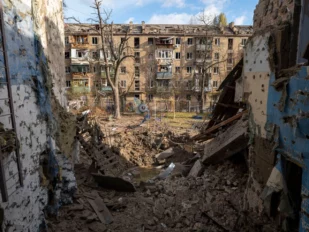
New negotiations between Ukraine, the USA and Russia are planned for November 10 and 11 in Abu Dhabi. This is the first meeting in this format after nine months

A serious accident occurred on Monday at a steel factory near Izmir, when an explosion claimed at least 17 lives. According to the first information of the local authorities, the accident was preceded by the fall of the crane and damage to the gas pipeline

At the moment when the institutions of the Republic are destroyed, when Vučić's octopus is still alive, when people are disgusted by the injustice and the stench left behind by the Essenes regime, we have, as Machiavelli said, only civic virtue as the fuel with which we can return to the beginning

The four independent members of REM are an example of perseverance and civic responsibility. Rodoljub Šabić even, upon leaving the premises of REM, after the sentencing of the Informer, experienced that the Essenes insulted him, hit him with their hands and feet. But that too will soon be over

Vučić pardoned the batterers and Dijana Hrkalović. The election winners should abolish the sultan's power that allows one man to run afoul of the entire judicial system

Time explores: The construction of the St. Sava Temple
Did the money paid by the Government to SPC end up in Moscow through Alta Bank? subscribeThe archive of the weekly Vreme includes all our digital editions, since the very beginning of our work. All issues can be downloaded in PDF format, by purchasing the digital edition, or you can read all available texts from the selected issue.
See all



