
The World
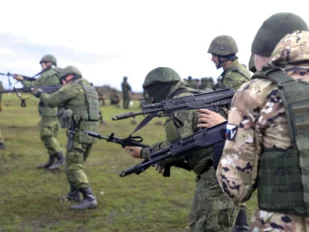
Data leak: More than 400.000 Russians killed in war in Ukraine
Largest ever leak of Russian casualty data shows more than 400.000 Russians killed in Ukraine war

Albania, with the support of France and the USA, is speeding up preparations for the establishment of a Bektash state, claims the French portal Intelligence Online. Bektashis make up five percent of the population of Albania, and they are quite different from Muslims in the Balkans - many drink, pray twice a day, and women do not cover themselves. And that's not all
"Our goal is to turn the Bektash World Center into a sovereign state - a new center of moderation, tolerance and peaceful coexistence," said Edi Rama in 2024, thus announcing the establishment of a new state for the Islamic religious brotherhood bektashi inside Tirana, after the Vatican in Rome. The idea is that the state gets an area roughly the size of five New York City blocks.
Now, two years later, the French portal Intelligence online writes that such a creation will soon be formed. According to that portal, preparations for the formation of a new state have entered an intensive phase and formalization is expected in the coming months.
In addition to functioning as a separate state, with all the structures and sovereign territory surrounding the world headquarters of Bektash, it will also have its own symbols, a special passport, the "bek" currency, which, as stated, will be indexed to the price of gold. They will also have their own diplomats in the most important countries of the world.
The head of the Bektash community, Edmond Brahimaj, also known as Baba Mondi, is already receiving foreign delegations at his headquarters, while at the same time creating a network of ambassadors, starting with Krešnik Grezda as the general ambassador of the new Bektash state.
New York businessman Christopher Hyland, who was an adviser in the presidential campaign, is mentioned as the new country's ambassador to the USA. Bill Clinton 1992 and deputy national political director for ethnic electorates.
As for France and Belgium, they are talking about Hazis Vardar, this portal writes.
According to the results of the last census in Albania, Bektashis make up about five percent of the population and represent the third largest religious community, after Sunnis and Catholics.
The Bektashi are known for some peculiarities that make them seem heterodox in the eyes of some Muslims, that is, they are not seen as true believers, DW wrote. As a Sufi movement, which means spiritual, the Bektashi emphasize the unity of all existence and the inner spirituality of believers. External forms and religious obligations are secondary for them.
According to them, anyone who is closely connected with God cannot be separated from God even by disobeying religious precepts, such as for example the prohibition of alcohol consumption. This attitude causes Bektash religious practice to differ from many other Muslims.
Instead of praying five times a day, as is customary among Muslims, they pray twice a day, at sunrise and sunset. Men and women pray together in tekkes, houses of prayer led by spiritual leaders called dervishes. They also meet for prayer in private houses. Women generally do not wear headscarves. Music and dance play an important role.
Every year, the Bektas meet for a pilgrimage on Mount Tomor in southern Albania, where they celebrate together. And what they celebrate is a kind of mixture of national holidays and family gatherings. They shape Albania in a special way, but small Bektash groups also exist in North Macedonia, Montenegro, Bosnia and Herzegovina, Bulgaria, Kosovo and Greece.
With the expansion of the Ottoman Empire into the Balkans, the first Bektash came to Albania and Greece as chaplains of the Sunni Janissaries. Their tekiya in southern Albania is well documented in the reports of the Turkish traveler Evli Çelebi (1611-1685).
"The Bektashi often have pictures/icons of Ali hanging in their homes, which is contrary to the Islamic prohibition of icons," wrote Canadian expert on Albania Robert Elsey in his book "Albanian Bektashi: History and Culture of the Dervish Order in the Balkans."
Some Bektas do not even comply with the ban on alcohol. According to visitors' reports, dervish flasks were even displayed in a display case in the reception hall of their leader, Baba Mondi, in Tirana.
The boundaries with other religions are also fluid. Many Bektash worship not only the Prophet Muhammad, but also Jesus, because for them the divine truth, as they say, is much greater than the denominations and religions written by men. To this day, the Bektashis stand for a particularly pronounced tolerance.
A close association with Albanian nationalism is also typical of the Bektash. This is also because, unlike the Sunni Muslims of Albania, they use the Albanian language for religious instruction instead of Arabic, with the exception of central texts from the Koran. They were at the forefront of the struggle for national independence and represent the central element of Albanian national identity.
With the beginning of the communist period in Albania, the Bektash, like all other religious communities, were under great pressure. Dictator Enver Hoxha (1908-1985) banned all religious practices in 1967 and declared Albania the "first atheist state" in the world. In the radical cultural revolution, the government encouraged attacks on churches, monasteries and mosques and the destruction of tekke. When the law was repealed in November 1990, just before the end of communist rule, only six tekis and only one dervish remained in all of Albania.
All religious communities first had to rediscover their identity. It was particularly difficult for the Bektashis to recover from this persecution, writes Robert Elsey. Unlike the Sunni Muslims, who received support from Turkey, and the Christian churches, it was much more difficult for them to secure the necessary support for reconstruction from abroad.
Exclusive in August: Save three thousand dinars on the annual subscription to the digital edition of "Vremena"! Take advantage of the discount here and support independent journalism.
Largest ever leak of Russian casualty data shows more than 400.000 Russians killed in Ukraine war

At least 11 people died in two chain collisions on the Trakia highway in Bulgaria. 86 vehicles were involved, and around 50 people were injured

The global race in the development of artificial intelligence has boosted Chinese exports. Increasing dependence on foreign markets is straining Beijing's relations with its trading partners
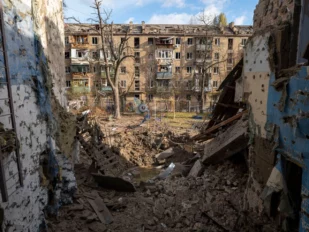
New negotiations between Ukraine, the USA and Russia are planned for November 10 and 11 in Abu Dhabi. This is the first meeting in this format after nine months

A serious accident occurred on Monday at a steel factory near Izmir, when an explosion claimed at least 17 lives. According to the first information of the local authorities, the accident was preceded by the fall of the crane and damage to the gas pipeline

At the moment when the institutions of the Republic are destroyed, when Vučić's octopus is still alive, when people are disgusted by the injustice and the stench left behind by the Essenes regime, we have, as Machiavelli said, only civic virtue as the fuel with which we can return to the beginning

The four independent members of REM are an example of perseverance and civic responsibility. Rodoljub Šabić even, upon leaving the premises of REM, after the sentencing of the Informer, experienced that the Essenes insulted him, hit him with their hands and feet. But that too will soon be over

Vučić pardoned the batterers and Dijana Hrkalović. The election winners should abolish the sultan's power that allows one man to run afoul of the entire judicial system

Time explores: The construction of the St. Sava Temple
Did the money paid by the Government to SPC end up in Moscow through Alta Bank? subscribeThe archive of the weekly Vreme includes all our digital editions, since the very beginning of our work. All issues can be downloaded in PDF format, by purchasing the digital edition, or you can read all available texts from the selected issue.
See all



