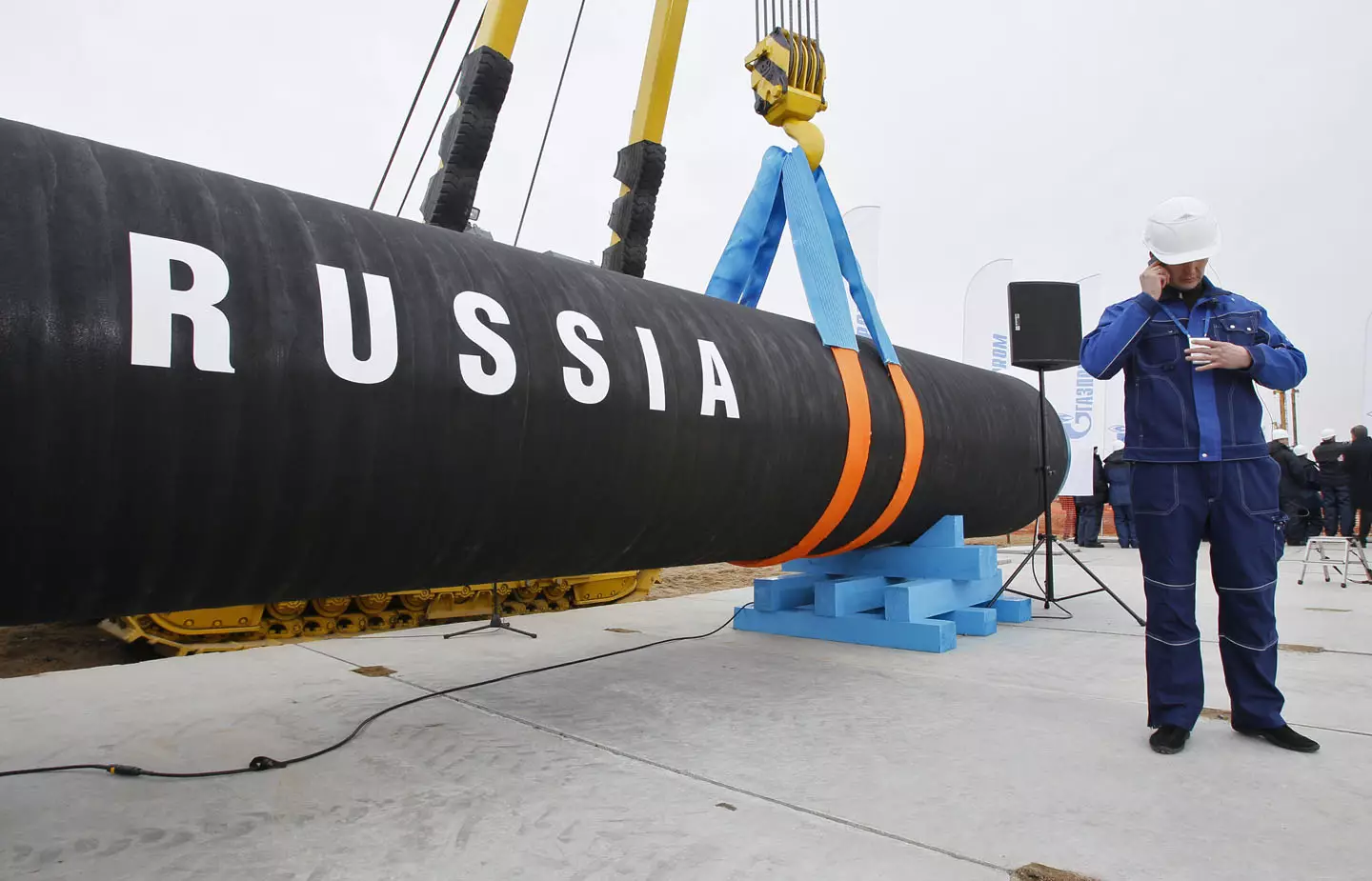
Russia will stop the delivery gauze Austria from Saturday, November 16, was announced by the OMV company.
The interruption comes after the announcement of the Austrian energy and chemical company OMV that it will stop paying gas to the Austrian branch Gazprom, in order to compensate for the arbitration of 230 million euros, which it received due to the earlier interruption of gas deliveries to its German subsidiary, AP reported.
On Thursday, the Austrian Arbitration Court issued a verdict according to which the Russian Gazprom must pay 230 million euros to OMV due to irregular deliveries and the complete suspension of gas deliveries to Germany.
Full gas storages
Chancellor of Austria Carl Nehammer he pointed out that the underground gas storage in his country is full and that there are alternative supplies, which do not originate from Russia.
"Our gas storages are full and we have enough capacity to get gas from other regions. We cannot be blackmailed", said the Austrian chancellor.
Janis Kluge, an expert on the Russian economy at the German Institute for International and Security Affairs, stated that the interruption will cost Gazprom around 2,37 billion euros in annual revenue.
Austria was the first Western European country to buy Russian gas when the USSR signed a gas contract in 1968.
Oil and gas exports, as well as related tax revenues, are the most important source of cash for the Kremlin, according to the AP.
What will happen next year?
There is a possibility, however, that Austria is not the only country that will stop receiving Russian gas. On the first day of 2025, Ukraine's contract with Gazprom will expire, which will close the main route of Russian natural gas to Europe.
Although the Kremlin says that they are ready to extend the transit agreement and call on the Europeans to convince Ukraine to agree to it, Kiev states that they will not give in, Voice of America reports.
Russian natural gas supplies were a cornerstone of European energy security before the start of the war in Ukraine in February 2022, when Russia temporarily cut off 80 billion cubic meters of gas to the continent in response to sanctions and a payment dispute.
The interruption dealt a big blow to the European economy, which, according to the analysis of the International Monetary Fund, will still be felt in 2024.
However, from 2021, Europe has secured alternative suppliers of natural gas, in an effort to depend as little as possible on Russia. Russian imports via Ukraine fell from 11 percent to five percent, according to data from Oslo-based energy analysis company Rystad Energija.
However, some countries, such as Hungary, have doubled their reliance on Russia, and Slovakia and Austria have since increased their Russian imports.
Sources: AP/Voice of America