

Kosovo
Donald Trump nominated the US ambassador to Kosovo
Trump nominated Mihail Bogacek as the new US ambassador to Kosovo, so the US will again have an ambassador to Kosovo after December 2024

All over Africa, Russia is recruiting men for war - usually fraudulently. The death rate is high - they are cannon fodder. Families are trying to bring the bodies of the dead to bury them
Karolina Mukiza wipes her tears with a tissue. A 42-year-old Ugandan woman kneels in a church pew on the outskirts of the capital, Kampala. She is grieving. A few days ago, she learned through social networks that her husband was killed at the front in Ukraine.
Her 46-year-old husband, Edson Kamwesigye, previously worked as a security guard at iraq and Afghanistan, says a petite woman with short hair and glasses, as she walks in the garden next to the church after prayer. In December, he says, he boarded a plane to Moscow for another security job. She hadn't heard anything about him for a long time. "On the fifteenth of January 2026, he wrote: 'People, I need your prayers. They forced us to sign contracts for the military.'" He received a brief training and was sent to the front, writes DW.
Tears flow down Mukiza's cheeks again. He sits down on a bench in the shade behind a stone building with colorful stained glass windows. She sobs softly as she tells how at the end of January, acquaintances asked her if she could confirm that photos of her dead husband were circulating on the Internet. "I asked people not to send me those pictures," she says, looking towards the cemetery below the church. Yes, that was him.
The fate of the Ugandan Mukiza is not lonely. In Uganda, Kenya, Cameroon, Nigeria or the Republic of South Africa - from all these countries there are men who have been recruited for alleged civilian jobs in Russia, and then they ended up at the front in the ranks of the Russian army.
"At least 1.436 citizens from 36 different African countries are currently fighting in the ranks of the Russian invasion army in Ukraine," Ukrainian Foreign Minister Andriy Sibiha claimed in November, warning African governments that their nationals were dying en masse on the front. "Signing the contract is the same as signing your own death sentence," he said. The majority Africans, he says, does not survive in the Russian ranks "more than a month".
It has long been an open secret that Russia in Africa is recruiting young men for the war in Ukraine. Back in May 2024, the Ukrainian military intelligence service announced on its website that Russia was sending Africans to the front as mercenaries for $2.200 a month.
But little was known about the recruitment methods, the fate of those men, and the extent of it all. Only the announcement of the Ukrainian minister in November - which was also reported by the African media - caused a chain reaction. Numerous families came forward looking for their missing sons and husbands who had traveled to Russia. Since then, more and more videos and photos of Africans in military operations have appeared on social networks.
In January, a video shot on the Ukrainian front in Uganda went viral in which a dozen African mercenaries sit in the snow and sing or dance to a song from the Ugandan civil war in the 1980s.
In another video, released by the Ukrainian military in early January, Ugandan Richard Akantorana explains that he thought he would be working in a supermarket. Upon arriving in Moscow, he was told: "You will join the Russian army."

"When we refused, they put a gun to my head and made me sign the papers," says Acantorana. Then he was deployed near Donetsk. During the first operation, he surrendered to Ukrainian forces. "My dear compatriots in Africa," he says at the end, "I warn you, do not fall into that trap."
For 316 of them, the warning came too late. The names of dead Africans whose bodies were found by Ukrainian forces along the front lines are included in a 15-page list published in a report by research team INPACT. Most of them are from Cameroon - almost a hundred. Two names from Uganda are also on the list. The name of Karolina Mukiza's husband, Kamwesighe, is not on the list.
Some videos circulating on the Internet show Africans being sacrificed as cannon fodder. In a particularly disturbing video, an African mercenary can be seen in an underground bunker with a large mine strapped around his stomach. "Stop shitting your pants," says a voice in Russian in the background. The barrel of the rifle is pointed at the African: "Come on now, run - you're going to launch the attack today," says the voice. Apparently, they are sending him on a suicide mission with the aim of surprising the Ukrainians. The authenticity of the video cannot be confirmed with absolute certainty.
But also in the INPACT report, it is stated that most Africans serve only as "cannon fodder". "Russia is exploiting their ambitions and their desperation to bolster the ranks of its military in Ukraine with young African men."
The Ugandan government has launched an investigation. In August, nine men were stopped at Entebbe International Airport on their way to Moscow. They confirmed that they were hired allegedly as security workers. Two days later, a Russian was arrested in the capital, Kampala. He said that he works for the company "Magnit" which supposedly recruits people for work.
Investigators later determined that the company was not registered in Uganda. By the way, many international labor recruitment agencies operate in that country. Most of them are looking for cheap labor for jobs in Dubai, Saudi Arabia or Qatar. Young women are hired as housekeepers for rich sheikhs, and men are mostly hired as drivers or security guards. For those countries, the government of Uganda has made official agreements.

However, Uganda does not have any agreement with Russia, explains Joshua Kyalimpa, spokesperson for the Ugandan Ministry of Labour, Gender Equality and Social Welfare. He states that there are cases of Ugandans "who are dragged into that conflict (Russian war in Ukraine, ed.), but they are usually recruited through the Internet, that is, TikTok and similar platforms." Kyalimpa adds: "Our task is to warn Ugandans not to register as alleged labor migrants for conflict zones in Russia or Ukraine."
Karolina Mukiza, she says, requested the help of the Russian embassy in Kampala. She shows a letter asking for "support" to bring her husband's body home and "bury it according to our culture and family tradition." She has not yet received an answer. He cannot expect help from his own country either. The Minister of Foreign Affairs, Okelo Orjem, told local television station NTV: "Uganda does not have the capacity to bring back the bodies of those who die abroad."
"I'm desperate," sighs Mukiza. She had not yet told the children about their father's death. He is afraid of their questions, because children know that those who die must be buried. "They'll ask me where he is," he says quietly and sobs into his tissue again.
Trump nominated Mihail Bogacek as the new US ambassador to Kosovo, so the US will again have an ambassador to Kosovo after December 2024
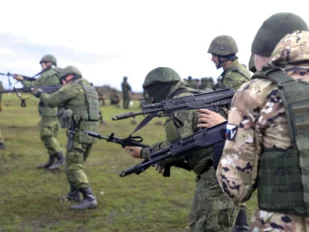
Largest ever leak of Russian casualty data shows more than 400.000 Russians killed in Ukraine war

At least 11 people died in two chain collisions on the Trakia highway in Bulgaria. 86 vehicles were involved, and around 50 people were injured

The global race in the development of artificial intelligence has boosted Chinese exports. Increasing dependence on foreign markets is straining Beijing's relations with its trading partners
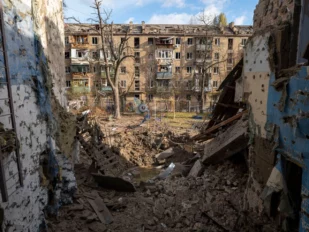
New negotiations between Ukraine, the USA and Russia are planned for November 10 and 11 in Abu Dhabi. This is the first meeting in this format after nine months

At the moment when the institutions of the Republic are destroyed, when Vučić's octopus is still alive, when people are disgusted by the injustice and the stench left behind by the Essenes regime, we have, as Machiavelli said, only civic virtue as the fuel with which we can return to the beginning

The four independent members of REM are an example of perseverance and civic responsibility. Rodoljub Šabić even, upon leaving the premises of REM, after the sentencing of the Informer, experienced that the Essenes insulted him, hit him with their hands and feet. But that too will soon be over

Vučić pardoned the batterers and Dijana Hrkalović. The election winners should abolish the sultan's power that allows one man to run afoul of the entire judicial system

Time explores: The construction of the St. Sava Temple
Did the money paid by the Government to SPC end up in Moscow through Alta Bank? subscribeThe archive of the weekly Vreme includes all our digital editions, since the very beginning of our work. All issues can be downloaded in PDF format, by purchasing the digital edition, or you can read all available texts from the selected issue.
See all



