
The World
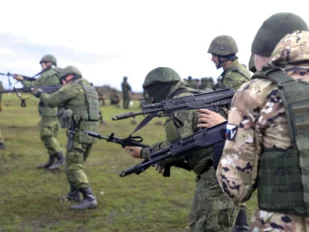
Data leak: More than 400.000 Russians killed in war in Ukraine
Largest ever leak of Russian casualty data shows more than 400.000 Russians killed in Ukraine war

Tens of thousands of Moroccans stormed the Spanish exclave of Ceuta, then left on their own. How is that?
The end of this July brought the most bizarre episode of the "migrant crisis" that Europe has ever witnessed.
In a few days, over 60.000 Moroccans found their way to the Spanish exclave of Ceuta on African soil – by swimming or jumping over a fence.
During Friday and Saturday, practically everyone went back, peacefully.
Garbage, tires and cheap slippers were left behind. In Ceuta, a town with as many inhabitants as there were sudden arrivals, the locals were in makeshift apartments in fear. There were several robberies.
At least 67 people died trying to get there.
There was a lot of political noise and the new 500 meter long Spanish floating barrier was left behind. In the future, it should make it more difficult for migrant swimmers to come to Ceuta.
"To be honest, I don't even know what we came for. I'm going back now," said one of the migrants to the cameras. "What we did is not good for us, and it's not fun. People got hurt."
Others spoke similarly, adding that they found closed shops in Ceuta. There was no food, no water, no place to sleep.
Many said they were encouraged to cross the border by Moroccan law enforcement.
New York Times elaborates several theories. The first one is that Morocco is exerting political pressure on Spain, perhaps because of the earlier agreement between Spain and Algeria that concerns gas in particular.
"For me it plays a pretty central role. It's impossible for almost 50.000 people to cross the border between Morocco and Spain in one day without Morocco having anything to do with it," says Lorenzo Gabrieli of the University of Barcelona.
Another theory, advocated by right-wing parties in Spain and Europe, says that the migrants were attracted by the decision of Pedro Sánchez's government to allow early legalization of the status of about half a million people who came to Spain illegally.
"By legalizing hundreds of thousands of illegal migrants, Spain's Socialist Prime Minister Pedro Sánchez has opened the door to Europe," said French far-right leader Jordan Bardella.
Sanchez rejects that claim and brings a third theory into play - it's all the fault of people smugglers.
According to Sánchez's interpretation, the smugglers took advantage of a recent decision by the Supreme Court of Spain, which ruled that anyone who reaches the territory by sea must go through the proper asylum process.
Those who are caught by the Spanish forces of order to have crossed the land can be immediately sent back to where they came from.
"It was all triggered by messages circulating on social media about the Spanish court's decision, which created an attraction factor," he reports. New York Times the words of Abdullah Abakil, a Moroccan left-wing politician.
The Moroccans' invasion of Ceuta gave free points to the European radical right. The European Union will urgently discuss the developments on Tuesday.
A spokesman for the border agency Frontex said: "It is too early to really say why the rush happened and how it happened so quickly."
Sources: Vreme, DW, NYT
Only in August: Save three thousand dinars on the annual subscription to the digital edition of "Vremena"! Take advantage of the discount here and support independent journalism.
Largest ever leak of Russian casualty data shows more than 400.000 Russians killed in Ukraine war

At least 11 people died in two chain collisions on the Trakia highway in Bulgaria. 86 vehicles were involved, and around 50 people were injured

The global race in the development of artificial intelligence has boosted Chinese exports. Increasing dependence on foreign markets is straining Beijing's relations with its trading partners
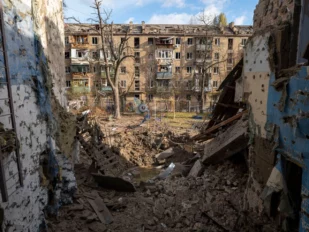
New negotiations between Ukraine, the USA and Russia are planned for November 10 and 11 in Abu Dhabi. This is the first meeting in this format after nine months

A serious accident occurred on Monday at a steel factory near Izmir, when an explosion claimed at least 17 lives. According to the first information of the local authorities, the accident was preceded by the fall of the crane and damage to the gas pipeline

At the moment when the institutions of the Republic are destroyed, when Vučić's octopus is still alive, when people are disgusted by the injustice and the stench left behind by the Essenes regime, we have, as Machiavelli said, only civic virtue as the fuel with which we can return to the beginning

The four independent members of REM are an example of perseverance and civic responsibility. Rodoljub Šabić even, upon leaving the premises of REM, after the sentencing of the Informer, experienced that the Essenes insulted him, hit him with their hands and feet. But that too will soon be over

Vučić pardoned the batterers and Dijana Hrkalović. The election winners should abolish the sultan's power that allows one man to run afoul of the entire judicial system

Time explores: The construction of the St. Sava Temple
Did the money paid by the Government to SPC end up in Moscow through Alta Bank? subscribeThe archive of the weekly Vreme includes all our digital editions, since the very beginning of our work. All issues can be downloaded in PDF format, by purchasing the digital edition, or you can read all available texts from the selected issue.
See all



