
The World
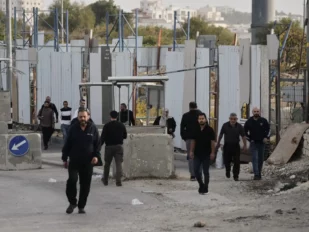
Israel begins demolitions in the West Bank
The Israeli human rights organization "Bethlehem" has condemned the plan for the "forced displacement of Palestinian residents" from a settlement in Hebron.

The renewable energy sector, and thus the implementation of the green agenda, drives technological progress, which is almost entirely dependent on the availability of raw materials. The market for electric vehicles is growing and manufacturers are increasingly looking for stable sources of lithium, cobalt and nickel. The future of our society is undoubtedly electric. In the mass transition from fossil fuels to electric solutions, the availability of high-capacity batteries is a major problem. The need for efficient batteries for transportation, power supply and industrial applications is growing day by day
The Critical Raw Materials Act (CRMA) was set up as a guarantor of Europe's green future and a way to ensure that Europe remains a manufacturing base for electric vehicles (EVs), wind turbines and other green technologies, establishing mechanisms to reduce the European Union's dependence on China when it comes to supply of raw materials. According to Reuters, the CRMA is actually the result of the painful lessons that the European Union learned during the covid-19 pandemic and the Russian invasion of Ukraine - due to the first, there was a stoppage in the supply of basic goods and raw materials, while the result of the second was the interruption of the supply of natural gas by Moscow . The vulnerability of the EU and the need to build more resilient and diverse supply chains has become apparent.
In order to reduce its dependence on the import of critical raw materials, especially from China, the European Union has designated projects related to certain raw materials as strategic, which will enable such undertakings to save on the time needed for the projects to go through all the prescribed administrative procedures. Namely, CRMA sets seemingly ambitious goals: by 2030, European mines and recycling centers should produce 10-15 percent of the raw materials needed by the EU's green industry. This will diversify the supply chain of critical raw materials in the EU, and at the same time improve its resistance to external influences.
When it comes to critical raw materials, the European Union currently, as for many other things, relies heavily on China, which dominates the global market with a 90 percent share in rare ore processing and even 60 percent when it comes to lithium processing. Despite being the absolute leader in this field, China has recently placed restrictions on the export of critical raw materials such as gallium, germanium and graphite in order to preserve its industry. All of the mentioned raw materials are also on the EU's list of strategic raw materials, thus China has directly influenced the European market and supply chains.
SUSTAINABILITY AS A PATH TO INDEPENDENCE
According to the new regulations of the European Union, 34 critical and 17 strategic raw materials are designated as "key" for the green and digital transition of the European Union, as well as for the defense and space industries. In this regard, CRMA has set three targets for the annual consumption of raw materials within the EU: 10 percent local extraction, 40 percent from processing in the EU and 25 percent production from recycled materials. What is key to reducing the European Union's dependence on China and Russia in this field is the regulation that states that member countries cannot import more than 65 percent of a certain raw material from a country that is not a member of the EU.
"Raw materials are vital for the production of key technologies for our transition - such as wind power generation, hydrogen storage or batteries. We need to strengthen our cooperation with reliable trading partners at the global level in order to reduce the EU's current dependence on just one or a few countries. It is in our common interest to increase production in a sustainable way and at the same time ensure the highest level of diversification of supply chains for European companies", said the President of the European Commission Ursula von der Leyen on this occasion.
While demand for critical raw materials is predicted to rise dramatically, Europe remains heavily reliant on imports, most often from third-country suppliers. The EU needs to mitigate supply chain risks related to such strategic dependencies to improve its economic resilience, which has been highlighted by shortages following the covid-19 pandemic and the energy crisis following Russia's invasion of Ukraine.
Together with the Net Zero Emission Industry Act, the CRMA will create an enabling regulatory environment to improve the competitiveness of European industry. With this act, the European Commission has set the goal that at least 40 percent of clean technologies will be produced in the EU by 2030, as part of efforts to meet its climate goals and strengthen energy independence. The interruption of natural gas supply by Moscow was an indicator of the extent to which European industry, as well as the quality of life of its citizens, depend on external factors, placing the issue of energy independence at the very top of the EU's priorities.
TECHNOLOGICAL PROGRESS AT THE HEART OF TRANSITION
Although the CRMA has identified 34 critical materials, the EU Council has recognized that Europe will not be able to independently produce all the necessary raw materials. For some of the above, the EU depends on one country: for rare heavy elements it is China, while the EU gets 98 percent of its boron from Turkey, and 71 percent of its platinum from South Africa.
The renewable energy sector, and thus the implementation of the green agenda, drives technological progress, which is almost entirely dependent on the availability of raw materials. The market for electric vehicles is growing, and manufacturers are increasingly looking for stable sources of lithium, cobalt and nickel. The future of our society is undoubtedly electric. In the mass transition from fossil fuels to electric solutions, the availability of high-capacity batteries is a major problem. The need for efficient batteries for transportation, power supply and industrial applications is growing day by day.
In order to remain competitive in the face of this industrial challenge, the European Commission launched the European Battery Alliance back in October 2017. The main goal of the alliance was to build battery technology and manufacturing capacity in the EU, as a key segment for low-emission mobility, energy storage and European economic strategy.
At the start of the alliance, Europe had almost no large-scale production of battery cells: it accounted for about 3 percent of the world market. Today, it is estimated that production in the EU will meet demand by 2025. The alliance attracted the industrial participation of about 440 actors and about 100 billion euros in investment commitments, which is why it has become an example of good practice and timely action of the EU when it comes to ending dependence on foreign suppliers.

Increasing demand for electric vehicle batteries will be a strong driver of lithium consumption over the next decade — global demand for lithium is expected to exceed 2030 million metric tons of lithium carbonate equivalent by 2,4, while demand estimates for 2035 reach 3,8, 1,2 million tons. Global lithium production is currently dominated by Australia, Chile and China. The largest European reserves are in Germany and the Czech Republic, while Serbia is in third place with about 1,3 million tons, i.e. XNUMX percent of world reserves.
"Batteries are the driver of the ongoing industrial revolution. They represent its core technology. Battery development and production play a strategic role in the ongoing transition to clean mobility and clean energy systems. The lack of a domestic, European manufacturing base threatens the EU's position because it leads to supply chain uncertainty, increased transport costs, delays, weaker quality control and other constraints," said Maroš Šefčovič, Executive Vice President of the European Commission for the European Green Deal.

CONCLUSION
The Law on Critical Raw Materials, the Net Zero Emission Industry Act and a whole series of announced legislative reforms represent a significant step forward in the EU's efforts to ensure the supply of critical raw materials necessary for the green and digital transition. By reducing dependence on non-EU countries and promoting sustainable practices, CRMA aims to strengthen Europe's industrial base and make it more resilient to future supply chain disruptions. As technological advances continue to drive demand for these materials, the EU's strategic initiatives will play a key role in positioning Europe as a leader in the green transition in the future. The public is divided in its assessment of what role Serbia will play in this, but one thing is certain — lithium is the future of Europe, and Europe, at least declaratively, is the future of Serbia.
The Israeli human rights organization "Bethlehem" has condemned the plan for the "forced displacement of Palestinian residents" from a settlement in Hebron.

The Ministry of the Interior has announced that it will hire 70.000 police officers, which will increase the security presence in French cities.
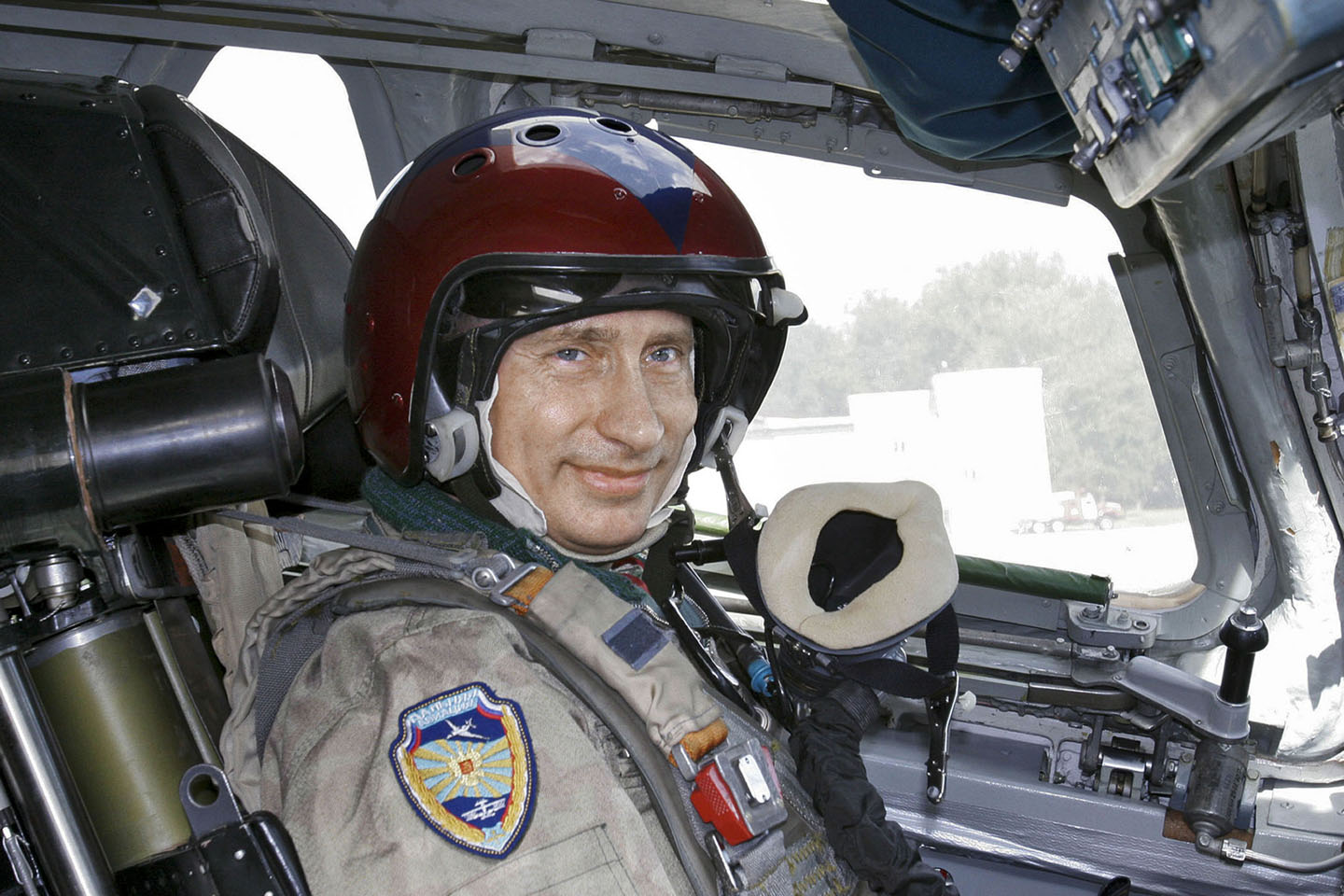
"Now they are talking about the threat from Russia and the beginning of preparations for war with Russia, which, in my opinion, is a kind of political schizophrenia," said Russian President Vladimir Putin

For the first time in almost two years, the opposition in Venezuela took to the streets across the country to demand elections by July 2027. The government organized its own march in the same square on the same day

France is preparing for Saturday's protests with a series of bans on gatherings and an increased police and military presence. The courts have already overturned one ban in Paris, and unions and students are calling for peaceful demonstrations

There is, literally, no difference between the one who claims it is day in the middle of the night, or the one who claims to be a giraffe, from the claims we read on billboards: that Vučić is working to unify Serbs and that Serbia is doing better and better day by day.

The pre-election arrests due to the alleged "overthrow of the state" testify to the regime's panic. The bad news for them is - they can't arrest the whole people who decided to defend themselves from progressive beatings and election theft

The ring that tightens around Ćaciland Student list is getting narrower. Because there are more and more spoiled people who see the false prophet for what he is: a street obscener who is fighting Serbia

The archive of the weekly Vreme includes all our digital editions, since the very beginning of our work. All issues can be downloaded in PDF format, by purchasing the digital edition, or you can read all available texts from the selected issue.
See all




