The 2020 Nobel Peace Prize to the World Food Program draws public attention to the fact that hunger is knocking on the door of 265 million people in the world. In April of this year, ten thousand people died of hunger every day, while the eight largest companies for the production of food and beverages paid their shareholders more than eighteen billion dollars in earnings, and a hundred companies on the stock exchange increased their capital by three trillion dollars
For its efforts in the fight against hunger, for its contribution to improving the conditions for peace in conflict-affected areas, and for its work to prevent the use of hunger as a weapon of war and conflict, the United Nations World Food Program has been awarded the 2020 Nobel Peace Prize. Given the alarming forecast that the number of people facing a hunger pandemic in 2020 is likely to increase from 135 million to 265 million (by about 80 percent compared to 2019), it is difficult in this time of the socially destructive covid crisis to dispute the decision of the Norwegian Nobel Committee to reward the UN agency that has been working since 1961 to fight hunger in the world.
The British humanitarian organization Oxfam estimates that by the end of the year, 19 to 6000 people could die a day from hunger related to the social and economic impacts of the Covid-12.000 pandemic. Oxfam also states that in April 2020, slightly more than 10.000 people died of hunger every day.
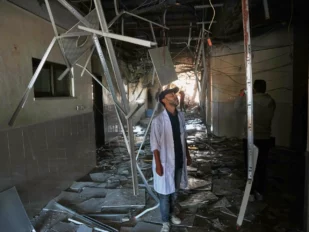
photo: ap photoPLAGUES IN AFRICA: Wars,…
HUNGER AND DISEASE
The World Food Programme's chief economist, Arif Hussain, told Britain's Time magazine: "We were already in bad shape, but covid-19 has created a kind of economic quicksand under people's feet, by compounding the impacts of the pandemic, conflict, poverty and climate-related shocks, which in the five-year period before 2020 fueled a chronic and acute hunger pandemic..." "Washington Post" writes that the hunger pandemic in some areas of Africa manifests itself in the most difficult, the so-called "level 5". And that means: two deaths per day due to lack of food per 10.000 adults, or the death of four out of 10.000 children every day; one in five households feels an extreme lack of food; every third child in the given area is acutely malnourished. "When you declare a famine, bad things have already happened." People have already died," says Arif Hussain.
The first famines in the era of the corona virus could soon hit four chronically conflicted food-deprived areas - Yemen, South Sudan, northeastern Nigeria and the Democratic Republic of the Congo, writes the New York Times, citing a warning by the Director General of the UN Food and Agriculture Agency (FAO). in the UN Security Council. The media describe such projections with headlines such as "twenty million die of hunger", notes the "Washington Post", noting that starvation is usually not the main cause of death, but that these are diseases that can be treated under normal conditions, and which, due to the lack of healthy food, water and medical care become deadly. Thus, malaria or cholera can be fatal for people whose bodies are exhausted by starvation, because the process of starvation weakens the immune system. In Somalia, poor pre-famine conditions and malnutrition accelerated the outbreak of measles. Diarrhea is also extremely common.
Famine can cause irreparable damage even to those who survive. The most vulnerable are children under the age of five who, after surviving measles, often suffer from blindness, brain swelling and severe respiratory infections. Inadequate nutrition and repeated infections during the first thousand days of a child's life can also cause stunting, which has irreversible long-term effects on physical and mental development. In 2015, according to data from the World Health Organization, there were 156 million stunted children under the age of five. Almost 80 percent of stunted children live in conflict-affected countries.
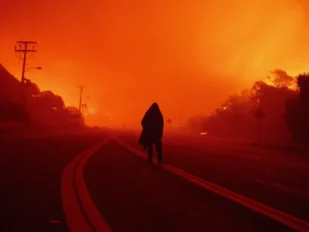
photo: ap photo...runaways,...
THE SPREAD OF POVERTY
Extreme poverty, defined as living on less than $1,90 a day, which has been gradually reduced over the past 25 years, is likely to affect between 9,1 and 9,4 percent of the world's population this year, according to a World Bank report.
Due to the disruption caused by the coronavirus emergency, extreme global poverty will rise in 2020 for the first time in more than twenty years, affecting an additional 88 to 115 million people, and depending on the severity of the economic contraction in 2021, perhaps as many as 150 million.
The president of the European Federation of Food Banks, Jacques Vandenshryk, in "Politico" magazine, estimates that the impact of the crisis on Europe may not be as serious as elsewhere in the world due to social security networks within the European Union, but that there will also be growing insecurity due to the provision of food for the most vulnerable. especially in countries that are not so economically dynamic and where social protection is below the European average. The American "Hunger Early Warning Network" predicts that due to the combination of the impact of conflict and macroeconomic and climate shocks and the covid-19 pandemic, 2020 to 90 million people in 113 countries will require emergency humanitarian food assistance in 46.
photo: fao...locust infestation, famine...
VICE CIRCLE OF VIOLENCE AND HUNGER
Eight of the ten hotspots of extreme hunger in the world identified by Oxfam have high levels of violence. "Newsweek" magazine observes that hunger is not only the result but also the source of conflicts. The forecast that due to covid 19 the world will go through an economic recession not seen since the thirties of the last century, the most dramatic perhaps refers to Africa, affected by civil wars and burdened with social problems. In Burkina Faso, a continental country with eighteen million inhabitants in West Africa affected by violence, there were, according to UNHCR estimates, more than one million internally displaced persons at the beginning of September, and more than three million refugees in the border regions of Burkina Faso, Niger and Mali. People who are forced to flee violence are particularly vulnerable, as food security is associated with great insecurity.
However, food is also often lacking for those who remain in violence-affected areas, as agriculture is threatened, farmers are attacked, farms are looted, and the journey to and from the market becomes too dangerous. Warring parties destroy markets and warehouses, prevent food imports and cut transport links in order to gain a war advantage. War destroys economies and leaves people with no money for mere survival, while the interruption of production simultaneously causes food prices to rise.
In the world media, such phenomena are usually described with indignation, along with demonizing local actors, although this is not a new phenomenon in the history of warfare.
Hunger can also be a weapon of war, history provides countless examples of this, writes "Newsweek", recalling that in the Middle Ages cities under siege were starved to be forced to capitulate. Recent history provides us with examples of systematic food deprivation, such as the famous German World War II famine plan that provided for millions of Soviet citizens to be deprived of food, or, as Newsweek writes, the lesser-known long-term British occupation of the port of Aden from 1839 to in 1863, which enabled her to control the Middle Eastern channels of food distribution with sometimes devastating consequences in the Arab region.
FOCUS OF EXTREME HUNGER
Noting that countries destabilized by conflicts are mostly and most affected by hunger, the World Food Program points to ten hotspots of extreme hunger: Yemen, the Democratic Republic of the Congo, Afghanistan, Venezuela, the Sahel, Ethiopia, Sudan, South Sudan, Syria and Haiti.
Before the war, Yemen imported ninety percent of its food and almost all of its fuel. When, as a result of the conflict, restrictions were imposed at sea, land and in the air, borders were closed and supply routes were cut, there were shortages and drastic increases in food prices; the price of drinking water has more than doubled since April, and the national currency has collapsed.
In Yemen, even before the start of the pandemic, the five-year civil war plunged more than half of the population into a food crisis. And then, along with all that suffering, the desert locusts also swarmed the unfortunate land. Seventeen million people need humanitarian food aid. Two million Yemeni children under the age of five suffered from acute malnutrition in 2019.
In the Democratic Republic of the Congo, about 21,8 million people are unable to get enough food per day, which, according to the FAO, is the highest number of people at risk of hunger ever recorded in a single country.
In Somalia, a fragile country in the Horn of Africa, where there has been no peace since 1991, and where intense conflicts have been going on since 2009, between July and September 3,5, around 2020 million people faced the consequences of war and the consequences of covid-19, floods and desert insects. grasshopper. That's 67 percent more people in existential uncertainty than in 2019, the most difficult year to date.
In South Sudan, where the end of the civil war in 2018 did not end the economic crisis, humanitarian aid is urgently needed for 9,6 million people. From June to September 2020, their number increased by 64 percent, which, according to the FAO, is the highest rate of deterioration ever recorded in that country. Flooding further aggravates the situation.
In Nigeria, Boko Haram attacks continue in the northeast, and insecurity reigns in both the northwest and central parts of the country, limiting access to livelihoods and causing internal displacement of more than 2,5 million people. In northern Nigeria from June to August 2020, 8,7 million people were not sure how they would feed themselves and their families. Their number has increased by 2019 percent since 73.
Zimbabwe will need significant humanitarian aid in 2020 due to very poor macroeconomic conditions and two consecutive bad seasons.
In the Horn of Africa, the season of extremely heavy rains in 2019 caused major river floods and flash floods. In some areas this has slowed the recovery from previous droughts in 2018/19 and 2016/17. year.
DEEP ECONOMIC DISTURBANCE
Along with civil wars, droughts, floods and locust infestations, Africa has also been affected by the drop in the prices of basic raw materials due to the halting of the world economy. The decline in export earnings is particularly noticeable in countries heavily dependent on crude oil exports, such as Nigeria, South Sudan, Sudan and Chad. The price of crude oil has increased since March, but its price in August was 30 percent lower than the average price in 2018 and 2019.
The prices of key metals have also recovered since May, but an increase in total revenue from these exports is still awaited. Kenya and Ethiopia also expect a decline in textile exports. Other export sectors have partially recovered, such as flower exports from Kenya, but that must be little consolation.
The UN Conference on Trade and Development UNCTAD estimates that in 2020, total public revenues in Africa will decrease by five percent, and exports of goods by about 17 percent. At least 60 percent of the African population depends on agricultural production. However, despite the huge resources (including wide availability of arable land and young workforce), due to difficult distribution and inaccessibility, the impact of extreme climate shocks and economic recession, the Black Continent cannot provide food for its population from its own sources.
From 2016 to 2018, Africa increased its food imports from other continents by about 85 percent, which cost about 35 billion dollars. UNCTAD predicts that by 2025 food import costs will reach $110 billion. In several African countries, trade disruption and panic buying, stockpiling and distribution disruptions related to Covid-19 increased the price of food, especially grains, between March and June. That problem is complicated by the fact that some countries have introduced bans on grain exports.
At the end of April, "Time" used examples from around the world to illustrate how the corona virus pandemic "universally" disrupted the food supply chain, how local markets were closed, how transport restrictions made it difficult to obtain seeds and fertilizers for sowing, how fears grew that the harvests fail because workers are prohibited from working or fear of infection.
In India, travel restrictions have left farmers without vital migrant labor at the height of the harvest season, forcing many to leave their crops to rot in the fields. Up to one hundred million people were left without their main source of income because during the height of the harvest season for forest products, traders could not reach them, so vegetable growers near Bombay, India had to give away or let cabbage and other vegetables rot. In the Sahel, movement restrictions have prevented pastoralists from moving their livestock to greener pastures, disrupting the lives of millions of people.
MASSIVE JOB LOSSES
The International Labor Organization estimates that 305 million full-time workers have been laid off due to the pandemic. In Brazil, millions of poor workers lost their income when production was halted due to the pandemic. The pandemic has particularly affected about 61 percent of people who earn their living in the informal economy (forty percent women and three quarters of young people): domestic helpers, street vendors, drivers, deliverymen or construction workers.
Due to massive job losses across the Persian Gulf in the first four months of 2020, migrant remittances to families in war-torn Yemen fell by 80 percent, or $253 million. Globally, remittances totaled $2019 billion in 554 and have been a lifesaver for millions of families living in poverty. The World Bank estimates that the pandemic will reduce remittances in low- and middle-income countries by 20 percent - which amounts to more than 100 billion dollars.
The way out of the impasse is far away. "The Economist" estimates that the return of the economy to the pre-pandemic level will be slow and probably uneven. In 2021, all the drivers of the crisis, including the economic impacts of the pandemic, are expected to continue to negatively impact the ability of poor households to meet their basic food needs.
WHILE SOME ARE STARVING, OTHERS MAKE MONEY
As someone said, the world may be collapsing, but not capitalism. As the covid-19 pandemic spread, those at the top were making profits: the eight largest food and beverage companies paid out more than $18 billion to shareholders from January to early July 2020: Coca-Cola ($3,522 billion), Danone ($1,348 billion dollars), General Mills ($594 million), Kellogg ($391 million), Mondelez ($408 million), Nestle ($8,248 billion), PepsiCo ($2,749 billion) and Unilever (estimated $1,180 billion). That, states Oxfam, is ten times more than, according to the estimation of UN agencies, it is necessary to help people in the world not to starve.
As the stock price rose, one hundred listed companies added more than three trillion dollars to their market value during the pandemic. Jeff Bezos could personally pay each of Amazon's 876.000 employees a one-time bonus of $105.000 today and still be as rich as he was at the start of the pandemic.
Oxfam Executive Director José María Chema Vera says: “Covid 19 is tragic for many, but good for the privileged. The economic crisis we are suffering due to the pandemic was fueled by a rigged economic model. The world's largest corporations make billions at the expense of low-wage workers, funneling profits to shareholders and billionaires – a small group of mostly white men in rich countries.
It is sickening that in the midst of a pandemic, some corporations are paying massive dividends to wealthy shareholders who received government bailouts to protect jobs. Scarce resources are being handed over to the already super rich at a time when hundreds of millions of people are suffering the consequences of this pandemic...
What is happening in the country and the world, what is in the newspapers and how to pass the time?
Every Wednesday at noon In between arrives by email. It's a pretty solid newsletter, so sign up!
The first trilateral talks between Ukraine, the USA and Russia after nine months ended with an agreement on the exchange of prisoners, but without progress towards a ceasefire. Experts warn that key issues - territories and security guarantees - are still far from being resolved
By the end of the century, the planet will warm on average by 2,7 degrees Celsius compared to the pre-industrial period, according to the analysis of the "Climate Action Tracker" organization. This could have catastrophic consequences for billions of people
The "Wider Europe - Stronger Europe" forum, which will be held on November 15 and 16 in Brussels, will be attended by European and regional officials, representatives of civil society and youth, as well as a representative of the Student List whose name has not been published.
Protesters in Spain are demanding lower rents, higher wages and protection of tenants. Protests were held in more than 130 cities and towns, and at the end of the day there were clashes with the police in Madrid and Barcelona. The government of Pedro Sánchez supported the demands, while the opposition claims that the unions are using the protests for pre-election mobilization
At the moment when the institutions of the Republic are destroyed, when Vučić's octopus is still alive, when people are disgusted by the injustice and the stench left behind by the Essenes regime, we have, as Machiavelli said, only civic virtue as the fuel with which we can return to the beginning
The four independent members of REM are an example of perseverance and civic responsibility. Rodoljub Šabić even, upon leaving the premises of REM, after the sentencing of the Informer, experienced that the Essenes insulted him, hit him with their hands and feet. But that too will soon be over
Vučić pardoned the batterers and Dijana Hrkalović. The election winners should abolish the sultan's power that allows one man to run afoul of the entire judicial system
The archive of the weekly Vreme includes all our digital editions, since the very beginning of our work. All issues can be downloaded in PDF format, by purchasing the digital edition, or you can read all available texts from the selected issue.