
The World
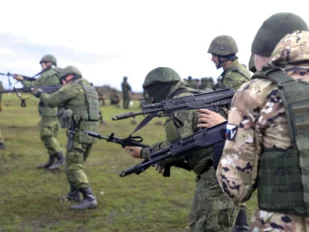
Data leak: More than 400.000 Russians killed in war in Ukraine
Largest ever leak of Russian casualty data shows more than 400.000 Russians killed in Ukraine war
 photos: nathalie bertrams
A town in Mauritania lives by catching octopuses. A town in the north of Spain lives by processing its tentacles. It all often ends up on Japanese tables. A lucrative job that could come to the head of an octopus, an animal so clever that it dreams, like a man
Za "Time" from Tokyo, Share, Nouadhibou and Karbaljina
Red lanterns hang in front of eateries, as the Japanese call them vomit. The lanterns divide the outside world, where trains are not late, from the inside world of typical Japanese cafes, which often hold no more than twenty people.
U get out dominates - the cook. He prepares specialties in front of everyone, maybe grilled pork skewers, maybe sushi or fried octopus.
If it's an octopus, there's a good chance it was caught on the other side of the world, off the Atlantic coast of Mauritania. In the first three months of this year, Japan imported more than ten thousand tons of octopus. Of the ten octopuses that end up in the pot here, four come from an African country.
Octopuses are a delicacy, they are also served as sashimi, among thinly sliced pieces of raw fish and seafood. In Osaka, the tentacles of this sea animal are a cult.
When it gets dark, under the neon lights of the metropolis, people crowd in front of food kiosks waiting for takoyaki, a famous street snack that here has the status of a burger in Leskovac.
In a separate tray, balls of dough are arranged with a piece of octopus in the middle. Baked balls are topped with fish flakes, mayonnaise and a special sauce. Eight takoyaki cost 600 yen, which is a little less than four euros.

That's why fishermen and traders in distant Mauritania call the best octopus "Japanese quality". It is a common octopus (Octopus vulgaris), whose price in Mauritania depends on how much the Japanese are willing to pay.
In Nouadhibou, a coastal city in this largely desert country, no one uses either the Arabic or the French word for octopus. They just say "so", in Japanese.
BOTH SMELL AND TASTE

Hiromichi Akiba owns a supermarket in Tokyo Akidai, a place with a good reputation. There, fruits and vegetables are displayed like in an advertisement, while Akiba rushes around praising the goods to customers. It shows an octopus - two tentacles in a package - caught in Mauritania.
"The Mauritanian octopus is very popular in Japan, partly because of its color. It is similar to a Japanese octopus," says Akiba.
Octopus prices are rising because demand is increasing, but the catch is not. Akiba says that a few years ago, a kilogram of octopus sold for a thousand yen (slightly more than six euros), today it is four times more expensive. "In the old days, octopus was popular and cheap, everyone could afford it," says Akiba.
Customers care about aesthetics. Importers will not pay for an octopus that has seven tentacles. The exporters in the Mauritanian port know all this, they have people sniffing every octopus that arrives from the ocean.
An exporter in Nouadhibou tells us that the Japanese will reject the entire shipment if one octopus smells bad, say because it was soaked in oil from the ship's engines.
It is estimated that one hundred thousand inhabitants of this city - and there are about 140.000 of them in total - live from fishing, mainly octopus. Fishing is, after iron ore, the second most important industry in Mauritania. Octopus exports alone weigh more than three hundred million dollars a year.
CULTIVATION PRACTICALLY IMPOSSIBLE
As octopuses are solitary animals (see box), no one has yet succeeded in breeding them. The attempts ended with high stress octopuses that would start eating each other.
"For farming to be profitable, the animals would have to be crowded together," says Carrie Tietge, an octopus expert from the Brussels-based organization Eurogroup for Animals. "When octopuses are crowded into bare pools, then these highly intelligent animals have no stimuli. They are stressed and bored. Sometimes they become aggressive.”
Spanish company New Pescanova was the last to try to create an octopus farm in Gran Canaria, with the idea that the "yield" should be three thousand tons a year.
Reporters are not allowed to visit the kennel, nor is anyone from Nueve Pescanova was ready to talk. To date, breeding has not started - animal rights activists oppose the plans and demand that the authorities do not issue the necessary permits.
So the hunt remains. The UN Food and Agriculture Organization states that in 2021, 375.000 tons were caught worldwide, of which 25.000 were off the coast of Mauritania.
There are catch quotas, as well as a rule that the octopus must not be lighter than five hundred grams. Millions of pieces then go to Japanese, American and South Korean tables. But also European - especially Spanish.
WHERE THE OCTOPUS HAS A MONUMENT

Spain annually imports octopus for almost one billion euros, almost all imports come from the West African countries of Morocco, Mauritania and Senegal. As the world's third largest importer, Spain is a crossroads for European trade.
The epicenter is in Galicia, a region in the northwest of the country. There is the town of Karbaljino, where about fifteen thousand people live. There is a giant octopus statue on the main roundabout and for good reason.
Marta Baros doesn't like the octopus herself, she even seems to have a tentacle over her head. But he runs a restaurant Casa Gazpara, and there you know what to look for. Next to her, the chef takes out a whole cooked octopus from the cauldron - an import from Mauritania, people gather, ask when the restaurant opens.
The small town of Karbaljino becomes big when the annual octopus festival with a tradition of six decades is held. Baros tells us that then a hundred thousand people visit the place and that the festival is a "very important" part of the local culture.
It is strange how Karbaljino - 120 kilometers from the ocean - became a bastion of octopus in the first place. Namely, in the 16th century, the monks there accepted dried octopuses as a means of payment for the land they rented. They taught the locals how to prepare octopuses and made good money selling them.
To this day, octopuses are an excellent business in Galicia. Daniel Gonzalez Atañez says that his family has been living off the creature with eight tentacles for four generations. Atanjes is the boss And Pulpeira, a company that sells processed octopus in Europe, America, Australia and Japan.
Negligible quantities are hunted in Galicia itself - there is someone in Africa to do the dirty and difficult work, let's say in Mauritania. "Japanese quality octopus comes from there, the best, and we only use that kind," says Atanjes.
VISIT TO A SLAUGHTERHOUSE
Atanjes' plants are on the outskirts of Karbaljina. From the outside they look like a warehouse, but the inside is different. Inside is a slaughterhouse where about fifty people work. When needed, in three shifts.
During the reporter's visit, there were about three hundred tons of African octopus. The process starts with thawing, then they go to wash in what looks like a giant washing machine. Then the workers open the lower hatch, through which countless octopuses fall out. Two women disembowel, cut off the heads and separate the tentacles. Again and again, quickly and precisely, as the cloyingly sweet smell fills the cold factory air. The tentacles are vacuum sealed and then cooked in large pressure cookers. The greyish and slightly slimy flesh takes on an attractive reddish color as it simmers in its own juices.
The owner has a deal with another Spanish company to whom he sells the heads, and they chop them up and add them to the frozen seafood mix. Whole heads on a plate wouldn't look pretty anyway.
Atanjes is a kind guy, a man of the people. He insists on showing how they love octopus the most in Karbaljin. In the tea kitchen of the factory, one tentacle heats up - in a microwave oven. It's not exactly the traditional way, but Atanjes claims the taste is the same.
Papak cuts the tentacles with scissors, lays the pieces on a wooden tray, puts some olive oil, a little paprika and salt on top. That's it powder to fair, the most famous Galician dish.
The popularity of Spanish cuisine contributed to the demand for octopus. Almost everywhere in the world you can find restaurants that offer Spanish-style tapas, small portions of delicacies, something like meze.
"EVERYONE IS A SLAVE TO THE ONE ABOVE"
Due to this demand, the port of Nouadhibou is choked with blue fishing boats. "There are more and more boats hunting octopus because the price is going up," says Bejah Meisa, a marine biologist at the Institute of Ocean Research and Fisheries. His office is right across from the port in Nouadhibou.
"A few years ago, fishing quotas were introduced, but fishermen do not respect them. They catch more than they should," he claims. "The octopus population was pretty much boosted by that."
"Fishermen will always manage to cheat the law, that's the nature of fishing everywhere in the world." As with drugs, smuggling or the trade in white slaves - this is a lot of money," says Meisa.
Authorities have introduced hunting seasons and no-fishing zones. There is also a coast guard. But there is a huge pressure from the octopus industry, a huge social pressure to allow the people on about seven thousand ships to earn a living.
"It's barely enough money to survive," says Atig Bukavar (48) while resting on the octopus traps at the pier. Around here, workers are loading oil barrels and supplies onto boats - the crews will be at sea for up to twenty days.
"It's dangerous, but I have no choice. Most of the workers do not have their own ships, but work for businessmen", complains Bukavar. More and more often he returns with a poor catch - too many boats, too much competition, and less and less octopus.
Of the final price on the market in Tokyo, barely a fifth goes to the fishermen. They say that a crew of five to seven people divides around five euros per kilogram of octopus.
Not far from the fishermen's ordeal is the infamous harbor tavern "Tako" - also named after the Japanese word for octopus. Cuban doctors, fishmeal producers from Ghana or European exporters meet there. Alcohol is not officially served in Muslim Mauritania, but here those who do better in the octopus business, a business worth billions, treat themselves to streams of whiskey.
"He can get rich easily and quickly with this," says one wholesaler, who does not want to reveal his name. The same goes for the owners of smelly sardine factories or those who keep octopus coolers.
Babana Jahja Emhamed knows these stories well. He is an inspector of the Ministry of Fisheries, he meets the reporter at a lonely gas station between Nouadhibou and Nouakchott, the capital of millions. Around the road are sand dunes and goats, only a few tents on the desert horizon.
"At sea, they say that bigger fish eat smaller ones", says Emhamed. "It's the same with fishermen. A large importer is trying to manipulate Mauritanian exporters. They manipulate the buyers, and these the small fishermen. Everyone is a slave to the one above."
In Mauritania, octopus is almost not eaten. Many would not even try it for a living. The real deal is goats, camels, sheep, cows. In fact, no one here would have even thought of octopuses if it weren't for one Japanese.
THE MAN WHO STARTED IT

The Japanese man lives in the Tokyo suburb of Edogavi, a place for deeper pockets, where buildings are surrounded by golf courses. Masaki Nakamura (73) is recovering from hip surgery, and then intends to make another trip to Nouadhibou. He got used to the plane, he went to more than half of the world's countries on business.
"There was nothing there. Nothing but sand. I was shocked", recalls Nakamura of his first trip to Mauritania in 1976. He went there at the behest of the Japanese Agency for International Cooperation, to teach Mauritanians fishing.
Nakamura started in Nouadhibou with ten fishermen - and he barely found them. He taught them the traditional Japanese way of catching octopus, using earthen jars. A Japanese company marketed the entire catch.
Jars are still used in Mauritania today, albeit plastic. They are attached to cables one hundred meters long, a barrel every two meters, and then they are submerged thirty meters deep. Octopuses go into the container themselves, to hide, but then end up on the ship.
Two droughts in the 1970s also pushed Mauritanians into fishing. "The drought decimated the livestock," says Babana Emhamed. "Mauritanians are naturally born with their backs to the sea. They are nomads, they don't know anything about water."
Mauritania is mostly Sahara. It has only four million inhabitants, although its area is ten times larger than Serbia.
But the drought drove people to the coastal cities en masse, many hungry mouths. "That's when they realized that we have wealth in fish, that it could bring prosperity and work to young people," says Emhamed.
FOREIGNERS MAKE BIG MONEY
Seven hundred kilometers of coastline, where the sea is the richest in fish in the whole world. Here, the cold Canary currents hit the warmer water from the Gulf of Guinea, this encourages the development of plankton, and this gives an impressive wealth of fish life. From sardines to sea bream to sharks, it's all there.
Mauritania gives hunting licenses to Chinese and Russians, Ukrainians and Turks, Japanese. There are also huge fishing boats from the EU, with nets that buy everything in front of them - as many as 86 boats from the EU are licensed to catch 290.000 tons of fish in Mauritanian waters annually. But, in 2012, the government decided that it could no longer do so with the octopus. Only local fishermen and boats are allowed to catch octopuses.
Nakamura supports returning the entire fishery to Mauritanian hands. He says Chinese fleets are also reportedly hunting octopuses by taking them to China. This old Japanese expert says he will now go to Nouadhibou to talk to fishermen and unions - he wants to encourage them to take over cold storage and exports.
When so much of the world wants tentacles on the grill, sashimi, takoyaki or powder to fair, so that at least ordinary people in Africa live better than that. At least that's what the man who once taught Mauritanians to catch octopuses wants.
The common octopus grows quickly and lives for a short time, a year or two. It is found from the Republic of South Africa to Britain, it lives closer to the coast, usually at a depth of about a hundred meters. The octopus is a solitary animal, a predator that devours crustaceans, sea snails and smaller fish. Adult octopuses can weigh up to nine kilograms, but they are usually caught much earlier, when they already weigh a kilo or two. Three hearts beat in them and blue blood flows. Some scientists have seriously considered whether the octopus is an extraterrestrial, whose eggs were brought to earth by a meteorite.
Even without fishermen, the life of an octopus is pure gambling. When they hatch, they float like plankton for more than twenty days and are easy prey. Only then do they begin a solitary life at the bottom of the ocean and very few survive long enough to grow up. Those that succeed die in the act of prolonging the species. The male immediately after mating, the only one in his life, and the female after laying about half a million eggs and watches over them for five months.
Some call them "the first intelligent beings on the planet", because their roots are at least 330 million years old - older than the dinosaurs. Octopuses are very smart creatures. Of the five hundred million neurons, two-thirds are located in her eight tentacles. Octopuses use tools and solve complex tasks. Scientists are convinced that octopuses dream. Studies show that octopuses feel pain, that they remember well, that they can love. Lawmakers in the EU and the US are considering protecting octopuses at least as much as vertebrates.


Largest ever leak of Russian casualty data shows more than 400.000 Russians killed in Ukraine war

At least 11 people died in two chain collisions on the Trakia highway in Bulgaria. 86 vehicles were involved, and around 50 people were injured

The global race in the development of artificial intelligence has boosted Chinese exports. Increasing dependence on foreign markets is straining Beijing's relations with its trading partners
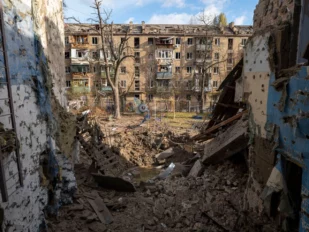
New negotiations between Ukraine, the USA and Russia are planned for November 10 and 11 in Abu Dhabi. This is the first meeting in this format after nine months

A serious accident occurred on Monday at a steel factory near Izmir, when an explosion claimed at least 17 lives. According to the first information of the local authorities, the accident was preceded by the fall of the crane and damage to the gas pipeline

At the moment when the institutions of the Republic are destroyed, when Vučić's octopus is still alive, when people are disgusted by the injustice and the stench left behind by the Essenes regime, we have, as Machiavelli said, only civic virtue as the fuel with which we can return to the beginning

The four independent members of REM are an example of perseverance and civic responsibility. Rodoljub Šabić even, upon leaving the premises of REM, after the sentencing of the Informer, experienced that the Essenes insulted him, hit him with their hands and feet. But that too will soon be over

Vučić pardoned the batterers and Dijana Hrkalović. The election winners should abolish the sultan's power that allows one man to run afoul of the entire judicial system

Time explores: The construction of the St. Sava Temple
Did the money paid by the Government to SPC end up in Moscow through Alta Bank? subscribeThe archive of the weekly Vreme includes all our digital editions, since the very beginning of our work. All issues can be downloaded in PDF format, by purchasing the digital edition, or you can read all available texts from the selected issue.
See all


Mauritius lives on tourism, sugar cane and - monkeys. Tens of thousands of caged macaques await certain death after being used in experiments. It costs a lot of money even though many tests can be done without harming animals

