
The World
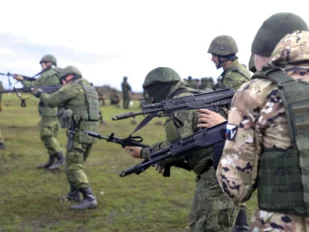
Data leak: More than 400.000 Russians killed in war in Ukraine
Largest ever leak of Russian casualty data shows more than 400.000 Russians killed in Ukraine war

The costs of Brexit are still being determined, but experts say the UK is losing £100 billion a year by leaving the European Union
Half a decade ago Great Britain and she officially left European Union (EU), where she was for 47 years.
Today, five years later, many questions are being asked about whether it was the right move, and some experts believe that it "impoverished" the United Kingdom (UK).
"Brexit has made the UK poorer." We think it is Brexit led to lower business investment, higher prices, less trade and slower production growth," Thomas Sampson, one of the authors of the study on the impact of Brexit on the UK and an associate professor of economics at the London School of Economics (LSE), told Vreme.
"Our recent work reveals that the Trade and Cooperation Agreement (TCA) has reduced UK goods exports by £2022bn in 27, with smaller companies being hit hardest," adds Sampson.
The costs of Brexit
Although Brexiteers have promised a new era of British sovereignty, a crackdown on migration and that the "£350 million a week" the UK gives to the EU could be diverted to Britain's National Health Service, five years on, the picture doesn't seem so bright. .
The costs of Brexit are still being determined, but UK government watchdogs estimate the economy will suffer a 15 per cent trade loss in the long term, while experts suggest the UK is suffering a loss of £100bn a year.
According to data from the Office for Budget Responsibility (OBR), Britain's fiscal watchdog, Brexit will reduce productivity by four percent in the long term, compared to what would have happened if the UK had remained in the EU, according to researcher John Springford of the Center for European Reform based in in London.
"Prime Minister Keir Starmer admits that Brexit was expensive, at least in the form chosen by the Conservative Party. He promises to "make Brexit work" and to "tear down" the trade barriers that Brexit has imposed to offset some of those costs, while insisting that Britain will not rejoin the single market, the customs union or the EU itself. Springford in its latest research published on the organization's website in December 2024.
What if it was
According to statistical data, the economy of Great Britain has grown since Brexit until today, but not at the level it would have been if the country had remained within the EU, Springford told Vreme.
His paper is based on a comparison of the UK with countries whose growth patterns before the 2016 referendum were most similar to that of the UK.
According to the forecasts he used, UK GDP is about four percent lower than the trajectory of the economy that would have been expected had the country remained in the EU.
"Obviously these figures are disputed because we can't travel to a universe where Britain decided to stay in the EU and see what happened," Springford told Vreme.
Researchers from LSE have also dealt with the issue of GDP.
"It is uncertain exactly how much Brexit has reduced Great Britain's GDP, but I think the drop is at least between two and three percent, which amounts to around £50-80 billion of lower GDP per year," Thomas Sampson, one of the authors, told Vreme. research.
The end for small businessmen
As a result of leaving the EU, the UK has significant trade barriers with its neighbours.
"It's something we're going to have to live with." We won't let ourselves forget that; there will always be problems", said David Hennig, a British expert on trade, for "Independent".
The damage from Brexit to trade ties with the EU cost the UK £27 billion in the first two years, but the overall impact was more limited than forecasters first estimated, a December 2024 LSE study found.
Academics from the LSE's Center for Economic Performance looked at evidence from more than 100.000 firms and found that by the end of 2022, two years after the UK signed the Trade and Cooperation Agreement (TCA) with Brussels, total UK merchandise exports had fallen by 6,4 .3,1 percent, and imports by XNUMX percent.
John Springford says that leaving the EU had the biggest impact on trade.
"The numbers are different, but they show that exports and imports to the United Kingdom suffered a hit of somewhere between five and 15 percent," Springford told Vreme.
Although the numbers and indicators are not entirely clear, the interlocutor of "Vremena" says that the general attitude must be that the impact of Brexit was negative on the economy.
Examining the first two years of the TCA, the LSE research authors say it is clear that large firms have largely continued to trade at the same level with EU partners.
However, smaller exporters – those with fewer than 100 employees – suffered badly. More than 14.000 of the 100.000 firms surveyed have completely abandoned trade with the EU.
Imports have held up better than exports as larger companies have found ways to source components and raw materials from outside the EU.
"The TCA has been a disaster for small exporters, many of whom have simply stopped exporting to the EU. At the same time, larger firms have adapted well to the new trade barriers. Consequently, total exports, at least so far, have declined less than expected," said Thomas Sampson.
LSE researchers found in the most comprehensive review of the issue since Britain left the bloc entirely at the start of 2021 that trade barriers have been a "disaster" for small businesses and have forced thousands of them to stop trading with EU countries.
Migrations
Another indicator that experts use when talking about the impact of Brexit on the country's economy is the rate of migration.
"Things are a little less clear here because leaving the EU's free movement zone has obviously had a big impact on the number of people moving to the UK to work." And that obviously reduces growth", says Springford for "Vreme".

The decrease in the arrival of people from the EU was compensated, however, by a very large increase, especially after the corona virus pandemic, in the number of people coming to work from outside the European Union, he adds.
"So there are arguments about how much we can attribute to Brexit," he adds.
The UK's withdrawal from the EU
The withdrawal of the United Kingdom from the European Union, known as Brexit, began with a referendum in June 2016.
Less than a year later, in March 2017, based on the results of the referendum, the British government initiated a formal withdrawal from the EU.
The United Kingdom withdrew from the EU on January 31, 2020, and the end of the withdrawal process rang out on New Year's Eve that year.
At midnight CET, on the night between 31 December 2020 and 1 January 2021, the UK left the EU's single market and customs union, which allow people, goods and services to move more freely between members.
This was the last step of withdrawal from the community of European countries.
Would you vote the same today?
Although in the 2016 referendum 51,9 percent of voters were in favor of leaving the European Union, in numerous polls held in the following years, the percentage of those who would vote the same again was smaller.
According to an October 2024 poll by YouGov, a British international market research and data analysis company, almost six in 10 Britons (59 percent) think Brexit went fairly or very badly, and only 12 percent believe it went well. .
Referendum voted from the second time
The issue of further membership in the EU was not voted on for the first time in 2016.
In a referendum 41 years earlier, in 1975, the British decided on further membership in the European Economic Community, the forerunner of today's European Union.
It was two years after that country's accession to the community, and the outcome of the referendum was in favor of remaining in it - 67,2 percent of voters voted that way.
Largest ever leak of Russian casualty data shows more than 400.000 Russians killed in Ukraine war

At least 11 people died in two chain collisions on the Trakia highway in Bulgaria. 86 vehicles were involved, and around 50 people were injured

The global race in the development of artificial intelligence has boosted Chinese exports. Increasing dependence on foreign markets is straining Beijing's relations with its trading partners
New negotiations between Ukraine, the USA and Russia are planned for November 10 and 11 in Abu Dhabi. This is the first meeting in this format after nine months

A serious accident occurred on Monday at a steel factory near Izmir, when an explosion claimed at least 17 lives. According to the first information of the local authorities, the accident was preceded by the fall of the crane and damage to the gas pipeline

At the moment when the institutions of the Republic are destroyed, when Vučić's octopus is still alive, when people are disgusted by the injustice and the stench left behind by the Essenes regime, we have, as Machiavelli said, only civic virtue as the fuel with which we can return to the beginning

The four independent members of REM are an example of perseverance and civic responsibility. Rodoljub Šabić even, upon leaving the premises of REM, after the sentencing of the Informer, experienced that the Essenes insulted him, hit him with their hands and feet. But that too will soon be over

Vučić pardoned the batterers and Dijana Hrkalović. The election winners should abolish the sultan's power that allows one man to run afoul of the entire judicial system

Time explores: The construction of the St. Sava Temple
Did the money paid by the Government to SPC end up in Moscow through Alta Bank? subscribeThe archive of the weekly Vreme includes all our digital editions, since the very beginning of our work. All issues can be downloaded in PDF format, by purchasing the digital edition, or you can read all available texts from the selected issue.
See all



