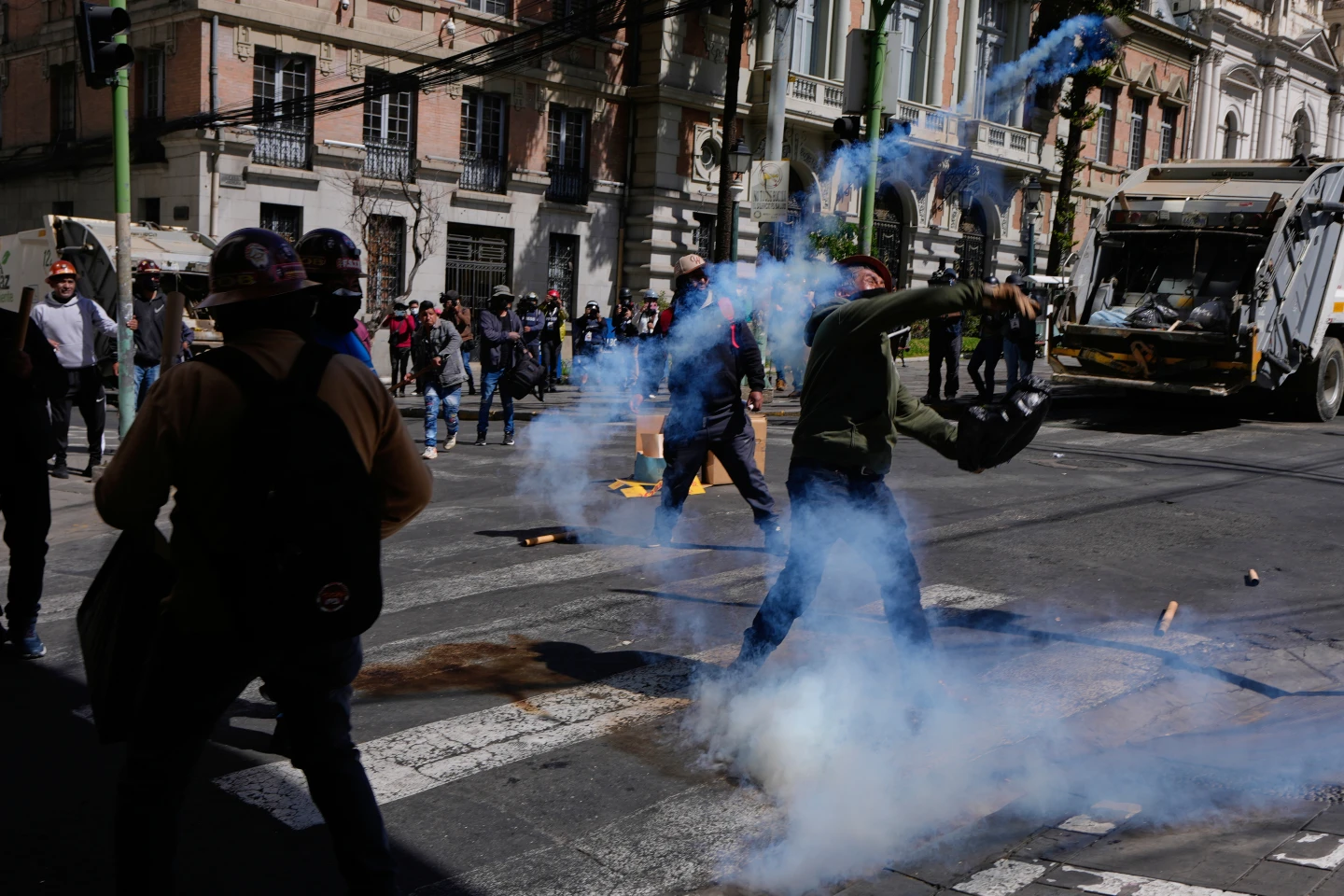
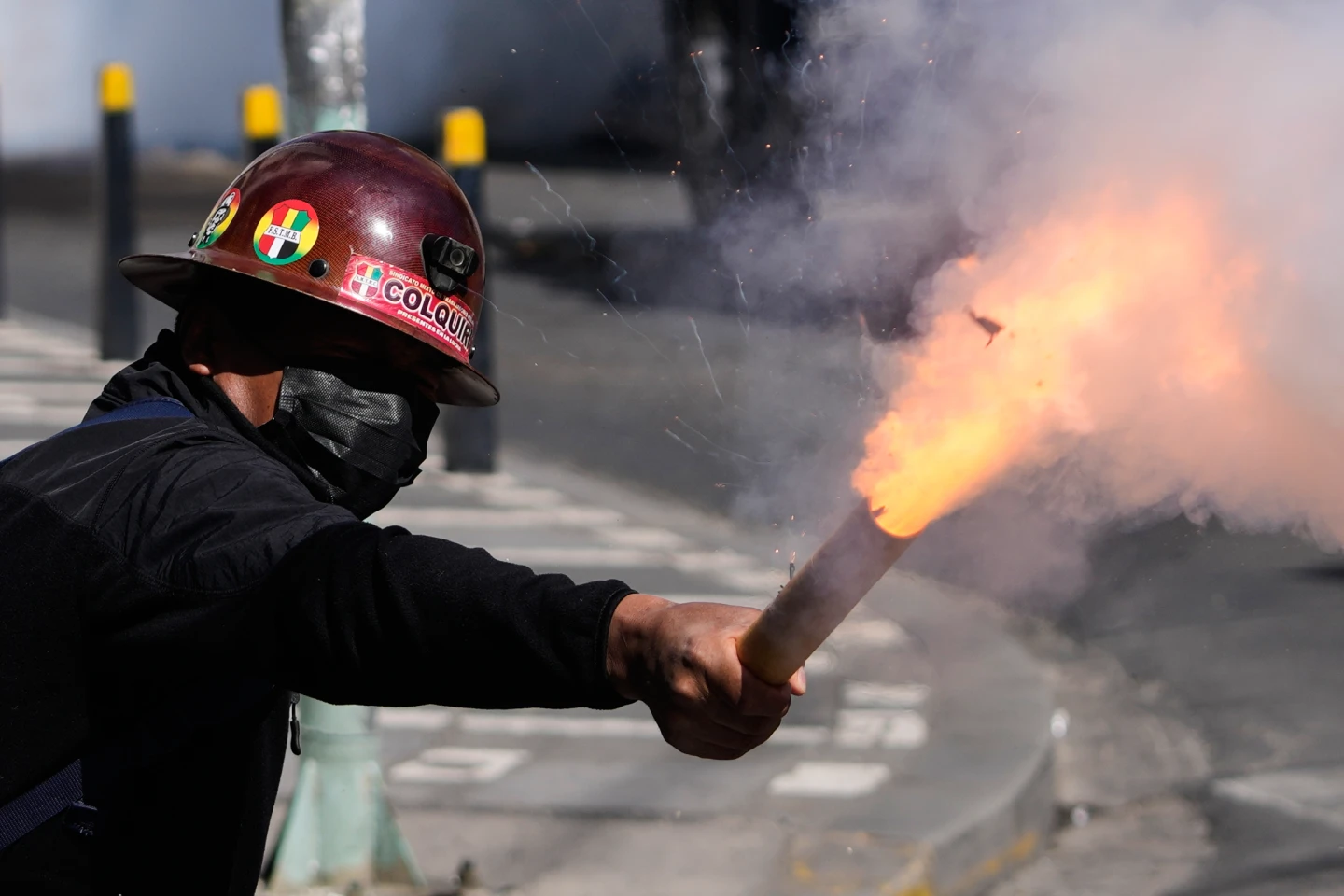
The situation in Bolivia is extremely tense: journalists from the scene report that protesters they repeatedly detonate smaller amounts of dynamite to loudly draw attention to their demands.
Main roads have been blocked for weeks, and now the situation is intensifying in the administrative capital of La Paz: protesters stormed public buildings and erected dozens of barricades, which fuel and food remained stuck in transport, and in some hospitals oxygen bottles temporarily disappeared, writes DW.
Banks are closed as a precaution. Economists warn that the protests could further push the country into crisis. The US State Department describes the riots as an "attempted coup". We answer several key questions.
What is the political background?
Even before the elections last fall, Bolivia was in a bad economic situation: due to weak exports, there was a lack of foreign currency, which is urgently needed, for example, to import fuel.
After almost 20 years of socialism with a strong state influence on economic policy under presidents Evo Morales (2006–2019) and Luis Arce (2020–2025), Bolivians have already paved the way for significant changes in the first round of presidential elections.
Ahead of the second round, both centre-right candidates promised capitalism for all, linked to economic reforms.

Photo: AP Photo/Juan CaritaA miner throws a firecracker at police during anti-government protests in La Paz
Former favorite Jorge Quiroga wanted to get Bolivia back on its feet with the help of the International Monetary Fund. In the end, center-right politician Rodrigo Paz, who advocated the modernization of the state without outside help, won.
However, although his Christian Democratic Party (PDC) won the parliamentary majority necessary to implement the reforms, experts predicted difficult governance even at the time of his inauguration.
The PDC, namely, is not ideologically homogeneous, nor is it particularly strongly connected to Paz, Christina Stolte from the "Konrad Adenauer" Foundation analyzed in October: "The PDC does not guarantee the newly elected president any coherent party base in the parliament, let alone a disciplined vote in accordance with the guidelines he sets."
What economic problems are piling up now?
A perennial shortage of foreign exchange and a heavy dependence on imports have led to Bolivia's debt reaching 95 percent of gross domestic product by 2025.
One of Paz's first measures to consolidate the state budget was considered reasonable by observers, but it was painful for the population: at the beginning of the year, he abolished fuel subsidies, which caused the prices at the pumps to almost double. That sharp rise in prices, along with other domestic factors, further accelerated inflation.
The situation was partly aggravated by external factors, such as the global price increase caused by the war with Iran.
In April 2026, purchasing power was, according to the data of state statisticians, 14 percent lower than a year earlier. High inflation hits the poor sections of the population particularly hard.
Who is protesting - and who is supporting the protests?
The unions responded to the rise in prices by demanding an increase in wages, as well as the return of fuel subsidies. A diverse alliance of peasants, miners, teachers, employees from other sectors, as well as indigenous groups quickly gathered around those demands.
The government gave in to another demand: it repealed a law passed just a month earlier that allowed landowners to pledge smaller plots of land as collateral for bank loans.
The demonstrators, however, claimed that small farmers could lose their land to agrarian concerns in such a practical way.
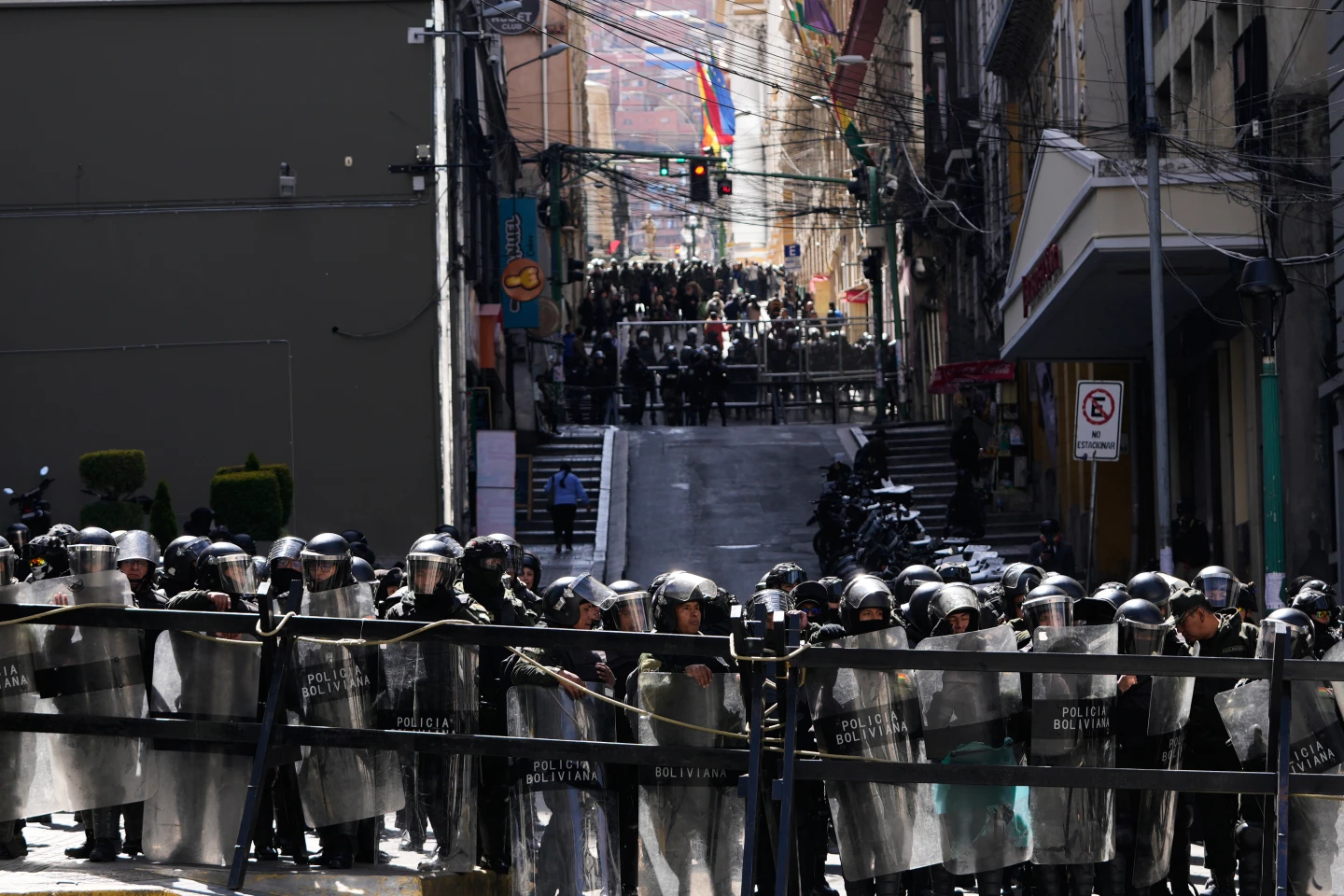
Photo: AP Photo/Juan CaritaPolice cordons during anti-government protests near the government palace in La Paz
The government managed to remove this topic from the agenda, but at the same time tensions further intensified when the first protesters demanded Paz's resignation. In that situation, the largest trade union COB called for mass protests. A few days later, the state prosecutor's office issued an arrest warrant for the president of the COB, Mario Argol, for terrorism and incitement to violence.
Calls for protests also came from the environment of former President Evo Morales. The government suspects a conspiracy: without providing evidence, Economy Minister José Gabriel Espinoza labeled the protesters as "political agents" who are serving "coca farmer" Morales as a springboard to return to power.
How could the situation develop?
President Paz is clearly counting on dialogue. On Wednesday, he announced the reconstruction of the government. The new government will listen to citizens better, he promised. In addition, protesting groups should be included in decision-making through the "Economic and Social Council".
At the same time, Paz made it clear that he would not negotiate with "vandals".
The United States has already clearly stood behind the Paz government and condemned all attempts to destabilize it. Before that, Peru, Chile, Argentina and Paraguay, as well as four Central American countries, published a similar statement. In a joint statement, the EU and five European embassies called on the conflicting parties for dialogue.
The key question is whether President Rodrigo Paz can stay in power - and to what extent domestic or foreign mediators can open up space for compromise.
It is believed that Evo Morales also has a great influence on whether the situation will further escalate or remain calm.
In the long term, Bolivia would need to address its underlying economic problems to stabilize the situation – but for now, even President Paz apparently sees new debt as inevitable.
Even before the start of the protests, his government agreed with the World Bank on a new loan of 200 million US dollars, intended to mitigate the social consequences of rising prices. More room for maneuver should secure the promised $4,5 billion from the Inter-American Development Bank. After the outbreak of protests at the beginning of May, it was announced that negotiations with the International Monetary Fund on a loan of up to 3,3 billion dollars are underway.
For the future of Bolivia, it will be crucial how the government uses this newly acquired space - and how much space the protests will give it in general.
Real journalism costs money, and we will not be bought by tycoons and corporations. Support us with a one-time or monthly donation. The time for it is now!