
The World
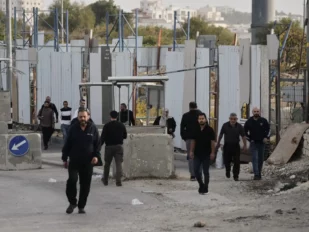
Israel begins demolitions in the West Bank
The Israeli human rights organization "Bethlehem" has condemned the plan for the "forced displacement of Palestinian residents" from a settlement in Hebron.
The Kurds are the largest people in the world without their own state. They are known for their combativeness and non-acceptance of other people's authority. In Iraq, they were oppressed, persecuted, and now they are expected to use weapons to save the Iraqi state from members of the radical Islamic State.
The Kurds are a people of Persian origin who today live in large numbers on the territory of eastern Turkey, western Iran and northern Iraq and Syria. The exact number of Kurds is not known. The Turkish authorities claim that there are five million of them in this country, the Kurds that there are twenty, and independent sources state that there are about 13 million in Turkey, about six in Iran, four in Iraq, and a million in Syria. There are over 25 million Kurds in total, which makes them the largest nation in the world that does not have its own state.
They are mentioned as far back as the third century, when the Persian ruler Artaban V wrote to his rebellious vassal Ardashir: "You have overstepped your bounds and brought on your own evil fate, you Kurds who grew up in the tents of the Kurds..." Throughout history, the Kurds have mostly engaged in nomadic cattle breeding , farming and crafts. In Istanbul today, Kurdish bakers are especially appreciated. They have a rich literature, full of heroic epics, fairy tales and fables. They speak several dialects of a Western Iranian language that is close to Persian, with Turkish and Arabic influences. The most famous Kurd was the legendary Saladin, victor over the Crusaders, conqueror of Jerusalem, ruler of Egypt and Syria.
Honor and pride are important words for the Kurds, weapons are part of everyday life. A Kurdish proverb says: a dagger is a brother, a weapon, a relative. They are known for their combativeness and non-acceptance of other people's authority. An old Kurdish story says that once upon a time, a Persian king in the mountains of Kurdistan passed by a sparrow and paid no attention to it. Angry at such disrespect, the Kurdish sparrow bristled and screamed at the king: "I pee on your father's grave!"
The Arabs Islamized them in the 7th century, but the Kurds constantly raised uprisings against the caliphs. They were under the Mongols in the 13th and 14th centuries, and a hundred years later, the Turks and Persians fought for supremacy in the territory where the Kurds live. The Kurds fought against both the Shah and the Sultan. At the time they were under the Turks, a large number of them were in the Turkish Janissary army. On the side of the Turks, they participated in the battles against the Armenians in the First World War in which the Armenians were decimated, but their common suffering at the hands of the Turks later made them allies.
They are accompanied by stories that they are prone to internal divisions, which made them good "material" for manipulation, both by the great powers and by their neighbors. They often joke about their divisions and the struggle for power, as in the joke about the elections in Kurdistan, when the hodja comes across two men bowing in front of the ballot box. Confused, he shouted at them: "Why do you worship the box, you wicked?" The whole village voted for Kasem, and Yusuf won!"
KURDISH STATE: At the conference in Sèvres, held in 1920, after the First World War, the great powers gave permission for the declaration of independence of Kurdistan with the condition that the process be gradual. Three years later, overwhelmed by the successes of Ataturk, Turkey refuses to accept it. Kurdistan was divided between Turkey and the newly created Iraq, which was under British rule, and the Kurdish uprisings in Turkey in the twenties and thirties were suppressed in blood. A similar thing happens after the Second World War. True, the first and only Kurdish state was founded in Mahabad, on the territory of today's Iran, but it survived for only 327 days. It was initially supported by the Soviet Union, but later changed its mind and sided with the Shah, who suppressed the rebellion by force.
In the Constitution of Iraq from 1958, it was stated that Iraq is a country of two equal peoples, Arabs and Kurds, but equality did not go beyond paper, so the Iraqi Kurds rose up in 1961. After 13 years of fighting, the ruling BAAS party decided to create an autonomous region for the Kurds, whose seat was in Irbil. After the agreement with Iran, which supported the Iraqi Kurds, there was a brief lull.
At the time of the fall of Shah Reza Pahlavi in 1979, the Iranian Kurds thought it was a chance to gain autonomy. After the uprising against Khomeini, the new regime dealt harshly with the Kurds.
During the Iraq-Iran war (1980–1988), the fiercest battles were fought in territories inhabited by Kurds. Both sides accused the Kurds of collaborating with the enemy. Saddam Hussein used chemical weapons killing thousands of Kurdish civilians, but the West passed over this massacre in silence, because at the time it supported Hussein in the fight against the new Iranian government.
In the first Gulf War in 1991, the Kurds again fought against Saddam, encouraged by the Western allies. The Western alliance halted before Baghdad and then withdrew, allowing the Iraqi army to vent its anger at the defeat on the Kurds. More than two million of them then had to flee to Turkey and Iran. Only after that, the US established a no-action zone for the Iraqi army in the Kurdish territories.
It was not only external enemies that were necessary for the Kurds to suffer. Between the two Kurdish parties operating in the north of Iraq, Massoud Barzani's Kurdistan Democratic Party and Jalal Talabani's Patriotic Union of Kurdistan, a real war broke out in 1994, which brought a new wave of refugees. During the conflict, both sides called on their blood enemies, the Turkish and Iraqi armies, for help.
During the American-British intervention in Iraq in 2003, the Kurds were one of the decisive factors for the overthrow of Saddam Hussein, and finally came a step closer to obtaining a state. Jalal Talabani became the president of the already disappearing Iraq, and the Kurdish autonomous region began to act as an almost independent state, lacking only official recognition.
KURDS IN TURKEY: The fierce struggle of the Turkish Kurds for autonomy (or an independent state) lasted from 1984 to 1999. The Kurds claimed that the policy of the Turkish state towards them amounts to the denial of their identity, the deliberate neglect of the region where they live in poverty, which leads to displacement and assimilation. Every spring, the Turkish army launched a traditional offensive against the Kurdish rebels in the southeast of the country, regularly entering northern Iraq as well.
Abdullah Ocalan, the leader of the Kurdistan Workers' Party, which led the struggle in which more than 15 people died in 35.000 years of war, terrorist attacks and assassinations, was arrested in 1999. Ožalan's death sentence was commuted to life imprisonment, which he spends in prison on the island of Imrali in the Sea of Marmara. Although the occasional clashes between the Kurds and the Turkish authorities, demonstrations and assassinations continued, in the following years both sides, step by step, began to lower the tension, and the leaders of the softening of relations were the Turkish Prime Minister Erdogan and Öcalan. It was an open secret in Turkey that all important steps in that process went through Ocalan.
These days, Öcalan announced from prison, after the presidential elections in which Recep Tayyip Erdogan won, that the bloody thirty-year conflict between the Kurds and the Turkish authorities "through key democratic negotiations has reached a stage where it could end" and that it is on the threshold "historical event".
The Israeli human rights organization "Bethlehem" has condemned the plan for the "forced displacement of Palestinian residents" from a settlement in Hebron.

The Ministry of the Interior has announced that it will hire 70.000 police officers, which will increase the security presence in French cities.
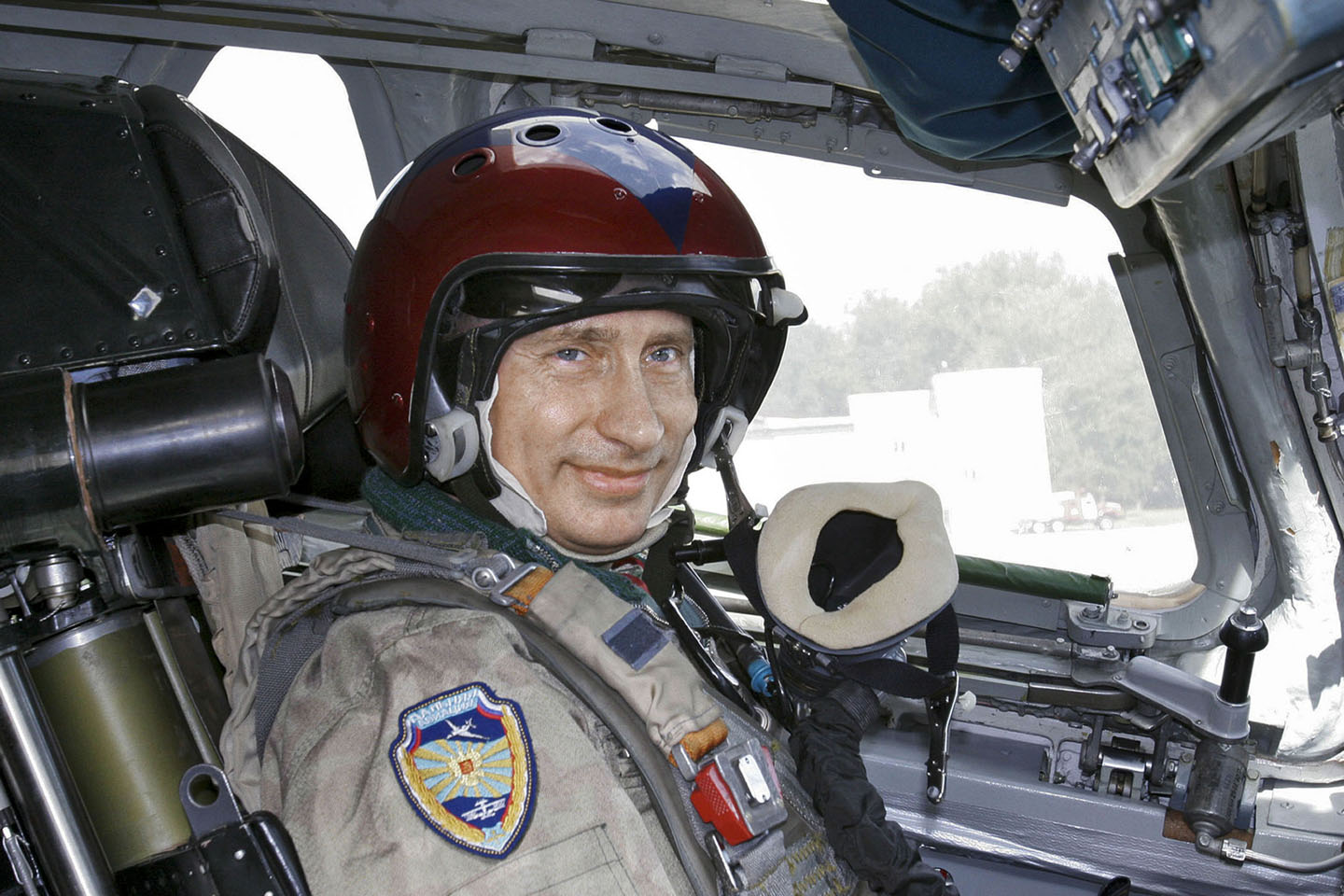
"Now they are talking about the threat from Russia and the beginning of preparations for war with Russia, which, in my opinion, is a kind of political schizophrenia," said Russian President Vladimir Putin

For the first time in almost two years, the opposition in Venezuela took to the streets across the country to demand elections by July 2027. The government organized its own march in the same square on the same day

France is preparing for Saturday's protests with a series of bans on gatherings and an increased police and military presence. The courts have already overturned one ban in Paris, and unions and students are calling for peaceful demonstrations

There is, literally, no difference between the one who claims it is day in the middle of the night, or the one who claims to be a giraffe, from the claims we read on billboards: that Vučić is working to unify Serbs and that Serbia is doing better and better day by day.

The pre-election arrests due to the alleged "overthrow of the state" testify to the regime's panic. The bad news for them is - they can't arrest the whole people who decided to defend themselves from progressive beatings and election theft

The ring that tightens around Ćaciland Student list is getting narrower. Because there are more and more spoiled people who see the false prophet for what he is: a street obscener who is fighting Serbia

The archive of the weekly Vreme includes all our digital editions, since the very beginning of our work. All issues can be downloaded in PDF format, by purchasing the digital edition, or you can read all available texts from the selected issue.
See all




