
The World
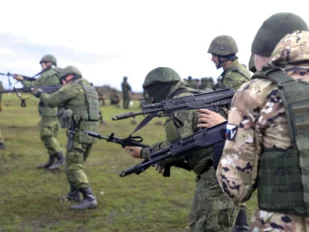
Data leak: More than 400.000 Russians killed in war in Ukraine
Largest ever leak of Russian casualty data shows more than 400.000 Russians killed in Ukraine war

According to analysts, the difficult process of forming the government and the continuation of political blockades will mark the period after the just concluded general elections in Bosnia and Herzegovina.
In the elections held on October 4, three seats in the Presidency Of Bosnia and Herzegovina they won Denis Bećirović from the Bosniak people (SDP BiH - Social Democratic Party), Zeljka Cvijanovic from the ranks of the Serbian people (SNSD - Alliance of Independent Social Democrats) and Darijana Filipović from the ranks of the Croatian people (HDZ BiH - Croatian Democratic Union). These are the preliminary data of the Central Election Commission of Bosnia and Herzegovina based on more than 90 percent of processed polling stations.
The leading Bosniak party, the Party of Democratic Action (SDA), is returning to the political scene of BiH strengthened by good election results. Along with the HDZ BiH, the SNSD and the Social Democratic Party (SDP) of BiH, they will have the most mandates in the House of Representatives of the BiH Parliament, writes DW.
SDA also won the most mandates in the House of Representatives of the Parliament of the Federation of BiH, ahead of the SDP and the HDZ of BiH. Ethnic national parties achieved victories in nine cantons of the Federation of Bosnia and Herzegovina. In Sarajevo Canton, they are rivaled by the SDP and the Party for Bosnia and Herzegovina.
In the Republika Srpska SNSD Milorad Dodik he kept the leading position. According to preliminary results, his candidate Savo Minić is leading in the race for the president of the RS, while the SNSD is also leading in the elections for the RS National Assembly.
However, Bakir Izetbegović, the leader of the SDA, did not win a seat in the BiH Presidency, while Darijana Filipović maintained her advantage over Democratic Front (DF) candidate Slaven Kovačević and independent candidate Zdenko Lučić.
Political messages after the election mostly remained within the existing divisions. Denis Bećirović said that "libertarian, anti-fascist and civil BiH is alive".
Izetbegović, despite the defeat in the race for the Presidency of BiH, assessed that the SDA has strengthened at all levels and will be an important factor in the formation of the government.
The HDZ BiH claim that the party has confirmed its position as a key political force among Croats, with an emphasis on equality and the election of legitimate representatives, while Milorad Dodik announced the continuation of the current political course.
Željko Komšić, the leader of the DF, interpreted the result as a consequence of "ethnic homogenization" and a sign that "the story of a civil state is not something that the people of Bosnia and Herzegovina accept."
At the same time, the weaker result of the Troika, which consists of SDP, NiP and Our Party (NS), was also acknowledged by its representatives. NS President Sabina Ćudić took responsibility, while NiP President Elmedin Konaković said that his party "paid the highest price" for the Troika's electoral downfall.

Political analyst Ibrahim Prohić believes that ethnic national parties have further strengthened their positions after the elections and expects that the political situation will be even more difficult than in the previous four years.
"Unfortunately, there will be no programmatic coalition. There will be a division of the electoral spoils among a smaller number of actors than it was until now, and it will be easier for them to rule than it was in the past four years," Prohić told N1.
According to his assessment, the result of the race for the Presidency of BiH could have been different if the Party for BiH candidate Semir Efendić had not participated. Part of his voters, according to Prohić, would in that case vote for Izetbegović, who would probably win.
The director of IFIMES, Zijad Bećirović, sees the election results as a confirmation that Bosnia and Herzegovina remains within the ethnic political pattern. SNSD strengthened its position in RS, HDZ BiH among the Croatian electorate, while SDA returned as the leading Bosniak political party.
"This means that ethnic political representation will continue to be dominant," says Bećirović.
At the same time, no national party can govern the country alone. That is why, Bećirović believes, the key test will be the formation of a functional government and the achievement of a political agreement.
According to his assessment, the troika failed to "capitalize" the power at the state level in the past four years. However, Bećirović singles out turnout as one of the most important messages of the election.
"When only a little more than 40 percent of voters go to the polls, it is a serious warning. It shows the deep distrust of citizens towards the political system and calls into question the political weight of the election result," he says.

Bećirović does not see the electoral defeat of DF and Komšić's assessment that the civil state does not have the support of the majority as a defeat of the civil idea itself.
DF candidate Slaven Kovačević did not repeat the electoral success of Željko Komšić, who was elected as a member of the Presidency of Bosnia and Herzegovina from among the Croatian people in three mandates in the Federation of Bosnia and Herzegovina.
"One politician cannot be synonymous with a civil state, and that is why his electoral defeat should not be equated with the defeat of the idea itself," says Bećirović.
The problem, however, remains in the very structure of the political system, the DW interlocutor notes. Bosnia and Herzegovina is still strongly organized around collective, that is, national identities, which is why it is difficult to find a balance between individual civil rights and the collective rights of the constituent peoples.
Bećirović therefore sees two possible directions. One is "further ethno-political polarization", and the other is the creation of a new policy that would connect identity issues with the economy, the rule of law and European integration.
Croatian Prime Minister Andrej Plenković reacted at the regional level. He congratulated Darijana Filipović and said that the Croatian people in Bosnia and Herzegovina "have a legitimate representative" in the Presidency of Bosnia and Herzegovina, announcing the continuation of close relations between Croatia and Bosnia and Herzegovina.
International observers led by the OSCE/ODIHR are due to present preliminary findings on the elections on Monday, October 5. The election process, including the application of new technologies, was monitored by representatives of the European Union, OHR and the US Embassy.
Election time! And someone has to report to you independently. That's why it's in October annual subscription the digital edition of "Vremena" even 2.500 dinars cheaper. Choose now!
Largest ever leak of Russian casualty data shows more than 400.000 Russians killed in Ukraine war

At least 11 people died in two chain collisions on the Trakia highway in Bulgaria. 86 vehicles were involved, and around 50 people were injured

The global race in the development of artificial intelligence has boosted Chinese exports. Increasing dependence on foreign markets is straining Beijing's relations with its trading partners
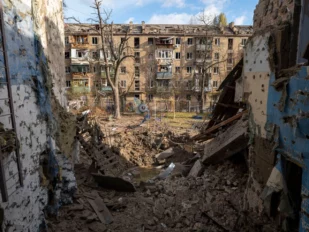
New negotiations between Ukraine, the USA and Russia are planned for November 10 and 11 in Abu Dhabi. This is the first meeting in this format after nine months

A serious accident occurred on Monday at a steel factory near Izmir, when an explosion claimed at least 17 lives. According to the first information of the local authorities, the accident was preceded by the fall of the crane and damage to the gas pipeline

At the moment when the institutions of the Republic are destroyed, when Vučić's octopus is still alive, when people are disgusted by the injustice and the stench left behind by the Essenes regime, we have, as Machiavelli said, only civic virtue as the fuel with which we can return to the beginning

The four independent members of REM are an example of perseverance and civic responsibility. Rodoljub Šabić even, upon leaving the premises of REM, after the sentencing of the Informer, experienced that the Essenes insulted him, hit him with their hands and feet. But that too will soon be over

Vučić pardoned the batterers and Dijana Hrkalović. The election winners should abolish the sultan's power that allows one man to run afoul of the entire judicial system

Time explores: The construction of the St. Sava Temple
Did the money paid by the Government to SPC end up in Moscow through Alta Bank? subscribeThe archive of the weekly Vreme includes all our digital editions, since the very beginning of our work. All issues can be downloaded in PDF format, by purchasing the digital edition, or you can read all available texts from the selected issue.
See all



