

Election 2026.
REC determined the final number of voters in the elections
The Republic Election Commission (REC) made a decision today on determining the final number of voters in Serbia

The Freedom and Justice Party, Serbia Center, the Solidarity movement and the New DSS have a legitimate right to go to the elections on October 25 with their own lists. But being right and making a morally correct decision are not the same thing. At a time when the defeat of the regime is closer than at any time in the last thirteen years, insisting on one's own columns is not a demonstration of pluralism, but a waste of votes that only harms one side - the opposition. The argument is simple: these lists will not pass the census

The whole idea of these two lists – European Serbia and the Authentic Right - which is why they need to go to the elections separately right now is based on one basic premise: that these coalitions will surely pass the census and that, when they pass it, they will be supported in the Parliament Student list. The problem with that argument is pretty simple – it's not supported by data. I will refer to, in my opinion, the most relevant publicly published survey so far: the one conducted by CRTA and Stanford University's Democracy Action Lab in June 2026, according to which the SRCE party has 0,4%, SSP 0,9%, and Novi DSS 1,1% of voter support.
If these parties go to the elections and do not pass the 3% threshold - and there is every chance that they will not pass it - the opposition bloc will lose several tens of thousands of clearly opposition-oriented voters. A large part of those voters, in a situation where these parties do not participate in the elections, would vote and support the Student List. This is indicated by their political profile of clearly anti-regime voters who follow political events and vote regularly because they want this regime to be replaced. For those who need a more detailed argumentation, I recommend Dušan Milenkovic's text "Referendumska atmosfera"; I agree with almost every word of it.
SSP, Srce, Solidarnost and Novi DSS defend their decision elegantly: they say they have a legitimate democratic right to go to the elections separately from the Student List because they stand for pluralism and their voters expect it from them. And really - nobody seriously disputes that right. But there is a difference between "having the right" and "being right", and it is crucial these weeks. These parties have a legitimate right to participate in the elections. However, they do not have a moral right.
RIGHT TO ERROR PAYED BY OTHERS
One of the answers that could be heard from the representatives of these two lists to the question of what will happen if their votes remain below the threshold - and there is every chance that they will - is that they will pay a political price for it and take responsibility.
For now, let's put aside the discussion about whether some of the leaders of the parties that make up these two coalitions should have taken responsibility for certain actions a long time ago. The right to make a wrong decision is a noble heritage of democracy and something that cannot be denied to any political actor. In orderly democratic systems, this is what happens: parties make mistakes, lose votes because of that, go to the opposition or, if they are already there, stay in it. They learn lessons, and the consequences of their bad decisions are borne by them.
We, however, do not play that game. Serbia has not been a democratic country in which normal rules of the game apply for a long time. Instead, we have an undemocratic political context in which an atypical process has been taking place for the last two years, which was initiated by the student movement and brought the authoritarian regime to the brink of collapse. A large number of citizens actively participated in that process. For months, they set aside their time, went out into the streets, lost their jobs, endured violence and engaged in public engagement in various ways. Their personal exposure has become enormous, and for a significant number of those people, the outcome of the October 25 election has immediate consequences for their lives and futures. This requires the other political actors to adopt different standards of political action, because the bill for their mistakes is no longer paid only by them, but also by ordinary citizens who have invested time, energy, reputation, and often their own existential security with a single goal - to change this regime.
Voting based on one's position on the European Union and gay marriage is a luxury that no one can afford at the moment. I say it on purpose: at this moment, because at some next moment the relationship will be different. Now, however, on the list of priorities, saving society is listed more than programmatic issues.
THESE ARE PARTIES THAT ARE NO STRANGER WITH NOT GOING TO THE ELECTIONS
No one took away the moral right of these parties to go out on their own - they spent it themselves, and in installments.
"We undertake that, as long as the required conditions for the election process to be free and fair are not met, we will not participate in any elections."
This is what the second point of the Agreement with the people, signed in 2019, read, among the first signatories of which were members of the Freedom and Justice Party with Dragan Đilas at the head. This was followed by a boycott of the 2020 elections, to which most of the opposition joined.
Then came 2022, then 2023. The election conditions were worse, but the opposition took part in the elections this time.
And then came the local elections in 2024. On them, a simple election calculation showed that the only chance for the SNS to retain certain municipalities in Serbia was for the opposition parties to decide to boycott the elections. And the same parties that are now advocating the right to participate in the elections - SSP, SRCE and Novi DSS - then decided to boycott them again. The failure of SSP and SRCE cost the opposition public the victory in Nis, because the opposition that participated in the elections won more votes than the ruling coalition, but it lacked about three hundred votes for the majority of the mandate. If SSP and SRCE had participated in these elections, those votes would certainly have been won.
"Today, whoever goes to the polls, he doesn't do it for the sake of the citizens - he does it for himself, for the mandate, for his ambitions," said Dragan Đilas at the time.
"There is no point in going to the elections if the election conditions do not change," said Miloš Jovanović at the beginning of 2024.
Now, when those conditions are not even a shade better - and in many aspects they are even worse - those same parties want to go to the elections again.
A principle that turns on and off according to the current calculation is not a principle. You can't make going to the elections conditional on the existence of fair election conditions for years, and then in one of the most unfair election cycles decide to go anyway - unless the election conditions were never the real reason, but an excuse that is taken out of the drawer when needed.
The one who punished the voters with a boycott where victory was within reach can hardly today credibly teach a lesson about responsibility to those same voters.
PLURALISM THAT STOPS AT THE DOOR OF THE PARTY
The last reason why invoking democratic principles is problematic does not require much reasoning: you cannot invoke the right to defend pluralism of opinion while prominent members and entire local organizations come out of your party and openly invite you to stand behind the students, claiming that no one even consulted them when it was decided to go to the elections. The one who bypasses a different opinion within his own organization, and defends himself externally with the same pluralism as the main argument, has lost the right to refer to it.
People who are against this government are currently the majority in Serbia. But that majority, under the given circumstances, wins only if it is collected - and not if a part of it falls to the lists that do not pass the census.
There is a quote attributed to Lenin: there are decades in which nothing happens and there are weeks in which decades happen. Serbia is now living that historic week. Each subsequent one, until the election on October 25, will be more important than the last. The honorable and, what is equally important, rational decision of the European Serbia and Authentic Right would be to become aware of this, withdraw from the election race and support the Student List.
The author is a political scientist
Real journalism costs money, and we will not be bought by tycoons and corporations. Support us with a one-time or monthly donation. The time for it is now!
The Republic Election Commission (REC) made a decision today on determining the final number of voters in Serbia

A citizen of Belgrade whose polling station in Banja Luka was changed in the voter list without his knowledge claims that the Ministry did not correct his data and that the deadlines have expired. The elections are on October 25 and he still doesn't know where he will vote.
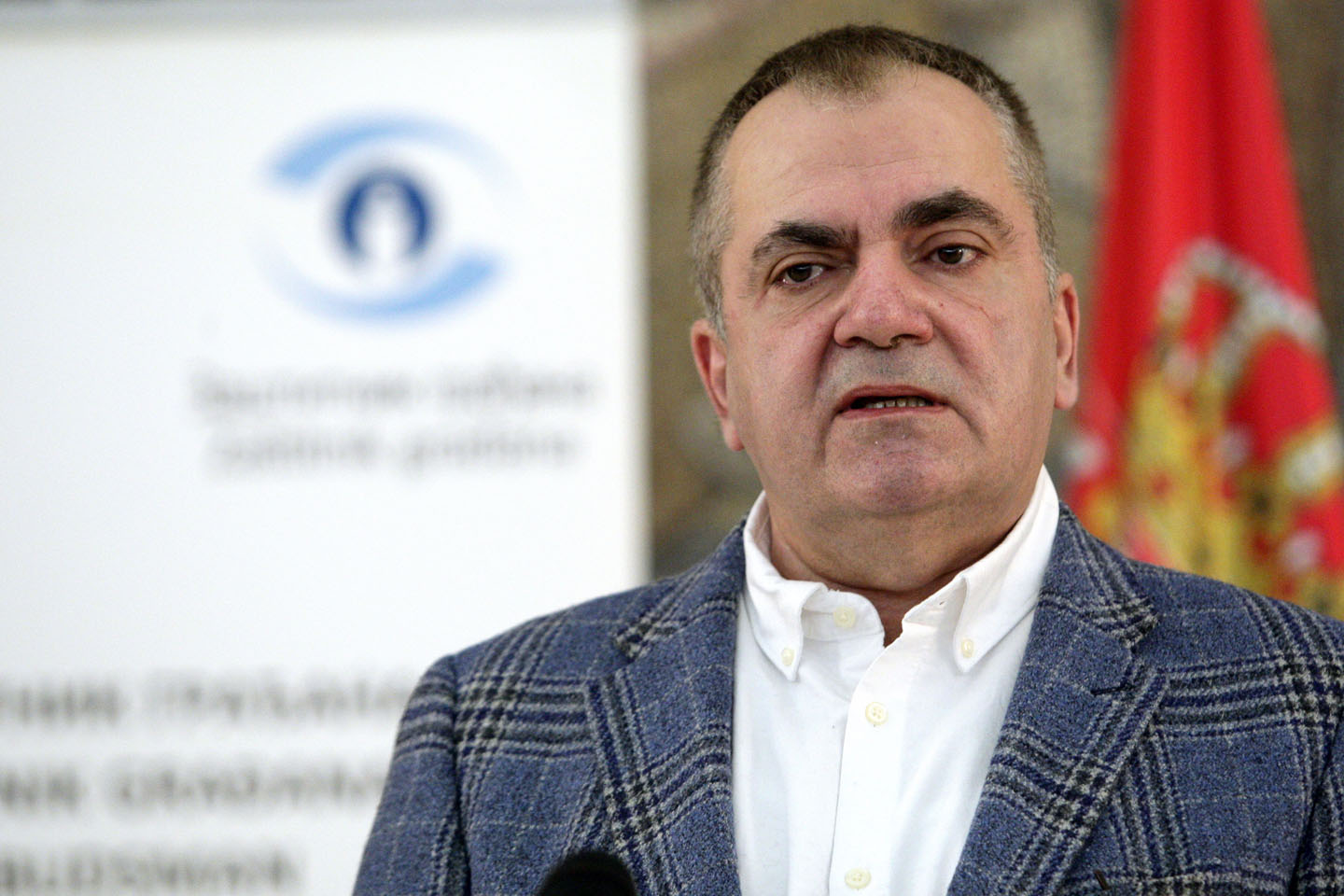
Phone numbers 064 876 85 05 and 011 2068 100 will be available 24/7 for reports and addresses to citizens, and the possibility of direct addresses at the premises of the Protector of Citizens is also provided.

Election silence began at midnight and will continue until the polls close on Sunday, October 25. Legal experts and analysts have long disputed its meaning in the era of social networks.
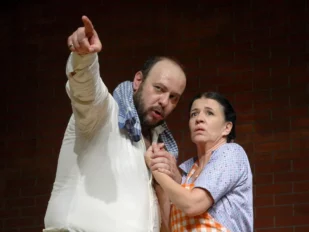
The performance of "Balkan Spy" was canceled last night just before the meeting of the Student List at Slavija - due to the indisposition of the actors. "I am not indisposed," says the director of the play, Tatjana Mandić Rigonat

There is, literally, no difference between the one who claims it is day in the middle of the night, or the one who claims to be a giraffe, from the claims we read on billboards: that Vučić is working to unify Serbs and that Serbia is doing better and better day by day.

The pre-election arrests due to the alleged "overthrow of the state" testify to the regime's panic. The bad news for them is - they can't arrest the whole people who decided to defend themselves from progressive beatings and election theft

The ring that tightens around Ćaciland Student list is getting narrower. Because there are more and more spoiled people who see the false prophet for what he is: a street obscener who is fighting Serbia

The archive of the weekly Vreme includes all our digital editions, since the very beginning of our work. All issues can be downloaded in PDF format, by purchasing the digital edition, or you can read all available texts from the selected issue.
See all




