
Elections 2026: From student revolt to decision at the polls
It intends to maintain production of one million tons of steel per year. He is looking for a strategic partner in Russia, Ukraine, China and India. SARTID was sold to US Steel on March 31, 2003 for $21,3 million, and five of the steel mill's subsidiaries for another $1,7 million.
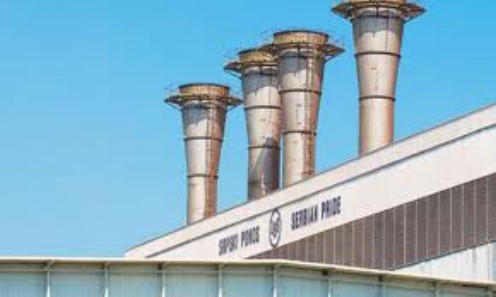
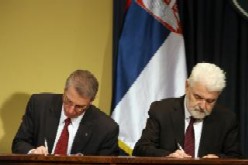
The Government of Serbia purchased the Smederevo ironworks from the American company "U.S. Steel" for one dollar. The Prime Minister of Serbia, Mirko Cvetković, signed the contract on the purchase of the Smederevo ironworks on Tuesday, January 31, together with the company's vice president for European operations. US steel David Rintoul. The Government of Serbia thus became the owner of the company, which has no debts or loans to banks, claims Prime Minister Mirko Cvetković, who emphasizes that the Government of Serbia received net working capital (inventories, raw materials) of 100 million dollars. The head of the government's Working Group for the Smederevo Ironworks, Dušan Nikezić, claims that the estimated value of fixed assets is around 250 million dollars.
Prime Minister Cvetković announced on Friday, January 27 that the agreement on the purchase of the ironworks in Smederevo from U.S. Steel-to be signed on Tuesday, January 31st, that as of Wednesday, February 1st, the government will start looking for a strategic partner and that it will be easier if the ironworks works and does not go into bankruptcy or bankruptcy. At the time of takeover, none of the potential buyers were contacted, but analyzes were made of who might be interested in the Smederevo ironworks. Economists are talking about the interest of the Japanese and Chinese in the Smederevo ironworks. In an interview with RTS, Professor of the Faculty of Economics in Belgrade Božidar Cerović assumes that the government has ideas, that potential collaborators are from countries that are developing more rapidly, such as China or India.
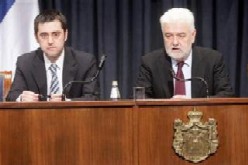
The government concluded that it must play a proactive role in solving the problems of that company because it is among the most important in Serbia, one of the largest exporters, and also because of the preservation of jobs.
According to the Prime Minister, none of the 5.400 workers will be out of a job, although it is not known whether their incomes will be reduced. The government had not previously planned to take over the ironworks, but this, according to the Prime Minister, was a forced move, because otherwise the existence of more than 5.000 families and another 20.000 people who were sent to work at the ironworks would be in question. Funds for maintaining the operation of the ironworks are provided from the part of the budget intended for supporting the economy. The head of the government Working Group for the Smederevo Ironworks, Dušan Nikezić, pointed out that efforts will be made to maintain the same level of production activities, that is, to have one blast furnace in operation, as well as a rolling mill. The capacity of the ironworks is about 2,2 million tons of steel per year, but the production is about one million tons. Nikezić announced that the government will try to maintain that production level.
Of the two blast furnaces in the Smederevo ironworks, one was put into the so-called quiet operation mode last year, and since January 9, workers in Smederevo work four days a week, while on the fifth day they receive 60 percent of their salary. In order to help the ironworks to continue working, the local government in Smederevo reduced the fee for using the Danube bank for business purposes, as well as the environmental fee, at the end of last year. U.S. Steel with five percent in the total Serbian production, and with about 14 percent in domestic exports (it exported to about 40 countries). The Reuters agency notes that in 2010, the value of the steel plant's exports US steel Serbia was 35 million dollars.
Switchboard U.S. Steel -in the USA announced that on January 31, it will decide on the fate of the ironworks in Serbia due to poor business results, caused by the global economic crisis and the drop in demand on the world market.
Prime Minister Cvetković announced that the Government has maintained regular contacts with the company in the last three years U.S. Steel, who complained about the difficulties in doing business during the world economic crisis and because of that she decided to leave Serbia.
List Pittsburgh Post Gazette it says that in the central office United States Steel Corporation in Pittsburgh did not want to comment on the news about the contract for the sale of the steel plant, and that the company announced last October that it was not satisfied with the results of the factory in Serbia and that it was considering various options. The president and general director of that corporation, John Surma, cited the high costs of raw steel processing, the pressure of reduced demand - customers who cannot pay, and Serbia's weak economy - as problems. The paper only reminds that immediately before the news about the transaction contract in Serbia arrived, the price of the company's shares was US Steel amounted to 30,04 dollars and that it had jumped by 67 cents.
As reported CBS news, including Washington post with Bloomberg businesses, the company U.S. Steel in Serbia, in the first nine months of last year, it had about 56 million euros (73 million dollars) in losses. The working week was shortened to four days.
KOŠICE: Steel plant U.S. Steel- in Košice, according to this source, is more profitable because it produces high-quality steel for automobile sheets that fares better on the market. Sheet Pittsburgh Post Gazette, however it says that they are European operations US Steel-, which includes a steel plant in Slovakia, recorded a loss of 50 million dollars during the third quarter of last year due to the crisis in the Eurozone. Sheet Sheet Pittsburgh Post Gazette quotes industry analyst John Tmazos that the Smederevo steel plant is probably worth more than one dollar, but that US Steel probably had a negative forecast that it could not do business more favorably in the region for the next year or two, where the steel plant competes with producers from Ukraine, Russia, Germany, Poland and Turkey. Toronto Star writes that the American company in its factories in Europe has operational losses of 40 dollars per ton of steel produced.
According to the company Metals Consulting International Limited which deals with consulting services in the field of steel business in Bulgaria, the Czech Republic, Kazakhstan, Poland, Romania, Russia, Slovakia, Turkey and in the Ex-YU countries, depending on whether it is hot-rolled, cold-rolled, steel in plates or in wire, prices in September 2011 ranged from 778 to 949 dollars per ton, and in April of the same year from 882 to 1004 dollars per ton.
Iron ore – 177,94
Transport of iron ore - 28,7
Coke - 103,80
Transportation of coke - 10,12
Steel scrap – 53,46
Waste delivery - 0,81
oxygen - 7,06
Metals for ferro-alloys – 23,10
Refractory material – 26,55
Refractors – 7,15
Other expenses – 14,25
Credits – 21,6
Thermal energy – 33,38
Electricity – 12,2
Workforce – 17,76
Exchange rate differences – 48,00
Interest – 58,00
Total - $533,92
SOURCE http://www.steelonthenet.com
Company Moody's gives a significantly less favorable cut for the 27 countries of the European Union: the prices of hot-rolled steel from European producers in the period January - September 2011 averaged 570 euros per ton, and in mid-October prices were below 510-530 euros per ton.
ArcelorMittal has closed blast furnaces in Belgium, shut down two furnaces in France, one in Poland and another in Germany, plans to shut down furnaces in Luxembourg and Spain. Shutting down the blast furnaces in South Wales has been completed Tata Steel UK, SSAB furnace shutdown in Sweden.
It is possible that economies of scale also play a role: in 2011, 4,242 million tons of crude steel were produced in Slovakia, 1,324 million tons in Serbia, 834 tons in Bulgaria, and 648 tons in Slovenia... Compared to the capacity of the world's largest steel producers, these are modest quantities (see list The world's largest steel producers in 2010. in the sidebar.)
CHANGE OF NAME: The Serbian government will choose professional management to manage the ironworks in Smederevo, but personnel solutions have not yet been considered. According to the Prime Minister, the government will not send its officials to the ironworks, but the management will be left to professional management, and maybe foreign management will be hired. The newspaper Blic and TV B92, referring to the statement of the Minister of Economy and Regional Development, Nebojša Ćirić, speculated on Monday, January 30, that the American management that had been running the steel plant until now could be hired, and "Novosti" that the iron plant would deliver steel to customers with which the American company has cooperated so far.
"We need to enter the company and see what all needs to be done," said Cvetković, adding that the possibility of one of the foreigners, who knows well the problems of ironworks management, being involved in the management of the factory is also not excluded. US Steel Serbia, with plants and branches in Smederevo, Šabac, and Kučevo, deals with the production and sale of hot and cold rolled products, as well as white sheet in the form of coils and flat sheets.
RTS learns that the company will no longer be called US Steel Serbia, but the government has not yet thought about what name the steel plant will bear.
SARTID was founded in 1913 as a joint stock company. Then his name was Smederevo Metallurgical Plant (MKS), with 47 work units and 12 OOURs, practically 12 companies.
Since 1963, steel production technology has been installed in MKS - with expensive loans, which was not completed in the 1971s. The pig iron smelter was completed in 1973, the cold rolling mill in 1974, the crude steel mill in 1979, and the hot rolling mill in 1986. However, it was thought that by 60, the degree of total construction was still only about XNUMX percent. Large debts dated from that time MKS- a. It started when from ThyssenKrupp(pre-war Krupp) in June 1971, an 8-year loan of 111 million dollars was taken. To make a second cold rolling mill, from a British company Davy Loewy from Sheffield, a loan of 1979 million dollars was taken in 660...
Old name – SARTID 1913. was married on May 31, 1992.
Železara was sold by free negotiation, based on the decision of the Commercial Court in bankruptcy proceedings, without the consent of the creditors, to the company U.S. Steel Košice, March 31, 2003.
Za SARTID in bankruptcy U.S. Steel paid 21,3 million dollars, and another 1,7 million for the other five subsidiaries. For that money U.S. Steel received: New ironworks and a rolling mill with 300 hectares of land, then the Old Ironworks with three foundries, a factory of white sheets in Šabac, the port of Smederevo on the Danube, a free customs zone in Smederevo on an area of 21 hectares, a lime factory in Kučevo and some other properties.
Then the property was actually sold, but not the company SARTID which today is run as a company in bankruptcy, and which has not yet been completed. In a recently published List of debtors of legal entities, which was published by the Tax Administration, his debts to the state amount to 5,599.268.242,44 dinars, which according to the Bankruptcy Law (Official Gazette of RS, No. 104/09), cannot be forcibly collected.
U.S. Steel In 2003, he undertook to invest another 200.000.000 dollars in this steel plant. According to the sheet Pittsburgh Post Gazette, US Steel has since invested at least 150 million dollars in the ironworks, but the nature of those investments is not described. On the US Steel website, it is stated that blast furnace no. 1, that blast furnace number 2 was modernized, that modifications were made to the steel mill, then the modernization of two continuous casting machines, the modernization of the cold rolling mill, the modernization of converter number 1, that a new wastewater treatment plant was built and that the main chimney was reconstructed in the agglomeration plant. No comment was available on whether US Steel had fulfilled the investment obligations of the 2003 agreement.
The American company is taking over SARTID- and the obligation to pay debts, in the amount estimated at over five hundred million dollars, which the Smederevo combine owed to creditors, was released.
Those debts were "ironed out" through the write-off of debts to the Paris and London clubs and through the liquidation of five large Serbian banks.
The transaction was a subject of dispute in Serbia for a long time, and he also announced Anti-corruption Council of the Government of Serbia . Disputes were silenced at a time when the ironworks was working at optimal capacity...
The case of the Smederevo Ironworks is not the only one in the region. From Croatia Sisak Ironworks the American company withdrew at the end of last year CMC, Commercial Metals Company , which invested 200 million dollars in the modernization of the Sisak company, but failed to organize profitable production and - closed the ironworks. 916 workers were dismissed. Some will be paid 400 euros per year of service, some nothing.
The collapse of the Sisak ironworks threatened the survival of 27 companies. Former Industrial Complex"Sisak Ironworks" was, by the way, divided during the transition and privatization into several metallurgical companies, among them are: Pipe rolling mill Sisak, Metaling, which deals with the production and assembly of steel structures, Felis, rolling mill of steel castings.
The Croatian state did not take over the company and unsuccessfully searched for a buyer for some time. In the midst of the pre-election campaign in Croatia at the end of last year, the new prime minister Zoran Milanović said on several occasions that "it will not happen that Croatia will be left without ferrous metallurgy", and at the end of the year it was announced that the Croatian government would continue negotiations with the American CMCin order to Sisak Ironworks trained for market competition as soon as possible.
Some economists warn that the Sisak company will have to return all the state aid received in the period 2002-2007, when Croatia officially enters the EU...
United States Steel Corporation from Pittsburgh was formed in 1901 and is considered the largest integrated steel producer in the USA, the tenth largest in the world. It works in the USA, Canada and Central Europe. Its origin is associated with legendary American businessmen such as Andrew Carnegie, JP Morgan, and Charles Schwab.
American Commercial Metals Company CMC, based in Irving, Texas, is engaged in metal fabrication and recycling. It was founded in 1915. It has a copper refinery in Virginia, and steel plants in Texas, Alabama, South Carolina, Arkansas, and Arizona, and its CMC Zawiercie, SA is the third largest steel producer in Poland.
The volume of production of companies expressed in millions of tons
1. ArcelorMittal, 98,2
2. Baosteel, 37,0
3. POSCO, 35,4
4. Nippon Steel, 35,0
5. JFE, 31,1
6. Jiangsu Shagang, 23,2
7. Tata Steel, 23,2
8. US Steel, 22,3
9. Ansteel, 22,1
10. Gerdau, 18,7
11. Nucor, 18,3
12. Severstal, 18,2
13. Wuhan, 16,6
14. ThyssenKrupp, 16,4
15. Evraz, 16,3
16. Shougang, 14,9
17. Riva, 14,0
18. SAIL, 13,6
19. Sumitomo, 13,3
20. Hyundai 12,9
21. China Steel 12,7
22. NLMK, 11,9
23. Magnitogorsk, 11,4
A future investor will have to meet two conditions - to be an operator in steel production, but at the same time to have its own iron mines and to have coke, President Tadić said on January 30, during a visit to RTB Bor, stressing that the state is not specialized in steel production and that she does not plan to deal with it, but that in the current circumstances she had to do everything in order to save jobs and the potential of the Smederevo ironworks.
List Blic speculates that Serbia will look for a buyer for the Smederevo ironworks in the east, in Russia, Ukraine, China and India.
Blic quotes Dušan Nikezić, State Secretary in the Ministry of Finance, who estimates that the main trump cards in those negotiations will be large infrastructure projects in Serbia: the Zemun-Borča bridge, the "South Stream" gas pipeline and the Belgrade metro, for which the steel mill in Smederevo could provide the raw materials .

The archive of the weekly Vreme includes all our digital editions, since the very beginning of our work. All issues can be downloaded in PDF format, by purchasing the digital edition, or you can read all available texts from the selected issue.
See all


