In front of the Patriarchate
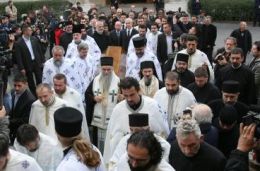
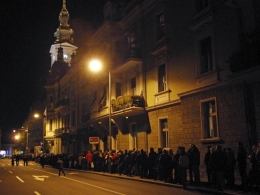
In front of the Cathedral in Belgrade and on Tuesday, November 17, for the third day in a row, a large number of people are waiting to pay their respects to the patriarch. His body will be on display in the Cathedral Church until the funeral in the Rakovica Monastery on Thursday, November 19. On that day, the funeral procession with the body of Patriarch Pavle will move from the Cathedral Church to the Church of St. Sava, and after the funeral service to the Rakovica Monastery.
On Thursday at 9.30:11 a.m., the funeral procession will start from the Cathedral towards the Temple of St. Sava, through the streets: Knez Sime Marković, Pop Lukina, Brankova, Zeleni venac, Prizrensko, Terazije, Kralja Milan, through Slavija, Boulevard of Liberation to Krušedolska and the Temple of St. Sava. A funeral service will be held in the Temple at XNUMX a.m., which will be officiated by Bishop Amfilohije and the Ecumenical Patriarch. After the funeral procession, the procession will go through the park to the Boulevard of Liberation and further towards the Rakovica monastery through the following streets: Boulevard of Liberation, Autokomanda, Boulevard of Liberation, Trošarina, Crnotravska, Borska, Miško Kranjca, Patriarch Dimitrija to the monastery of St. Archangel Michael in Rakovica in Patriarch Dimitrija Street.
According to some statements, the police estimate that around 500.000 people from Serbia, the region and the diaspora will attend the funeral. Ecumenical Patriarch Bartholomew and numerous statesmen and church leaders will also attend the funeral.
The Government of Serbia has recommended employers to provide employees with paid leave on the day of the funeral of Partiarch Pavle.
The Mayor of Belgrade, Dragan Đilas, declared the day of the funeral of Patriarch Pavle as the Day of Mourning in the territory of the city of Belgrade.
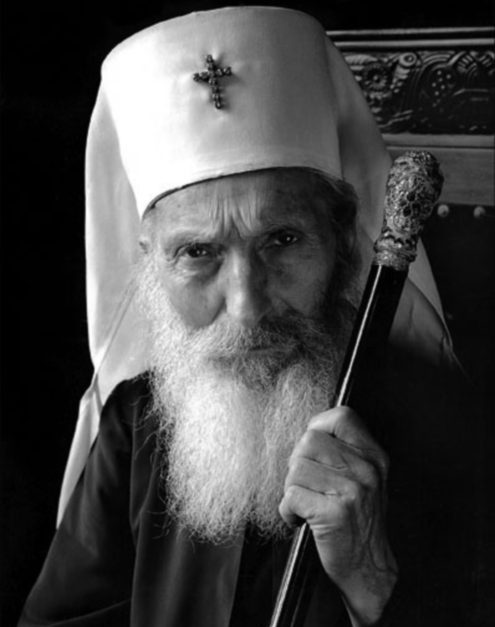
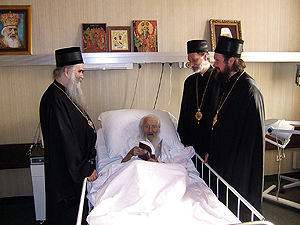
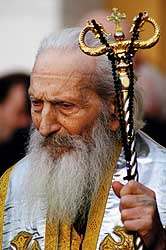
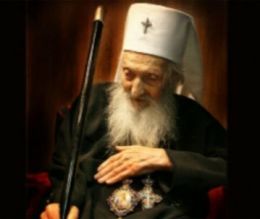
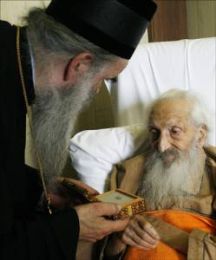
Serbian Patriarch Pavle (95), who had been in the Military Medical Academy for two years, died on Sunday, November 15 in the morning.
Radio Television of Serbia broadcast a recording of Metropolitan Amfilohi, who was the first to inform the public about the patriarch's death. In the video, the metropolitan crying from the pulpit announces during the ceremonial laying of the foundation stone of the new church that the patriarch has passed away. He said that during the morning the priest gave communion to the patriarch and that Paul's holy Christ-loving heart stopped beating.
The military medical academy where the patriarch was treated for the last two years announced that the patriarch died at 10.45:XNUMX a.m., in his sleep. The body of the patriarch was transferred from the VMA to the building of the Patriarchate and then it was displayed in the Cathedral Church in Belgrade, where a large number of citizens paid their respects to the patriarch. A black flag is displayed at the Patriarchate, and bells are rung every hour.
On Sunday, before midnight, a column of several thousand citizens who waited in line to pay their respects at the Cathedral Church stretched along Kralja Petra Street and along Sime Marković Street, towards Brankova Bridge.
The churches and monasteries of the Raško-Prizren diocese rang bells almost continuously that day as a sign of mourning for the death of Patriarch Pavle, as well as the Cathedral in Belgrade and other temples of the Serbian Orthodox Church, which rang 15 minutes before the full hour.
"The bells are ringing for the repose of his soul and we believe that the Lord God will grant him the kingdom of heaven, where righteous souls rest, that he too prays to God for us, for the Serbian nation, for all bishops, for all the clergy and faithful people, and especially for those of us who live in Kosovo and Metohija, to remain part of our homeland", said the secretary of the diocesan board of directors, father Radoslav Janković, to KIM radio. He added that the people spontaneously gathered in the Gračanica monastery, lit candles for the repose of the soul of Patriarch Pavle, who reigned as a bishop in Kosovo for 34 years.
On the occasion of the death of Serbian Patriarch Pavle, the Government of the Republic of Serbia declared three days of mourning in the Republic of Serbia. Days of mourning are November 16, 17 and 18, 2009.
Cable operators KDS, IKOM and the Serbian cable network will not broadcast certain radio and television channels during the three-day mourning for the death of Patriarch Pavle. The Deputy President of the RRA Council, Goran Karadžić, denied that the agency issued any kind of order to shut down some cable channels.
The cable distribution system (KDS), for example, switched off permanently or temporarily during the three days of mourning the following channels: Zone Club, Vizant, Fox life, BBC Prime, VH 1, OBN, Melos, MTV Adria, DSF, TV E, Canale 5, RT CG, Fashion TV, RAI Uno, MTV Hits, VH1 Classic, Enter, HRT 1 and 2, announced KDS.
The Synod of the Serbian Orthodox Church held a session on the same day when the patriarch passed away. The Constitution of the Serbian Orthodox Church stipulates that in the event of the death of the patriarch, all power will be taken over by the Synod of Bishops of the Serbian Orthodox Church. "After the commemoration that is served on the fortieth day, the patriarch can be chosen. That election can be scheduled already these days. This is what the Russian Orthodox Church did, when it announced the date of the funeral, it also announced the date of the election of the new patriarch," said religious analyst Živica Tucić.
Vice-dean of the Faculty of Theology, Radovan Bigović, in a guest appearance on Tuesday, November 17, on television B92, said that the new patriarch needs to be a man of faith and a visionary because the SPC is facing great challenges. He explained that all bishops with five years of episcopal service have the right to be elected as the new head of the Serbian Orthodox Church.
The following is a text from the archive of the website "Vremena", published on November 13 last year:
Assembly of the Serbian Orthodox Church
Patriarch's vow
written by: momir turudić
Although in the church they say that the patriarch is only "first among equals", everyone knows how important it is which person occupies that position. If it were not so, the election of the patriarch would not have caused so much attention in a country where, according to the results of a 2006 survey, "almost everyone celebrates Christmas, a significantly smaller number of people believe in God, few go to church regularly, and only individuals pray every day."
The Church and its influence were never limited to the spiritual sphere, which every country is aware of. Even at the time when Soviet Russia suppressed religion from public life, neither the people nor the Bolshevik leaders cared who the patriarch of the Russian Church would be. At the time this issue of "Vremena" goes to press (Tuesday evening), it has not yet been officially announced whether the Assembly of the Serbian Orthodox Church has decided whether Patriarch Pavle's request to withdraw will be on the agenda of the session. (see box) If this request is accepted, the Serbian Orthodox Church should soon have a new head. However, even if that does not happen now, if that decision is postponed until the spring session or some other solution is found, the request for dismissal in a way marks the end of the period in the history of the Serbian Orthodox Church in which Patriarch Pavle was at its head. .
In the biographies of Patriarch Pavle, it is said that when he became the 2th patriarch of the Serbian Orthodox Church on December 1990, 44, "innumerable problems awaited him", although history in this region only then began to accelerate and thicken. Eighteen years later, almost none of those problems have disappeared, only many have become far more tragic than they were, so from this perspective, 1990 seems like a heavenly age. He came to the position of Patriarch Pavle after 33 years spent in Kosovo, where he was the bishop of Raska-Prizren.
Serbian Patriarch Pavle was born on September 11, 1914 in the village of Kućance in Slavonia as Gojko Stojčević. In his autobiographical writings Bez osud, openly, fatherly, he writes that he lost his parents at an early age. His father worked in America, got tuberculosis there and "came home to die". Since his mother died soon after, he was raised by his aunt. Realizing that Gojko was a "very weak" child, his aunt spared him the farm work, so it was decided that he should continue his education. As he was inclined to "subjects where you don't have to memorize, such as mathematics and physics", under the influence of his relatives, he entered the seminary.
After Tuzla and Sarajevo, during the Second World War he arrived in Belgrade, where he enrolled at the Faculty of Theology. He was mobilized to the medical unit, and after the capitulation he walked to Sarajevo, then to his hometown. He moved as a refugee to Srem, then to Belgrade. He graduated in 1942. In destroyed Belgrade, he worked on constructions to have something to live on, but since he could withstand the physical effort, as he says, he fell ill. He stayed in many monasteries, and he arrived in Vujan already seriously ill. Realized that his plans for marriage and the parish were unattainable. "In the summer of 1945, I finally made the decision that, suffering from lung disease, although it was not 'open tuberculosis' in my case, I could not be a priest and devote my life to that lofty vocation... Aware, then, that that vocation was not for me and that, from childhood without parents, I cannot have my own family, I became a monk on the eve of the Annunciation in 1946," he said in his autobiographical writings. That's when he took the monastic name of Paul.
From 1950 to 1951 he was a teacher and educator at the theological school in Prizren, he became a hieromonk in 1954, and in the same year he was awarded the rank of archangel, in 1957 he was promoted to the rank of archimandrite. He completed his post-graduate studies at the Faculty of Theology in Athens in 1957, when he was elected bishop of Raška-Prizren. He will remain in that position until the election of the patriarch.
THE GOOD SHEPHERD: Although unknown to the general public at the time, the newly elected bishop Pavle of Raško-Prizren showed all the qualities of a "good shepherd" in the following years. Many biographers and witnesses claim that he visited his diocese on foot, talked to people, visited even the most remote churches and monasteries, built new ones and repaired destroyed temples. He led the daily struggle for the national rights of the Kosovo Serbs, wrote to the authorities, knocked on the doors of everyone whom he estimated could help prevent the conflict. The effort was in vain, neither state nor church officials paid attention to his warnings that "we can no longer live from the Arnaut tyranny". In spite of everything, he repeated that Serbs and Albanians can live in peace in Kosovo.
After 33 years in Kosovo and Metohija, Bishop Pavle of Raska-Prizren became the 2th Serbian patriarch on December 1990, 44. That choice was a surprise for many, primarily due to the fact that the choice was made during the lifetime of the previous patriarch Germano, without his consent. The archbishops decided to elect a new patriarch after the assessment of the doctor at the Military Medical Academy in Belgrade that German is no longer able to perform complex church duties, which is not a usual procedure for church circumstances.
At that time, three bishops were to be elected by secret ballot, with each of them having to win the trust of more than half of those present. Pavlo's name was on the list of candidates only in the ninth round of elections, and by then only two candidates had received a sufficient number of votes to enter the list. After that, according to the "apostolic way of choosing", the envelopes with the names of the three candidates were placed on the Gospel, the oldest dignitary present shuffled them and then pulled out the envelope with the name of the patriarch.
A lot of praise was said about the new patriarch at the time. Metropolitan Jovan of Zagreb-Ljubljana said that it was the best solution for the church circumstances at the time, because "it is about the most respected bishop in terms of monastic ascetic life." Bishop Stefan from Žič addressed the Assembly with the words: "For the first time in the history of the Serbian Orthodox Church, we applied the apostolic method in the election of the patriarch." That, as you can see, proved to be very useful. I cried for joy, because the holiest, best, most prayerful among us came to the throne of Saint Sava."
Paul then said to those present: "I submit to your choice and I hope that the Lord will help his Church so that there is no one in me who will humiliate it." My strength is weak, you all know that. I have no hope in them. I hope for your help, I say and repeat, for God's help with which he has kept me up to now. May it be for the glory of God and for the benefit of his church and our suffering people in these difficult times."
Hard times were yet to come. The election of the patriarch coincided with the most difficult years of recent Serbian history, and he managed to be equally appreciated by the opposition and those in power, both the faithful and those who are not, during the next 18 years.
The patriarch's modesty, uncharacteristic of both secular and ecclesiastical dignitaries, is the most responsible for this. He always stood behind the attitude that no job should be ashamed of: "Not even the dirtiest job can humiliate a man, only sin humiliates him." They say that he prepared his own food, sewed, mended and washed his own clothes, mended his shoes and maintains. He walked, took public transport... He distributed his pension to the poor: "How many of us, people of the Church, and how many times have we gone to shelters, homes, hospitals, to show our care for them every day? How many priests influence weddings, celebrations, various consecrations, and even funerals and memorial services to be more modest, at the time of the greatest misery of the greatest number of inhabitants of this country... Each of us should, in an active way, shame all those arrogant frivolities that live on so many public places, and not only that we are appalled and despaired that a dark, wicked shamelessness has reigned all around us.” The Walking Saint.
PROMISING: Six days after his enthronement, parliamentary elections were held in Serbia. The Assembly of the Serbian Orthodox Church then called on citizens to vote for those who are "truly faithful to God and family", and not for those "who promise a lot". Although it is not known whether the patriarch himself was behind these words, there was noticeable disappointment in the opposition public because of the wording that seemed to support those who were already in power. On the eve of the war, during the opposition demonstrations on March 1991, XNUMX, the students responded by blowing whistles to Pavlo's call to disperse from the plateau near the Terazije fountain. The next day, the patriarch apologized to the students, explaining that he wanted to avoid a possible conflict due to the announced arrival of Milošević's supporters from Ušće. Later, in an interview, the patriarch said: "I did my duty, according to my conscience, as I knew and could." I understand what youth is, and I didn't mind when a number of students, not understanding what it was about, reacted in a turbulent way, characteristic of youth."
The demonstrations were only a prelude to the Balkan wars, during which the SPC and the patriarch himself would suffer numerous criticisms for their positions, although before the start of the conflict, at numerous meetings, Patriarch Pavle and church dignitaries of other religious communities from all republics called for reason and peace, appealed against abuse religion for national-political purposes. In March 1991, he demanded from "Orthodox, Catholics and all people of good will" to show restraint and reasonableness and to "do everything in their power for the benefit of all" to restore peace. The Church, the patriarch explained, calls on the faithful not to respond to crimes with crimes. However, a considerable number of dignitaries in the Serbian Orthodox Church believed that the war could be justified if it was fought as a defensive one. Such a position was occasionally expressed by the patriarch himself: "Evil always attacks and good must defend itself." Cain is always looking to kill Abel and Abel has to defend himself. Defense, therefore, from the violence of the wicked, defense of one's life from a criminal, the life and peace of one's neighbors are the boundaries that mark a just war." The only problem was that the boundaries of "defensive" and "offensive" wars in the Balkans were lost on the very the beginning.
Opponents of the war criticized the patriarch the most for such attitudes, although he said even more often, as in 1992, that "the national state does not go as far as the sword can go, but the sword can only go as far as the border of a national state, i.e. fatherland. If the state is allowed to extend as far as the sword can reach, then the state ceases to be of the people... In that case, it gains territorially but loses morally. To conquer or to be conquered is equally disastrous for a nation-state."
Guilt can only be individual, never collective. "A great evil in this war befell the Croatian people, but also the Serbian people. Many of our compatriots participated in it. The individual must answer for the crimes, but the collective - not." Many were not satisfied with such actions of Patriarch Pavle - with complaints that he never clearly distanced himself from the leadership of the Bosnian Serbs, the hard wing in the Serbian Orthodox Church never forgot that he had put his signature on the pre-Dayton agreement, accusing him of supporting Milošević at a time when relations between Milošević and the Prekodrina Serbs deteriorated. Although the patriarch met with many people during all those years, the meetings with Milosevic remained the target of the fiercest criticism. Commenting on the indignation that he receives from persons whom many thought did not even deserve to approach the Patriarchate, he once said: "The Church does not reject even those who think they are non-believers, especially when they are also looking for ways to come to the Patriarchate, no matter what their intentions are." . After all, I am a priest, and the sacred secret of the priesthood does not make the choice of who you will receive and listen to if some trouble leads him to you. And sinners are generally very unhappy people, especially when they are full of themselves. After all, it all belongs to the ungrateful jobs I was talking about..."
The Patriarch was also present at most of the street protests of the opposition. During the 1996/97 demonstrations. he sent a message to the students blessing them and applauding the dignified way they expressed their protest. He was at the head of the Svetosava procession in 1997, in front of which the police cordon in Kolarčeva Street was withdrawn after a several-week blockade.
In a joint appeal for peace, Patriarch Pavle, Catholic Archbishop Perko, Belgrade Mufti Jusufspahić and Isak Aseil, Rabbi of Yugoslavia, condemned the bombing of the FRY in March 1999. In his statements, the Patriarch pleaded for the bombing to stop and for peaceful solutions to be found, but he also warned against inappropriate behavior regarding the concert on Republic Square: "Defiance is not an expression of power, but of powerlessness." He does not give strength, but dissipates it."
UNSUCCESSFUL APPEALS: In June 1999, the Synod of the Serbian Orthodox Church issued a statement in which, with deep concern about the events in Kosovo and Metohija and a request for the protection of the Serbian people and holy places, it requested that "the current president of the state and his government, in the interest of the people and for his salvation, resign, so that new people acceptable to the domestic and international public, as a government of national salvation, take responsibility for their people and their future". Patriarch Pavle clarified that announcement with the following words: "The meaning of that announcement is to reach a government of national salvation in which all well-meaning people will participate, regardless of which party they belong to or none at all." Faced with the tragic situation in which all our people and country found themselves, convinced that the final judgment and justice is in the name of God, and not in the instrumentalized Hague Court, we believe that the current president of the country and his government, in the interest of the people and for its salvation, should to resign so that new people, acceptable to the domestic and international public, as a government of national salvation, take responsibility for their people and their future."
In mid-June 1999, Patriarch Pavle decided to go to the Patriarchate of Peć and stay there until the situation stabilizes. He called on the Serbs not to leave their hearths and declared that he was amazed by the scale of the crimes that had been committed. When he went to a reception with Slobodan Milošević that year in honor of November 29, the birthday of the long-defunct Republic, both the church and secular public reacted violently. The open letter addressed to him by Bishop Artemije of Raska-Prizren was especially fierce. At the end of 1999, the patriarch's support for opponents of Milošević's rule became open. Representatives of the "Resistance" movement received his blessing in November of that year, but he asked them to refrain from violent methods, "inappropriate words and actions." The day after October 5, 2000, in a sermon on the plateau in front of the temple of St. Sava in Vračar, Patriarch Pavle said: "Let us pray to God, the only bestower of peace and love, to multiply peace, love and fraternal harmony in us, especially these days when our country it should experience a nationwide transformation, the lifting of sanctions and a connection with the world, which we all wanted and expected for so long. We also prayed that he would give us the gift of repentance, forgiveness and reconciliation, and eradicate from our minds and hearts every thought of hatred, revenge and conflicts."
The patriarch also had frequent contacts with the new government. Under his influence, religious education was introduced in schools in 2001. Kosovo also remained a place where he tried to help everyone with his presence and words. In October 2001, he served the bishop's liturgy in the Patriarchate of Pec, and on that occasion he said that the Serbs have reasons to repent and ask for forgiveness, but that the Albanians also have reasons to repent. And after all, he expresses the hope that coexistence in the Balkans is possible. In an interview with an Italian newspaper, he stated that he has confidence in the future, because he believes "in God and in people of good will": "I believe that the descendants of Serbs, Croats and Slovenes will live in peace, being ashamed of us and our time and our actions." "
Since November 13 last year, when he was placed at the Military Medical Academy, announcements of his retirement have become more frequent. Many people visited him: among others, Boris Tadić, Vojislav Koštunica, Aleksandar Karađorđević, reis-ul-ulema Adem Zilkić... Wishes for recovery were sent by the Russian Patriarch Alexey the Second, Pope Benedict XVI, and others. In addition, there are growing voices about the intra-church struggle over the successor, pressures on the patriarch to step down... Church dignitaries, of course, deny that there is any struggle.
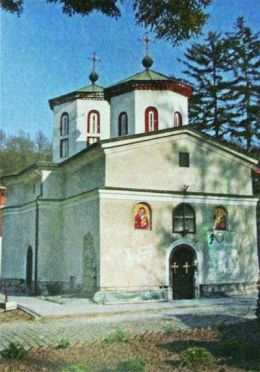
Rakovica Monastery is located between two hills - on the eastern side
Pruževica rises on the west side, and Straževica on the west side.
The monastery church is dedicated to St. Archangel Michael and Gabriel.
The oldest written document, which mentions the Rakovica monastery under
named Racauicense monasterium, is in the travelogue of Felix Petančić from
1502. years.
At the end of the 16th century, the monastery was moved to its current location in a more secluded location
place, deeper in the forest, and the remains of an old monastery were found above
the village of Rakovice. During the migration of the Serbs under Arsenij III Čarnojević, the monasticism left it, moving to the north and taking with them church valuables and liturgical books. Rakovica monk Grigorije mediated the conclusion of the Peace of Karlovac (1699), rendering significant services to Russian diplomacy. The Russians reciprocated by donating to Grigori personally, but also to the monastery money, liturgical books, vestments, vessels and four icons. Thanks to that, the monastery recovered economically. The monastery suffered new sufferings with the outbreak of the Austro-Turkish War (1737-1739).
In documents from 1788, the abbot of Rakovica, an archimandrite, is mentioned
Spiridon (Vitković), who was also the head of the monastery
Rajinovac.
The monastery suffered again during the great Austro-Turkish war
(1788-1790), and was severely punished for the activities of the monks on the side
Austria. It was looted, burned, and Abbot Sophronius, who is a Serb
gathered and encouraged to fight, he was hanged from an elm tree in front of the monastery.
After the signing of the Treaty of Svishtovsk (1791), the reconstruction of Rakovica began
with the great support of Prince Miloš Obrenović, who especially appreciated the role
monasteries in the life of the people. His special care for this shrine
was encouraged by the fact that his son Todor was buried
here. During 1822, he financed the construction of three-story buildings
monastery cells with a large dining room and the prince's quarters. For
the position of the monastery was of exceptional importance, and the binding of others
members of the Obrenović family for him. Except for Miloš and Princess Ljubica
(after which one part of the monastery is called "Ljubičin Konak"), about the monastery
were later diligently cared for by Prince Mihailo and Tomania Obrenović,
wife of Jefrem Obrenović. She is together with her husband and children
buried in the vestibule of the church, opposite their family tomb
rests Milivoje Blaznavac, husband of Efrem's granddaughter Katarina. Except for the members
of the Obrenović family, the hero of the First Serbian War was also buried in the monastery
Vasa Čarapić uprising. The church was rebuilt only in 1861-1862. the year when
was added in the upper part, above the cordon wreath. By 1737,
the iconostasis of the monastery church was decorated with four icons of Emperor Peter
Veliki gave it to Rakovica in 1701. Under the invasion of the Turks, transferred
are in Valik Remet, then the Ustasha took them to Zagreb during the war
together with other Serbian valuables, to eventually end up in
Matica Srpska Gallery.
According to "Pravoslavlje", the Rakovica monastery was decided by the Patriarch
In 1959, Germana was turned into a women's monastery.
Patriarch Pavle was born in 1914 in the Slavonian village of Kućanci, in a farming family. He lost his parents early - his father went to work in the USA, got tuberculosis there and "came home to die" when the boy was three years old, and the same happened to his mother soon after. He was raised by his aunt. Realizing that the child was "very weak", she spared him from farm work and thus enabled him to get an education: although little Gojko was inclined to "subjects where he does not have to be memorized, such as mathematics and physics", although he had thin two, the influence of his relatives prevailed and his final choice was the seminary. After Tuzla and Sarajevo, during the Second World War, he arrived in Belgrade, where he first worked on buildings, and then, due to his poor health, he began his monastic life: "In the summer of 1945... I finally made the decision that, suffering from lung disease, although it is not my case was 'open tuberculosis', I cannot be a priest and dedicate my life to that lofty vocation... I am aware, therefore, that this vocation is not for me, and that, since I was a child without parents, I cannot have my own family, I became a monk on the eve of the Annunciation in 1946," he told in his autobiographical writings Bez osuda, openly, paternal. After his post-graduate studies in Athens, on September 21, 1957, he was elected bishop of Raška-Prizren – a position he would hold until his election as patriarch and where he would demonstrate all the qualities of a "good shepherd". Although he was not known to the general public in that period, numerous biographies and witnesses claim that the then bishop led a practically daily struggle for the national rights of the Kosovo Serbs, wrote to the authorities, visited the most remote churches and monasteries, knocked on the doors of all those he judged to be able help prevent conflict. "They pushed him and pushed him out of the bus, so that he would wait for hours, at stations without a timetable, for more considerate drivers." From Prizren to Belgrade, he would spend the night more than once in carriages without windows, with snow on the seats", is vividly described in the patriarch's biography, which was published by the magazine "Pravoslavlje" at the time. Of course, nothing came of all the work - neither the church nor the state responded to Bishop Pavle's letters and his warnings that "we can no longer live off Arnaut's oppression".
However, after 33 years of suffering in Kosovo, Pavle moved from Prizren to Belgrade: on December 3, 1990, he was elected patriarch of the Serbian Orthodox Church. The election, however, did not go very smoothly. First of all, it was carried out during the lifetime of the previous patriarch Germano, without his consent. (To this day, conspiracy theories are woven and unraveled based on the fact that five of the most prominent doctors of the VMA signed the assessment that German is no longer able to perform complex church duties, and on the basis of which the archbishops decided to elect a new patriarch.) In addition, his name was on the list of candidates only in the ninth round of voting. Until that round, only two candidates received enough votes to enter the list, and it was only in the ninth round that the bishop of Raško-Prizren passed the "census". After that, according to the so-called apostolic method of election, the envelopes with the names of the three candidates were placed on the Gospel, the oldest dignitary present shuffled them and then "pulled out" the current patriarch. "My strength is weak, you all know that." I have no hope in them. I hope for your help, I say and repeat, for God's help with which he has kept me up to now. May it be for the glory of God and for the benefit of his church and our suffering people in these difficult times", the new, 44th patriarch of the Serbian Orthodox Church will say at that time. On the same occasion, he will state that "we do not have any program of patriarchal activity, our program is the Gospel of Christ". In the years that followed, it will really be shown that there was no real program, that church politics was adapted to current events and that this situation suited many.
(part of the text) "Portrait of a contemporary - Patriarch Paul: Modesty and interpretations" published in "Vremen" on December 22, 2005)
The Savior drove the merchants out of the temple, as it is written by the Apostles
John, out of zeal because after that event his disciples remembered him
that (for him) it is written: "Zeal: for your home eats me." Here to us
The Lord sets an example of zeal. But if we want to in every opportunity yes
we know what our zeal should be, we need to remind ourselves
the words of the Apostle Paul about those members of the Jewish people who are not
accepted Christ. The Apostle says about them: "I testify that they have zeal for
God, but not according to reason" (Rom. 10, 2).
True zeal is that which is reasonable, evangelical, like this one
shown by the Savior. We should also have such zeal, reasonable zeal.
If we have it, we will avoid all fanaticism and all exaggerations.
May the Lord help us to have the same zeal in virtue
according to every good deed He had towards His Father's house!
Serbian Patriarch G. Pavle
Taken from the book Life according to the Gospel, Serbian Patriarch Pavle,
National and University Library in Pristina and Ars Libri, Belgrade
Published on website of the Serbian Orthodox Church November 2, 2009
Excerpt from the Constitution of the Serbian Orthodox Church
Article 54
The Patriarch has all the rights and duties of the diocesan Bishop in his archbishopric, and he manages it with the help of his vicar bishops.
Article 55
The Patriarch, as the supreme head of the Serbian Orthodox Church, besides the rights given to him by the canons and church regulations, also has the following:
1) represents the Serbian Orthodox Church before other autocephalous churches;
2) represents the Serbian Orthodox Church at church, state and national ceremonies;
3) maintains unity in the hierarchy of the Serbian Orthodox Church;
4) consecrates according to church regulations, personally or through authorized Bishops, persons elected as diocesan and vicar bishops;
5) consecrates holy myrrh for the entire Serbian Orthodox Church;
6) grants absence to diocesan Bishops outside their dioceses;
7) wears, as a special church decoration, a white panakamilavka with a cross and a panagia of all Serbian saints, presented by the state to the first Serbian Patriarch of the restored Serbian Patriarchate, which remains as a legacy of all Patriarchs;
8) takes precedence during worship, and is addressed as "Holy" and "Holiness";
9) it is mentioned at the bishop's liturgies by the Bishop in the entire Serbian Orthodox Church;
10) bestows ecclesiastical honors and distinctions, according to the decree prescribed by the Holy Synod of Bishops;
11) appoints officials according to this Constitution by decree;
12) manages churches and mission areas abroad, where there is no organized Serbian Orthodox diocese.
Excerpt from the Constitution of the Serbian Orthodox Church
Article 42
The Patriarch is elected from among Serbian active diocesan Bishops, who manage dioceses for at least five years.
Article 43
The election of the Patriarch is carried out by the Electoral Assembly between three candidates, proposed by the Holy Bishops' Assembly of the Serbian Orthodox Church, in a session where at least 2/3 of the diocesan Bishops are present, under the presidency of the oldest member of the Assembly, the Metropolitan, that is, if there is none, the oldest Bishop, a member of the Holy Archbishop assembly.
The names of the three proposed candidates are communicated to the Electoral Council in writing by the Holy Synod of Bishops.
Article 44
The Electoral Assembly consists of:
1) all active eparchial and vicar Archbishops of the Serbian Orthodox Church;
2) Dean of the Orthodox Theological Faculty in Belgrade;
3) rectors of Serbian Orthodox seminaries;
4) the president of the Main Union of Diocesan Priestly Associations;
5) archbishopric vicars of the cities: Belgrade, Skopje, Cetinje, Zagreb, Sarajevo, Peja and Sremski Karlovac;
6) abbots of the monasteries: Žiče, Studenice, Dečana, Peć Patriarchate, St. Nauma, Mileseva, Sv. Vasilij Ostroški, Krušedol and Krka;
7) the head of the monastic school and
8) all members of the Patriarchal Board of Directors and all vice-presidents of Diocesan Councils, if they are not already members of the Patriarchal Board of Directors.
The clerics mentioned in this article can be members of the Electoral Assembly if they are not under investigation or canonical prohibition.
Article 45
The Electoral Council meets in the capital Belgrade or in another place determined by the Holy Council of Bishops, for the purpose of electing a new Patriarch, no later than three months from the day the Patriarchal Throne becomes vacant.
The Electoral Council convenes the Holy Synod of Bishops with a written act, in which the day, time and place of the meeting of the Electoral Council are determined exactly. The invitation is sent to the members with a delivery note twenty days before the meeting of the Electoral Assembly.
Article 46
The Electoral Assembly is presided over by the oldest member of the Assembly, the Metropolitan, or, if there is none, the oldest bishop by episcopal consecration.
The Chairman opens the Electoral Assembly. At the invitation of the chairman, the Electoral Assembly elects from among its members two secretaries, one of whom is a clergyman and one a layperson, and two notifiers of the minutes, of whom one is also a clergyman and one a layperson; with these, the chairman examines the powers of attorney of the members present and manages the election affairs.
Then the president invites the secretary to read the decision of the Holy Synod of Bishops on the convening of the Electoral Assembly and the list of invited and present members of the Assembly.
Article 47
When it is determined that at least 2/3 of the members of the Holy Assembly of Bishops and the overwhelming majority of all members of the Electoral Assembly are present, the Electoral Assembly approaches the summoning of St. Spirit. Otherwise, the election is postponed and the matter is returned to the Holy Synod of Bishops to determine the time of the new election.
Before joining the election, the members of the Electoral Assembly, except for the Bishop, take this oath in the Assembly:
"I, NN (name and surname), swear by Almighty God and everything that is most sacred and dearest to me in this world, that when consulting on the election of the Serbian Patriarch, I will have in mind only the good and interests of our holy Orthodox Church, the Serbian people and the homeland, and that I will give my vote only to the candidate whom I am convinced will most conscientiously and best fulfill the duties of the Serbian Patriarch. As I sincerely work, the Lord God will help me both in this world and in the next world."
After the invocation of the Holy Spirit and the oath, the president of the Electoral Assembly reads the act of the Holy Synod of Bishops, announcing the names of the three candidates proposed by the Holy Synod of Bishops for the election of the new Patriarch.
Article 48
Only the members provided for in this Constitution can attend and participate in the election of the Serbian Patriarch.
Of the absent members justifiably prevented from attending in person, only the Hierarch can authorize in writing any of the Hierarchs present to vote in his place.
Article 49
The election of one of the three candidates proposed by the Holy Synod of Bishops is done by secret ballot, which will be distributed by the secretary to the present members of the Electoral Synod.
The secretary calls the members of the Parliament according to the list, and each member submits his ballot in the box on the chairman's table.
Counting of votes is done by the chairman together with two notifiers of the minutes (Art. 46). The chairman takes one slip from the box and reads aloud the written name of the candidate, then hands the slip to the other two members who also read the names of the candidates aloud. The secretary immediately records in the minutes how many ballots were submitted and how many votes each candidate received, as well as the number of blank ballots, if any.
Votes not cast for candidates under Article 43 of this Constitution will be considered invalid.
Article 50
The candidate who received the absolute majority of votes was elected Patriarch.
If none of the proposed candidates receives an absolute majority of votes, then a shortlisting between the two candidates with the highest number of votes is started immediately. In the event that two candidates receive the same number of votes in the first ballot, the shortlist includes: the candidate who received the highest number of votes, and one of the other two who received the same number of votes, who is older by rank or episcopal ordination. If all three received the same number of votes, the two candidates, who are senior in rank or episcopal ordination, enter the shortlist.
In the event that both candidates receive the same number of votes during the short selection, then the choice between these two is made by drawing lots.
Article 51
The name of the elected Patriarch is announced by the President of the Electoral Assembly and closes the Assembly session.
Article 52
The minutes of the Electoral Assembly are signed by the president, secretaries and minutes certified by Art. 46 of this Constitution.
Acts and records of the work of the Electoral Assembly are kept in the archive of the Holy Synod of Bishops, and the certified copy is in the archive of the Patriarchal Board of Directors.
Article 53
The next day at the solemn Archbishop's St. liturgy, the Patriarch is enthroned in the manner prescribed by the Holy Synod of Bishops.
After this act, the newly elected Patriarch assumes the rights and duties of the supreme head and elder of the Serbian Orthodox Church.
Constitutional changes
After the changes in the relations between the Serbian Church and the state after the Second World War, there were amendments to the Constitution of the Serbian Orthodox Church, which were published in the Official Gazette of the Serbian Orthodox Church, Gazette no. 7-8 of August 1 (July 19) 1947. As Bishop Vasilije of Srem writes in one text, later, on several occasions, the text of the Constitution or some of its provisions were changed and supplemented, but the meaning remained the same. Thus, at its extraordinary session of September 14 and 15, 1967, the Holy Assembly of Bishops made a decision specifying the provisions of Articles 42 and 43 of the Constitution of the Serbian Orthodox Church, Articles 44 to 50 and the first paragraph of Art. 52. repealed and thereby amended and supplemented the provisions on the election of the patriarch. Then, at the session of the Holy Council of Bishops on 17/4. in May 2000, new regulations on the election of the patriarch were adopted and the provisions of Articles 42 and 43 of the Constitution of the Serbian Orthodox Church were amended.
At the spring session of the Holy Synod of Bishops in 2005,
the decision of May 17, 2000 was considered, it was annulled
and the provisions of the decision of September 15, 1967 were reinstated. This is it
done in order to return to the old evangelical way of election
the patriarch preserved the Church and its dignity from possible outsiders
influence.
While these lines were being formed, on November 11, 2008, it was unofficially learned that the bishops of the Holy Synod of Bishops of the Serbian Orthodox Church refused to elect a new patriarch by majority vote. In other words, Patriarch Pavle remains at the head of the Serbian Orthodox Church as long as he lives. From the same sources is the news that Metropolitan Amfilohije will continue to perform part of the duties of the patriarch, but that he has received somewhat wider powers than those he had before.
It seems that the conflict at the top of the Serbian Orthodox Church, at the center of which the election of the patriarch is currently frozen. It is a fact that in mid-October, Patriarch Pavle submitted a request to the SPC Assembly to allow him to step down from the leading position in the Church due to a prolonged illness, but also that certain bishops had been hinting for a long time "the need to elect a new patriarch".
As it is unofficially known, the session of the Parliament took place in a heated dispute between the bishops over the question of whether the patriarch's request should be considered at all; it was disputed whether the patriarch signed the petition, and if so, who took such a document to him for signature and with whose approval. In the end, no agreement was reached even on the agenda.
By the way, after the publication of information about the request for the withdrawal of Patriarch Pavle, the public started to bid on the names of his successor. Metropolitan Amfilohije of Montenegro and the Littoral, Bishop Irinej of Niš, Bishop Chrysostom of Žica, as well as Bishop Grigorije of Zahum and Herzegovina and Bishop Ignatije of Braničevo were mentioned as the most serious candidates. According to unofficial information - the only information that comes about the course of the Parliament - the final decision on changes to the Constitution of the Serbian Orthodox Church and the election of a new patriarch will be made at the May session.
RV
In its history, the Serbian Orthodox Church records four archbishops and nine patriarchs who, for various reasons, left the position of head of the Serbian Orthodox Church before their death.
Archbishops
Saint Sava (1219–1233) – retired voluntarily
Arsenije Sremac (1233–1263) – retired due to illness, died in 1266.
Danilo I (1271–1272) – deposed for unknown reasons
Ioanniki I (1272–1276) – retired due to illness, died in 1279.
The patriarchs
Yefrem (1375–1390) – retired voluntarily, died in 1399.
Makarije (1557–1572) – retired voluntarily, died in 1574.
Gavrilo Rajić (1648–1655) – fled to Russia in the face of Turkish retaliation for his political activities, deposed in absentia, hanged in Bursa in 1659.
Maxim (1655–1679) – replaced due to illness, died in 1680.
Gavrilo II was elected in 1752 - after 50 days at the head of the Serbian Orthodox Church - and five days before his death he handed over his post
Cyril II – elected in 1759, deposed, but there is no information on when or for what reason
Vasilije (1763–1765) – slandered for espionage activities, deposed and imprisoned, died in 1772.
Kalinik II (1765–1766) – resigned
German (1957–1989) – broke his hip on Vidovdan 1989, fell into a coma after the operation; the Constitution of the Serbian Orthodox Church was applied, and due to "proven impotence" he was dismissed, died on August 27, 1991
Serbian Patriarch Pavle was the 44th head on the throne of Saint Sava and the sixth patriarch of the unified Serbian Orthodox Church, since 1920. The independence (autocephaly) of the Serbian Church was established in 1219 by Saint Sava, who was also the first archbishop of the independent Serbian Church. Ioanniki II, the twelfth Serbian archbishop, was elevated to the rank of patriarch by Emperor Dušan in 1346 as part of the preparations for the proclamation of the empire.
After the destruction of the Serbian state, with the fall of Smederevo in 1459, the Turks restored the Serbian Patriarchate, with its center in Peja, in 1557, and it existed in very difficult conditions, with the exact fate of some patriarchs unknown, until 1766, when the Turkish authorities and definitely abolished.
From the time of the Great Migration of Serbs in 1690, Srem (later in Sremski Karlovci) housed a new religious center of Orthodox Serbs responsible for those who were in the Habsburg lands (Austria and later Austria-Hungary).
Their official title was metropolitan, but they were titularly called patriarchs, although they never formally held this high title. With the restoration of the modern Serbian state, the Serbian revolution at the beginning of the 19th century, the metropolitans of Belgrade became the heads of the church in liberated Serbia, the principality and then the kingdom, but they had no jurisdiction beyond the borders of Serbia at that time. The Serbian Patriarchate, which gathered all Orthodox Serbs, was formed, after centuries of division, only with the formation of the Kingdom of Serbs, Croats and Slovenes. In 1920, with the necessary consent of the Ecumenical Patriarchate of Constantinople, this act re-established a single Serbian church.
Archbishops
1. Saint Sava 1219-1233, fi1235.
2. Saint Arsenius I Sremac 1233-1263, fi1266.
3. Saint Sava II 1263-1271.
4. Daniel I 1271-1272.
5. Joanikije I 1272-1276, fi1279.
6. Saint Eustathius I 1279-1286.
7. Saint James 1286-1292.
8. Saint Eustathius II 1292-1309.
9. Saint Sava III 1309-1316.
10. Saint Nicodemus 1317-1324.
11. Saint Danilo II 1324-1337.
The patriarchs
12. (1) Saint Joanikije II Archbishop 1338-1346, Patriarch 1346-1354.
13. (2) Sava IV 1354-1375.
14. (3) Saint Ephrem 1375-1379, 1389-1392, fi1397.
15. (4) Saint Spyridon 1379-1389.
16. (5) Daniel III 1392-1398.
17. (6) Sava V 1398-1406.
18. (7) Daniel IV 1406.
19. (8) Saint Cyril 1407-1419.
20. (9) Saint Nikon 1420-1435.
21. (10) Theophanes 1446.
22. (11) Nikodim II 1446-1453.
23. (12) Arsenius II 1453-1463.
1463-1557. Before the Turkish conquests, the Patriarchate was transferred to the Žiča monastery.
24. (13) Saint Makarije Sokolović 1557-1571, fi1574.
25. (14) Antonije Sokolović 1571-1575
26. (15) Gerasim Sokolović 1575-1586.
27. (16) Savatije Sokolović 1587.
28. (17) Nicanor?
29. (18) Hierotheus 1589-1591.
30. (19) Philip 1591-1592.
31. (20) John 1592-1614.
32. (21) Paisje I Janjevac 1614-1648.
33. (22) Saint Gavrilo I Rajić 1648-1655, fi1659.
34. (23) Maksim Skopljanac 1655-1674, fi1680.
35. (24) Arsenije III Crnojević 1674-1690, fi1706
36. (25) Callinicus I 1691-1710.
37. (26) Athanasius I 1711-1712.
38. (27) Mojsije Rajović 1712-1726.
39. (28) Arsenije IV Jovanović Šakabenta 1725-1737.
40. (29) Ioannikije III Karadzha-Greek 1739-1746.
41. (30) Atanasije II Gavrilović 1747-1752.
42. (31) Gavrilo II Sarajevac 1752.
43. (32) Gabriel III 1752.
44. (33) Vikentije Stefanović –
45. (34) Paisius II the Greek –
46. (35) Gabriel IV the Greek –
47. (36) Cyril II 1758-1763.
48. (37) Vasilije Jovanović-Brkić 1763-1765, fi1772.
49. (38) Kalinik II Greek 1765-1766.
In 1766, the Patriarchate of Peć was again abolished and subordinated to Constantinople. The Serbian Patriarchate was re-established in 1920.
50. (39) Patriarch Dimitrije 1920-1930
51. (40) Patriarch Barnabas 1930-1937
52. (41) Patriarch Gavrilo (V) 1938-1950
53. (42) Patriarch Vikentius (II) 1950-1958
54. (43) Patriarch German 1958-1990, fi1991
55. (44) Patriarch Pavle 1990-2009
Karlovac Metropolitans and Patriarchs 1690 - 1920
Arsenije III Crnojević 1690-1706
Isaiah Djakovic 1707-1708
Sofronije Podgoricanin 1710-1711
Vikentije Popović 1713-1725
Moses Petrovic 1725-1730
Vicentije Jovanović 1731-1737
Arsenije IV Jovanović Šakabenta 1737-1748
Isaiah Antonovic 1748-1749
Pavle Nenadović 1749-1768
Jovan Djordjevic 1769-1773
Vicentije Jovanović Vidak 1774-1780
Moses the Traveler 1781-1790
Stefan Stratimirović 1790-1836
Stefan Stankovic 1837-1841
Josif Rajačić 1842-1861, from 1848 the patriarch
Samuilo Maširević 1864-1870
Prokopij Ivačković 1874-1879
German Andjelic 1881-1888
Georgije Branković 1890-1907
Lukijan Bogdanovic 1908-1913
Metropolitans of Montenegro and the Littoral from 1750 to 1920
The bishopric of Zeta, which was established in 1219, was elevated to the rank of Metropolis in 1346 at the Council. From the abolition of the Patriarchate of Peć in 1766 until 1920, the Montenegrin Metropolitanate had a special status.
Vasilije III Petrović (from 1750 to 1766), exarch of the Peć throne
Arsenije Plamenac (from 1781 to 1784)
Petar I Petrović (from 1782 to 1830)
Petar II Petrović (from 1830 to 1851)
Nikanor Ivanović (from 1851 to 1860)
Hilarion II Roganović (from 1860 to 1882)
Visarion III Ljubiša (from 1882 to 1885)
Mitrofan Ban (from 1885 to 1920), exarch of the throne of Pec
Metropolitans of Belgrade 1801 - 1920
Metropolitan Leontije Lambrović 1801-1813. (of Greek origin)
Metropolitan Dionysius II 1813-1815. (Greek)
Metropolitan Agathanel 1815-1827. (Greek)
Metropolitan Antim 1827-1831. (Greek)
Metropolitan Melentije Pavlović 1831-1833.
Metropolitan Petar Jovanović 1833-1859.
Metropolitan Mihailo Jovanović 1859-1881, 1889-1898.
Metropolitan Teodosije Mraović 1881-1889.
Metropolitan Inokentije Pavlović 1898-1905.
Metropolitan Dimitrije (Pavlović) 1905-1920, later Patriarch (1920-1930)