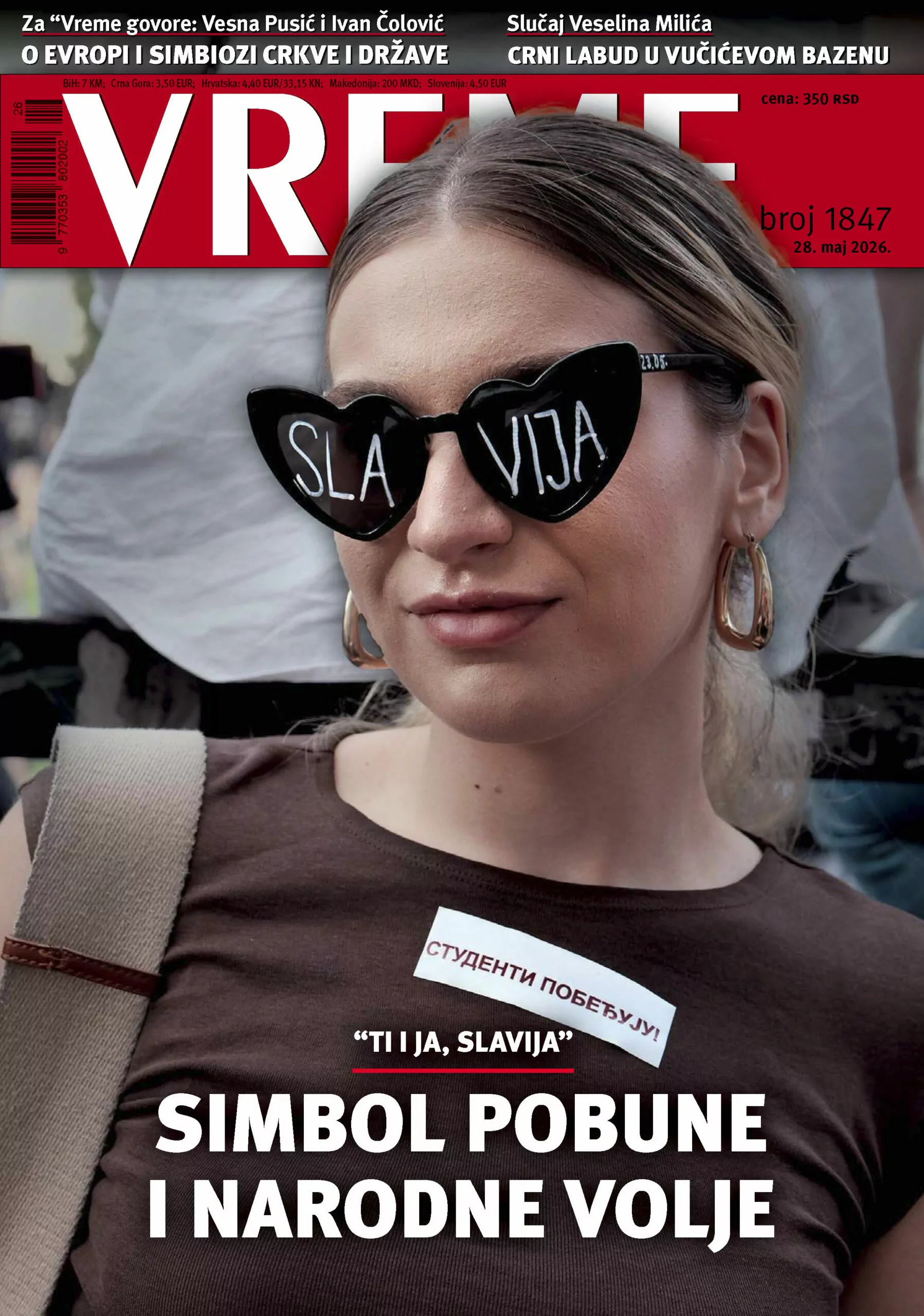
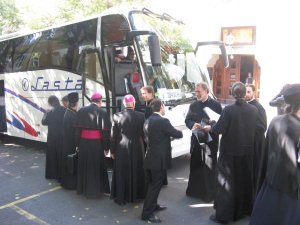
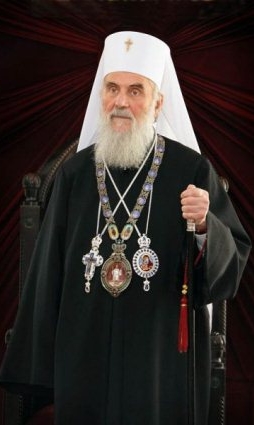
Serbian Patriarch Irinej was ceremonially installed on the throne of the supreme head of the Serbian Orthodox Church in the Patriarchate of Pec after the holy bishop's liturgy on October 3, 2010. The act of enthronement of the 45th head of the Serbian Orthodox Church was identical to the one that took place the day after the election, on January 23, in the Cathedral Church in Belgrade.
With exclamations of axios, worthy, the patriarch was ushered into the throne, handed to him the panagia of the archbishop (a small icon worn on the chest), a scepter and a white panakamilavka (cap) by Metropolitan Amfilohije of Montenegro and the Littoral and Metropolitan Jovan of Zagreb and Ljubljana.
A woman was injured when she was near the old hospital in Peja
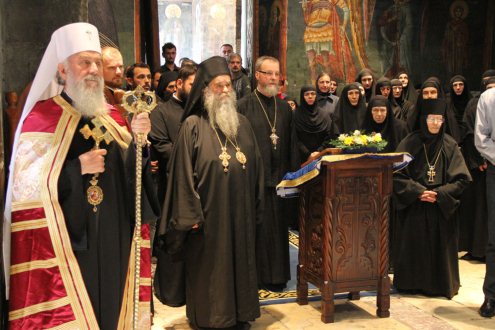
a stone column of buses with license plates of Belgrade, Nikšić
and Gračanica, who was returning from the patriarch's enthronement ceremony
Irinej in the Patriarchate of Pec, sources from Srpska told the Beta agency
Orthodox churches.
The enthronement ceremony was attended by more than 400 high-ranking officials, representatives of Orthodox churches from around the world and other religious communities and about 6000 believers. The Republic of Serbia was represented at the enthronement of Patriarch Irinej by President Boris Tadić. Among those present are representatives of churches and religious communities, Belgrade Archbishop Stanislav Hočevar, Serbian mufti Muhamed Jusufspahić and reis ul ulema of the Islamic Community of Serbia Adem Zilkić.
The Russian Orthodox Church is represented by Metropolitan Hilarion, the Jerusalem Patriarchate by Archbishop Tefilaktos, the Georgian Patriarchate by Metropolitan Gerasim, the Romanian Orthodox Church by Metropolitan Irinej, the Bulgarian Orthodox Church by Metropolitan Domentian, the head of the Cypriot Orthodox Church Chrysostom, the Greek Orthodox Church by Metropolitan Theologos, the Albanian Orthodox Church by Metropolitan Ignacios, and the enthronement is attended by and a representative of the Polish Orthodox Church.
The enthronement in the Patriarchate of Pec was attended by the representative of the Independent Serbian Democratic Party in the Croatian Parliament Milorad Pupovac and Prince Aleksandar Karađorđević with his family, the Russian ambassador in Belgrade Aleksandar Konuzin, representatives of the diplomatic corps, head of UNMIK Lamberto Zanier, commander of KFOR Erhard Biller and head of EULEX Iv de Kermabon.
Kfor secured the enthronement ceremony, the surroundings of the monastery, as well as the road to Pec. In Peja itself, in the part of the city towards the Patriarchate, there were a large number of policemen, and in the city itself, there were few citizens on the streets on Sunday morning. Traffic was closed in the part of the city towards the Rugovska gorge, except for emergencies and residents of that part of Peć. Many police patrols were observed on the road between Klina and Peć. "According to the information of the regional police in Peja and the operations center, there were no security problems with the arrival of the ceremony participants during the enthronement of Patriarch Irinej.
Buses and other vehicles carrying worshipers and journalists were escorted from Kosovska Mitrovica to Peja by the Kosovo police. EULEX did not allow the president of the Serbian Progressive Party, Tomislav Nikolić, to enter the territory of Kosovo and Metohija and, as an ordinary citizen, attend the enthronement of Serbian Patriarch Irinej. The leader of New Serbia, Velimir Ilić, was stopped in North Mitrovica and told that he could not go any further. It was explained to Nikolić that it was not officially announced and that such an agreement was with the government of Serbia, and he characterized it as discrimination. In the Belgrade media, several days before the enthronement, there were rumors about which of the politicians should go to the Patriarchate of Peć, whether the Kosovo leadership would attend the enthronement, etc. It is obvious that there were sensitive and complicated negotiations regarding the enthronement protocol.
The faithful came by organized transportation in about 80 buses and about 50 minibuses from other parts of Kosovo and Metohija, from central Serbia, Montenegro, Republika Srpska, Bosnia and Herzegovina. A group of believers from Herceg Novi unfurled a large tricolor flag, 10 meters long, in the gate of the Patriarchate of Peć.
In his introductory speech, Patriarch Irinej addressed the suffering of the people, as he said not only to the Orthodox Serbian people, but also to the honorable Albanian people with a call for peace:
"The time and circumstances of my election and introduction to the throne of the Serbian patriarchs have many similarities with the time and circumstances in which the Serbian Church and its people experienced and survived the difficult and fateful days of its history. To recall the recent time of general suffering, almost in all areas inhabited by our people. The consequences of that suffering are still visible and present: destroyed churches and monasteries, burnt down people's homes, the people expelled from their centuries-old hearths and, for the most part, scattered all over the world.
All that has been said can, unfortunately, be seen on the soil of Kosovo and Metohija. We cannot but mention the enormous wound on the body of the Serbian Orthodox Church and the Serbian people, here in Kosovo and Metohija, on this truly "terrible court". Today we are visiting and paying homage to this holy place and the holiest Serbian land, the cradle of history, spirituality, Christian and Orthodox culture of the Serbian people. On the ground stained with the martyr's blood of Kosovo and Pocos martyrs. In the area of our greatest sanctuaries, among which is the sanctum in which we are located, in which the holy relics of our Archbishops and Patriarchs are kept and where the graves of prayer men and ascetics are located, with the holy miracle-working icon of the Most Holy Mother of God.
In the immediate vicinity are the magnificent Dečani, the pinnacle of architectural and iconographic art of the 14th century, with the incorruptible relics of their holy founder, King Stefan of Dečan. And a little further is the Virgin of Ljeviška in Prizren, the imperial city, with a dozen preserved medieval churches, the monastery of the Holy Archangels, the largest endowment of Emperor Dušan, and the famous Prizren Theological Seminary. Let's not leave out the beautiful Gračanica, the famous Banjska, the endowment of King Milutin. We cannot do without mentioning the great Virgin's shrine and one thousand three hundred other churches and monasteries built on this blessed Serbian land. In the very recent past, many holy temples and monasteries were burned, destroyed, looted, as well as the homes of the Serbian people who lived here for centuries and left indelible traces of their existence and creativity.
Today, Kosovo and Metohija are without hundreds of thousands of exiled Serbian people. Its spiritual traces and historical roots are being erased.
There are still tens and tens of thousands of refugees from this holy land. They, turned to their centuries-old chest, with tearful eyes and pain in their hearts, await the day and the possibility to return to their homes, even though destroyed and burned. Only a few and the bravest managed to return to their hearths.
From this holy place, in this joyous and painful moment, we send a cry to the powerful factors of the world in whose hands is the fate of Kosovo and Metohija, praying to God that they do not sin their souls by making a decision regarding the status of this Serbian southern province, which would deprive the Serbian people centuries-old right to their homeland, to their homes and to their property, to the cemeteries of their ancestors and to their sanctuaries.
The Serbian people have no other central state except the country of Serbia, which has included Kosovo and Metohija for centuries. It has enough living space and places for the coexistence of Serbian, Albanian and other peoples. These two peoples lived together for centuries. Why can't they do it today?
Therefore, addressing at this solemn moment with love and respect not only the Serbian Orthodox people of Kosovo and Metohija, but also the honorable Albanian people and all local residents, we invite them to peace and unity, always based on God's and human justice.

His Holiness Archbishop of Peć, Metropolitan of Belgrade-Karlova and Patriarch of Serbia Irinej (Miroslav Gavrilović) was born in the village of Vidova near Čačak on August 28, 1930.
After finishing high school in Čačak, he entered the Theological Seminary in Prizren, and then the Faculty of Theology in Belgrade.
In the Rakovica monastery, in 1959, he received the monastic rank from Patriarch Germano, receiving the monastic name Irinej. In the same year, on Holy Friday, October 27, he was ordained a hieromonk.
He served as a professor at the Prizren Theological Seminary, and was then sent to postgraduate studies in Athens. In 1969, he was appointed director of the Monastic School in the Ostrog Monastery, from where he returned to Prizren and became rector of the Prizren Theological Seminary.
From that position, in 1974, he was elected vicar bishop of the Serbian patriarch, with the title of bishop of Moravia. A year later, in 1975, he was elected bishop of Niš, and after the death of Patriarch Pavle, he was chosen by the "apostolic lot" as the 45th partarch of Serbia, and was enthroned on January 23 in the Belgrade Cathedral.
The first Serbian patriarch was solemnly elected at the state assembly in Skopje, on Cvijeta 9/4. 1346, the previous archbishop of Pec, former logotet Dušanov, Janićije II. The Greek dioceses in the newly conquered regions, which previously fell under the Patriarchate of Constantinople, are subject to the jurisdiction of the Patriarch of Pec, as well as St. Gora with its privileges and immunities. Seven days after the proclamation of the patriarchate, on Easter itself, April 16, 1346, the Bulgarian patriarch Simeon, together with the new Pec patriarch Janići II and the Ohrid archbishop Nikola, in the presence of the entire assembly, crowned Dušan as the emperor of the Serbs and Greeks.
The Ecumenical Patriarch Kallistus cursed the Serbs because of this, but later, according to an agreement with Emperor John Paleologus, when a great danger threatened from the Turks, fortified in Thrace, he came to Ser in 1364 to conduct negotiations with Emperor Dušan's widow, Empress Jelena on the reconciliation of the Constantinople and Peć Patriarchates. Callistus, however, soon died in Serre. The danger from the Turks and this stay and death of Kallistov among the Serbs eased the strained relationship between the Serbian and Greek churches, which was most felt on Mount Athos. On the initiative of the Svetogorsk old man Isaiah, a native of Polimlje, Emperor Ivan Paleologus and Patriarch Filotej removed the curse, so that the Prizren Act of 1375 would officially reconcile the Greek and Serbian churches.
after the fall of Serbia under Turkish rule in 1459, Patriarch Arsenije II died (1463) and the power of the Archbishop of Ohrid extended to the Patriarchate of Peć. The Patriarchate of Peć was revived under Mehmed Paša Sokolović, when Makarije was elected Patriarch (1557—October 23, 10).
Arsenije III Crnojević (1674—1690—28 October 10) led the people into exile in southern Hungary. According to tradition, the choir was held under an ancient sham tree that still exists in the monastery courtyard. The black mulberry tree was planted by the Serbian archbishop Sava the Second between 1706 and 1263. On his return from Jerusalem, he passed through the province of Sham, in today's Syria, from where he brought a mulberry seedling and planted it in the gate of the Patriarchate of Pec. During a storm in 1272, the centuries-old tree split into two parts, the branches fell on the ground, then grew into two crowns, and three more shoots developed with a developed crown.
The following names of Pec patriarchs are known:
Janicije II (6. 4. 1346—3. 9. 1354; the church considers him a saint); Sava IV (November 29, 11—April 1354, 29); Ephrem (October 4, 1375—3; also a saint); Spyridon (10—1375); Danilo III (1382); Sava V (1382-1387 October 1389); Danilo IV (1398); Cyril I (7—10); Nikon (1404-1406); Theophanes (1407); Nicodemus II (1419—1420); Arsenius II (1435-1446).
Then the archbishops and metropolitans, who held the throne of St. Save:
Janicije (1506); John (1508); Theodosius (1520); Marco (1524); Paul (1530—1541); Theophanes and Joseph (1544).
And then the patriarchs of the renewed Peć Patriarchate:
Makarije (1557—October 23, 10); Anthony (1574—1572); Gerasim (1575-1575); Savatije (1586); Nicanor, Jerotius (1587, 1589); Philip (1591); John (1592—1592 October 14); Paisius (10—1614); Gavrilo I Rajić (1614—1648—1648 August 1655); Maxim (30—8—1659); Arsenije III Crnojević (1655—1674—1681 October 1674); Kalinik I of Skopje (1690-28 August 10); Athanasius I (January 1706, 1691—April 16, 8); Mojsije Rajović (October 1710, 6—1—1711); Arsenije IV Jovanović (23—4—January 1712, 6); Janicije III the Greek (10-1712); Atanasije II Gavrilović (1725—April 1726, 1725); Gavrilo II Sarajevac (1737); Gabriel III the Greek; Vicentije Stefanović; Paisius II the Greek; Gavrilo IV the Greek (18); Cyril II (1); Vasilije Brkić (1784—1737—1746) and Kalinik II the Greek (1747—1).
The first patriarch who was enthroned in that building after the liberation from the Turks, the re-establishment of the Patriarchate of Peć and the creation of Yugoslavia in 1920 was Dimitrije Pavlović.
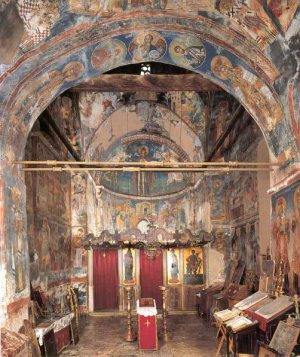
The monastery complex of the Peć Patriarchate consists of four churches that were built between the 13th and 14th centuries:
The Church of the Holy Apostles, the oldest church whose construction, judging by a fresco from the 1250th century, was conceived and begun by Saint Sava near the end of his life, and his idea was realized by Arsenius I, Sava's successor on the archbishopric throne, around XNUMX, when it was painted;
Church of St. Demetrius, built by Archbishop Nikodim, around 1320;
Church of the Virgin Odigitria, built by Archbishop Danilo II, around 1330;
Church of St. Nicholas, built by Archbishop Danilo II, around 1330.
The narthex in front of the churches was built by Archbishop Danilo II at the beginning of the fourth decade of the 14th century. In his biography, it is particularly emphasized that he wanted to build a chancel "worthy of much talk". Above the chancel, he built a catechumen, as well as a large pirg in front of the church, and on the very top of the pirg there were bells, which, by order of Daniel II, were brought from Primorje.
In the Patriarchate of Pec, in addition to the churches, a large number of other buildings were built and disappeared during turbulent times, which are known thanks to an old copper engraving, as well as archaeological research in recent decades.
On the copper engraving by Georgi Stojanović, which he made in 1745 on the order of Patriarch Arsenio IV, you can see monastic cells, guest quarters, "madjupnica" - a kitchen with a small and a large dining room, a water mill, a granary, a stable, a bakery, a garden. Of all these buildings, the last bakery, that is, the inn with dining rooms on the western side of the chancel, was preserved, but that building burned down in 1940, so now only its foundations can be seen.
The churches and buildings around them were protected by a large wall with five towers, one of which, the so-called donjon tower in the northwest towards Rugovo, was specially fortified.
Today's buildings around the churches come from the last and this century: the lodges at the bottom of the gate on the west side were built from the middle to the end of the 1981th century (burned down in 1970), the belfry on the south side was built in 1981, and the new lodge in the northwest part of the gate it was completed in XNUMX.
The old monastery complex extended beyond today's walls. On the Idvorac hill above today's road, on the north side of the monastery, there was also a strong donjon-tower, from which walls with defensive towers descended in two arms towards the monastery. Now there are only a few traces of the Turkish fortifications in the foundations, while the only thing visible is the keep tower, the lower parts of which have been partially restored.
Today, the Pećka Patriarchate monastery is a very important spiritual center with a sisterhood of 25 sisters. After the fire started by the Albanians in 1981, new monastery quarters were built with a new Patriarch's residence. After the war in Kosovo and Metohija in 1998-1999, the Pećka Patriarchate monastery became a spiritual and national center for the remaining Serbs of the northern Metohija and Hvostan regions. The Sisterhood deals with humanitarian work and maintains the monastery's economy. The monastery also has a metoh in Budisavci, not far from Klina, where two nuns live alone under the protection of KFOR forces.