OCCUPATION
The Germans marched in a parade to Zemun. There are countless of them, they occupied all the barracks, all the schools and even our Gymnasium. They are noisy, imposingly organized and correct to the point of peacefulness. The Zemun Germans are overjoyed, almost all of them already in Foxdeutsch uniforms and still tame.
It seems that everything is not as terrible as it was thought to be. Only then, someone brings some news about the shootings, to which someone else waves his hand: "Fabrics!"
About ten days later, someone brings photos (from Pancevo, I think): on a long football crossbar, a dozen hanged! For the first time in a sharp photo, I see distorted faces, heads turned to the side, tongues sticking out... Retribution for some inhospitality towards the "nice" occupiers, or maybe revenge for some action we were already preparing for.
Nobody is threatening us and around us yet, but the uncertainty is all the deeper because the threat is not so much personal as general. Why she didn't come on the same day, together with the Germans, would at least make it clearer what awaits us.
GERMANY
Zemun, May 1941.
We believed that there "must be" ("and quite a few") communists among the German soldiers. You just need to recognize them in some way and establish a relationship with them.
A young man from Gornja Varoš informs me that "from the first" he found such a person! It seemed to him that he was a "working type" even though he even had a lower officer's rank... He said, he followed him towards Ćukovac and whistled for "International", so when Willy (that was his name) accepted the same whistle arya, told him, in high school German, that "Hitler is nicht gut", and gave him the "good news" that Zemun's youth are all communists and that in our country everything is organized to fight against fascism.
Not much less naive, but more responsible in the Movement, Branko Afabi and I went, at the appointed time, to get to know this Willy and that, if he is really like that, he deserves to be "taken over", considering the importance he can have for our "further penetration" into the ranks of German communists in Hitler's Army.
Miraculously, that Willie was really anti-Hitler (it will be proven) and really a worker, admittedly, not a communist but a social democrat, but he immediately disappointed us with the assessment that almost all Germans in uniform were Hitlerites and that any similar attempt we made towards him would make us , led straight to the shooting, and let's not kid ourselves to continue like that.
We did not completely ignore his warning, although we concluded that no more can be expected from a "social democrat". Nevertheless, the kind-heartedness and anti-Nazism of Willi in question could be verified to some extent, because he lived in Gornja Varoša, in the house of one of our youths who also testified that Willi was "a very good man".
Branko and I learned from him that his unit, as part of a large military formation, was moving to Poland, from where, as he said (knew or guessed), they would certainly launch an attack on the Soviet Union.
I don't know, I don't remember, whether we passed that information on to someone at the time and whether it could have reached somewhere, and especially whether it would have been received as serious and useful, but for us at that time, the impending German-Soviet war, was so normal, expected, even desired, that what he said was more a confirmation of our hopes than some important news. I remember that we rejoiced at that information as information that Hitler would be driven out of Yugoslavia in a short time by the action of the invincible Red Army, which is just waiting for the hour to save us and the whole of Europe from fascism.
We went one evening to the Zemun railway station (the lucky discoverer of the German anti-Hitler, Branko Abafi and I) at the time of the departure of the German military unit to which Willy belonged and greeted him cordially at the end, accepting as completely normal his whispered statement that they will not shoot at the Red Army and that they will surrender in the first battle.
If someone happened to record that heartfelt farewell at the Zemun railway station in early June 1941, we would not be able to justify to anyone after the war that episode of our touching closeness with the Hitlerite officer.
BOILING
July 1941.
Shooting has already started in Serbia. The meaning of the word partisan, which started appearing, is known only to communists. The news about the beginning of the fighting in Serbia seemed incredible to the people of Zemun (many, I mean the majority), and even unpleasant to some. Is it now that everything is over and the Germans are not so unpleasant, that someone challenges them... What will a few "hajduks" do when the entire army has surrendered. All this seems to them more like an irresponsible provocation than some patriotic act. The majority do not think that the insurgents could be someone else, but only Chetniks. Most often, Košta Pećanac is mentioned in various heroic versions (the very one who was among the first to cooperate with the Germans, they even say, even before they came!).
Here are some completely forgotten details from that time (April, May, June 1941) before the German attack on the Soviet Union:
The German ("art") film in the Zemun cinema glorifies the cooperation and historical connection of the German and Russian people and the army. (I don't remember the title.) That's how they meet in the film, after dividing Poland in 1940, the German and Soviet Army... "Hurrah!" and on one side and on the other, German and Soviet soldiers, hugging each other, sing together the Russian song "Volga , Volga", and then again together with some German. They congratulate each other on their successes in the fight against the "Western plutocracy".
Or: a company of Germans marches down the main street of Zemun and sings (in German) "our" song "Crven je istok i zapad...", certainly with Nazi lyrics.
Or: a man (of course, protected by a Soviet passport) is walking down the street with a red band around his sleeve that says "CCCP" in large Cyrillic letters. We secretly followed him to look at him for a moment. How we envied him!
Everything could change in those years, only our faith in the Soviet Union could not!
ARCHIVES
The imposing building of the Faculty of Agriculture in Zemun also became a German barracks. In the basement of the faculty, there were student club rooms where wall newspapers, both the latest and a few earlier "issues" remained, forgotten, neglected, in rolls. When it was seen that the German army was moving into the building, someone remembered that for the Germans and the police, the signatures under the articles, especially those that directly call for the fight against fascism, could become a police warrant.
Ratko Aleksa (Dalmatian, member of the Party, then a student of that faculty) explains to me the exact layout of the rooms and the possibility of entering the building, through the courtyard windows of the building. However, the Germans are already occupying the building, setting up a guard, albeit only in front and not yet behind the building...
(I don't know why someone who knows the building and premises better wasn't appointed. Or why at least one of them wasn't added to me. It's only certain that there was no "pulling out" of someone, that didn't happen then among activists, especially not among communists .)
So, fortunately, for a short time, I found myself alone with the Germans in their barracks. It's good that we didn't meet in person on that occasion.
I hid the rolls in the attic of the courtyard building in Tvornička Street, where we used to live. Also, luckily, none of the numerous tenants seem to have noticed that either.
After the war, I found the untouched, dusty rolls where I had left them and handed them over to the then University Committee in Belgrade.
I saw them once at a post-war exhibition about the activities of the student movement in Belgrade and Zemun.
VEST
Early morning in Zemun, June 22, 1941
Occupier Radio Belgrade, from an apartment I pass by, loudly and dramatically broadcasts "the latest news that today, June 22, German troops launched a general attack on the Soviet Union at dawn...." Overjoyed (even today I am not ashamed of it), as on wings, I rush to process as many of ours as possible first
It's over, we all believe, in the shortest time we will see the Red Army, Freedom and Socialism are coming... Not only here, we are not selfish, freedom and socialism for the whole of Europe, for the whole world!
We were so much children then... And not only us, children.
DEPARTURE
At the end of July 1941, three of us from Zemun Skojeva left Zemun "to join the partisans": Ljuba Ljubinović, Milan Marić (Mare) and me.
I don't know who chose us and why. I know for myself that one of the reasons could have been that someone from the police inquired about my behavior, bearing in mind that in 1939 I was expelled from the Gymnasium "because of communism". (However, neither me nor others who were excluded from school on the same occasion and on the same grounds, at that time no one bothered.) Only, I got ready and with understandable dissuasions and fears in the family, went with the prescribed most necessary equipment, to the scheduled place in Belgrade, where at that time it was still possible to move freely.
I remember that departure as striking information about the high degree of our organization at that time. We were not afraid of the Germans, because they themselves did not yet control everything, but of the agents of the Belgrade Special Police, which they had already hired, and who knew communist activists and methods well.
We left at the same time but not together, we found the one in Belgrade who had to wait for us, then we were informed when we should be at the platform of the Belgrade Railway Station, which train to get into (again, each one separately), who we should follow when he got off from the train (we got off in Ralja), to then follow the man with whom he said goodbye. It was, to our surprise, an Orthodox priest, who then went, and we followed him, into the village and stayed at the last houses, after which, according to the instructions, we continued along the path that led further outside the village. Walking like that for another kilometer or two, a man with a rifle came out in front of us from the woods, who led us on, now all three of us together.
We soon found out that the squad we were going to was called "Kosmajski" and that one of his companies, which we will join, was only a few hours' walk away. We were surprised that that company, which we finally found, numbered only seven or eight fighters and had only four guns; that, therefore, we will be without weapons until we acquire them... We were told to use only nicknames, and the company commander "Marko" immediately assigned us partisan names: Marić "Black", Ljubinović "Blue" and me "White", which remained my nickname during the entire war, and for a long time in the subsequent peace.
It seems to me that I could list almost all the fighters of that time, the First Company of the Kosmaj detachment, whose real names I found out later. They were: Đuro Mešterović, a doctor, a "Spanish fighter", Dejan Popović, a doctor, Raos... also a doctor (is he also a "Spaniard"?), Marko Solomunović, a lawyer (commander), a distinctly non-military type looked more like a teacher rather than a warrior, Edo Davičo, a student from Belgrade, one Ivan (or Anton) Fratrović, a bakery worker, a long-term (Mitrovac?) political prisoner,
Boris Baruch, a well-known Belgrade painter, a peasant (Sava, from the village of Parcana), Max Štern, a medical student, after the war a well-known Belgrade psychiatrist (changed his surname to Šternić). When we arrived, the company was still living in fear for the fate of the Second Company of the same Detachment, which broke out of the encirclement in another direction only a few days after the encirclement of Kosmaj. It soon became apparent that the Second Company also feared that the First Company, after intense shooting during the encirclement and break-through, had lost a large portion of its lives. However, both of them managed to get out of the ring without any losses (only two were lightly wounded), and after a short fight, each in their own direction, and later happily reunited.
The encirclement of Kosmaj was very organized and perhaps the first major German operation against the first partisan units in Serbia. It was shown, as many times later, in other areas, that the encirclement (ring) is a very expensive, slow and ineffective form of military intervention against partisan units, although the Germans persistently repeated it for a long time, during the entire war...
The detachment grew rapidly, by the end of August it numbered more than 200 fighters. The most numerous were young men, Belgrade students, high school students and workers, but there were also several dozen women. The most numerous, of course, were Serbs, a relatively large number of Jews, there were Bosnians, Dalmatians and Macedonians, but also two real Germans, deserters (in my company there was one of them, we called him Milan, after the name of a Nedic man who he disarmed and forced to bring him to us). When we arrived in the Detachment, almost all the fighters were members of the Party or SKOJ, but later they were in a convincing minority. The Communist Party was very popular and respected, many wanted to join it. But the Party was staffed and strictly selective. Admission to it required a lot of evidence of ideological closeness and, above all, a proven willingness to make sacrifices.
All that I experienced in those first days was: a concentrated expression of the meaning and significance of the partisan struggle, which I experienced in many other parts of the country during the next few years. A feeling of exaltation
objectives, moral and human purity, organization and willingness to make sacrifices, constituted the inner strength of the movement which, thus started, was able to withstand everything that awaited it later. As a boy and infatuated, I didn't even think then that it could be different. There were, of course, later, different and even opposite experiences, but I saw them only as unacceptable exceptions.
Then I learned, and I have never forgotten, that the goal is indivisible from the means by which the struggle is used. And whenever later that "my struggle" sought, imposed and justified other means, which once broke even over my head, it still did not weaken the foundations on which it could only be great and successful. I sobered up, but I didn't waver, especially I didn't think of giving up! Today, I would not attribute absolute purity and innocence to either my own or other people's actions at that time. I only claim that at that time, neither others, nor I, had to do or say anything that would be contrary to the human, patriotic and veteran's conscience.
The identification of the Man and the Movement could have been complete!
BELGRADE - END OF SEPTEMBER 1941.
I have been staying in Belgrade for several days on a courier assignment. I exit from Nušićeva Street onto Terazije. I was startled by an unexpected sight: a row of hanged people on railway tram poles!
Weakness in the legs. I'm already a bit used to war scenes, and yet so much excitement! I pass by like the others, seemingly calmly as if I've seen it before, I don't stop like the others. Still, I glance over each of them.
I recognize a middle-aged man hanging on a pole who came to our Kosmaj detachment ten days ago, with whom I exchanged my "goyzers" for his shoes, which I have on my feet.
He, however, is now hanging barefoot.
ARREST – AUGUST 12, 1942.
... On that day, a team of the Zagreb Ustaša police, from the "Moving High Court", arrived in Zemun and immediately, in order to have something to start with, they ordered the arrest of all those who were arrested and then released because they were not seriously charged or did not admit nothing...
...They grab me, take me to a room upstairs. So that there are no more illusions, the interrogator grins triumphantly: "Is it possible that we caught you so easily... Sit down, tell everything you know about the Party and Skoj..."
...To make everything finally and irrevocably horrible: "Answer what I ask, and above all, tell me where you put your Zwickerash yesterday?"
DOCTOR
We captured "Doctor Herceg" (that's all we called him) in the middle of 1943 in a battle near Bijeljina, as a home defense doctor.
As is well known, we only took weapons and clothes from the Home Guards and sent them home... They deserved it, they rarely offered resistance, most of the time they surrendered immediately. Some even several times.
However, we kept Dr. Herceg and promised that we would let him go home after a month, but that now he must stay with our wounded. He begged every day that we somehow inform his wife in Zagreb that he is alive and that he will return... He counted the days... he reminded us of the given word! He worked hard, because of that we also respected his impatience, and then we also appreciated his characteristic excessive anger...
But there were more and more wounded, a month had long passed, and there was no less work for the doctor than when he came.
Nevertheless, the word is the word, and when we got close to Bijeljina again, we told him: "Thank you, doctor, now you can go."
"Yes, now you've remembered!... And to whom should I leave these poor people?", he said as usual and - remained with the partisans until the end of the war.
AWARD
A few months after the Seventh Offensive, I am writing proposals for decorations for the Supreme Headquarters. A short explanation, they say, and a strictly limited number of proposals.
I remember, almost verbatim, one of those explanations: Order of Courage - Sergeant Stevan Večera... Because he did not retreat with his machine gun until the Germans took the position he was defending. In the hand-to-hand fight that ensued, the Germans robbed Stevan Večera of the zbrojovka, but he retreated with the stolen German flag.
When the award was announced, Stevan Vecera was no longer alive!
After all, decorations are worn only by those who remain alive.
FATHERLAND
A large group of German prisoners, in front of the already liberated Obrenovac, in October 1944, hand over their weapons and equipment.
Everyone tries to provide some proof that he didn't fight: one shows the marks of having served in the medical corps, another says he was a cook, the third shows a pipe clogged with mud as "proof" that he didn't shoot. Hardly any of our people understand those excuses in German.
The next one who approaches to hand over the rifle is no more than 16-17 years old... I ask him with difficulty putting together a sentence in German: "You must have worked in the kitchen too, right?"
He looks at me excitedly, starts to cry... Now I'm already sorry: "What kind of Wehrmacht soldier are you when you cry?" With difficulty, but still correctly, I understand his answer: "I'm not crying because I'm afraid, but because my motherland…”
Partisans are sensitive to the word "fatherland", when it is spoken honestly. I saw that when I translated what he said. They also cursed the Swabian motherland, but - quietly, without hatred!
After all, Germans also have the right to their homeland, only theirs is not here.
SUZE
On the bow of the last "boat" that was returning to the opposite bank of the Danube, a beardless Red Army man cries inconsolably and loudly. No one bothered him, no one laughed at him, no one comforted him.
Tears are respected in war, I guess because the longer the war, the harder it is to flow.
From the interrupted words between the sobs, I understood that a Red Army man was also killed that day - the only one in the regiment who was from his place. They went together from the Urals.
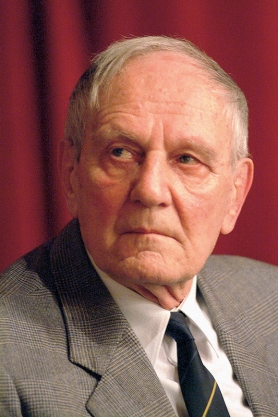
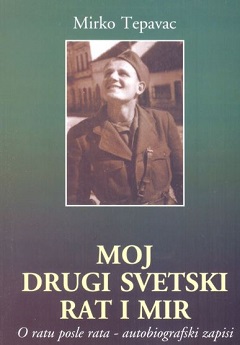
Excerpts from Mirko Tepavac's book My Second World War and Peace