

Basketball
The end of the saga: Jabari Parker and Partizan terminated the contract
Jabari Parker and Partizan terminated the contract by mutual agreement, which ended the saga that marked his stay in the black and white jersey
 photo: hnk.hr /novković
How am I because of the multi-hour show Cyclops came home late and worried my parents, and why is that the night my childhood ended
It's weird to say that because you can't mix people and books mix nor grandmothers and frogs, but Cyclops and I are peers: it was published the same year I was born. Fifty-one have passed since then, and Cyclops must have aged better, for it is a masterpiece, and I am not; And because that's how it goes with books: the bad ones are born dead, the average ones only live for a few seasons and in their fifties even their authors don't remember them anymore, and the out-of-series ones can live much, much longer than even the longest-lived human. Šjor Ranko Marinković wrote a novel that will hardly stop being alive and important as long as it is in the language in which it was written and in which we read it. And as long as the fears, struggles and hopes of Melkior Tresić live in us and in the future, as yet unborn; and it doesn't look like they're going to run out anytime soon.

We both received "Cyrillic" baptismal certificates, me because my mother gave birth to me in Skopje, a Cyclops because its first edition was published by Belgrade's Prosveta, in the Cyrillic script; there was a time when it was possible for a leading Croatian writer to have a premiere in Cyrillic. Next year, Prosveta will print the novel in Latin as well, and I have that edition at home now, although no, it was not the edition I first read, back then, for my early, youthful readings. Cyclops, but someone more recent, faded from memory. He does not know the number of later editions anyway.
But it's not that one. Cyclops, bookish, the one that is the immediate occasion of this story, than one other, theatrical, or theatrical, if you will. A colloquium was held at the Croatian National Theater in Zagreb the other day on the occasion of the fortieth anniversary of the premiere of the theatrical adaptation. Cyclops directed by Kosta Spaić, with the participation of live actors, critics, witnesses. That's how it is with the theater, the play is a worn-out medium that, when acted out, remains only in the viewer's deceptive memory, or suspiciously mediated by the critics' observations, so you are left to (not) take his word for it; Jovan Hristić wrote about it unforgettably in the introductory text of one of his four invaluable critical collections.
At the time of this premiere, in the spring of 1976, I was barely eleven years old, and I had only been a native of Zagreb for two or three months; I must have spelled out the topography of its streets. He will come to Zagreb that same year The Rolling Stones, the first and only time in SFRY: I didn't see them, I was just one summer too young for them, just as I was too young for Cyclops, but I still had better luck with him, because he was not a one-time attraction from the big world. I think it happened in the second season of his playing, maybe 1977 or early 1978, only, my schoolmate Edo and I went to see that Cyclops, alone, without parents: clattered from the age of twelve, they went to the pompous yellow National Institution for the difficult work of a living classic; today, I guess they wouldn't even let some of them into a large and grown-up theater without an escort, that's how these permissive times are in some ways more patriarchal than the grayness of that time.
How did it even come about? Maybe one of my parents or his parents got tickets ("through the union?"), but they didn't feel like it or they were too busy so they gave them to the kids, we just went to the show I guess having no idea what awaits us, as much as before the novel, I believe today, we still didn't know, God forbid if we licked it in passing. I don't know about Eda, but my life changed dramatically that night: that was the first time I saw a real, real and big Theater, and I will remember that meeting as well as the first rock and roll concert, the first record, the first cigarette, the first sex. The youth of Rade Šerbedžija - who else would? - it was Melkior Tresić, and even those two twelve-year-olds clattered, following him with open mouths as he walked angrily over their heads (suffering for Viviana, fearing the army, arguing with the drunkards from the Dajdam tavern), as it were, on some boardwalk that Spaić whipped deep into the audience, she understood that there couldn't be another Tresić besides him. And the great and rather forgotten Jovan Ličina masterfully and majestically played the Maestro, that terrible, grotesque, strong, sad, defeated human figure standing upright and powerless against evil and against human stupidity, misery and wickedness, but also the labyrinth of his own desires and incurable failure, and he played it in such a way that even the one with my name, Roman's peer, was beside himself with some obscure, overflowing elation, from the realization that the theater is It, and that, after all, Man is also It: a magnificent handful of misery, and that such and such will degenerate through life, and that art is a worthy engagement with that misery and that majesty, and to think and only naive consumers of theater and other "for children" pizzerias can believe otherwise, which my twelve-year-old namesake deeply despised anyway.
And that one Cyclops, Spaić's, alas, it lasted a long time, endlessly, I have no idea how long, maybe three hours, maybe four, with one or two breaks, certainly beyond what was expected, and we, fidgeting on our chairs, slowly realized how all the late buses were running away from us and trams, then the penultimate ones, then the last ones, but there was not the slightest chance that I would be lured out before the end, so let's wait for the morning here, watching the scene of Maestro's suicide by pissing on power line under high voltage. We finally came out, after applause that also tended to be endless, into the quiet Zagreb night of the late, in many ways sleepy seventies (in the deepest shadow of "Croatian silence"!), there were no night buses and trams in Zagreb back then, nor were there taxis in we didn't have money for the madness, so we set off on foot, and for some unclear or forgotten reason, on a slightly longer route, down the entire Savska, then across the bridge, then along Savski gaj, Trnsko, Siget and Sopot to our secluded, semi-wild and swampy, still very new neighborhood, and at home there was a great commotion at that well after midnight hour, the parents were beside themselves with worry, and it was damn hard to explain that is a play really lasted so long; so I guess my first serious carding with the time of returning home was completely crazy "legal" and chaste, nothing sex, drugs and rock'n'roll, but theater, theatre, auditorium and other theater.
I read the novel again after so many decades, a little anxious, as always before a new meeting with someone formative book: will I recognize in it what I saw then, or will I be amazed at both it and myself? A few years ago, I even took part in a large "Jutarnji list" survey (Newtonian, the colporteur will announce him in the novel, and in the play, I remember that voice well to this day!), the best Croatian novel "ever" was chosen, something like that, and Cyclops won overwhelmingly, and was also on the first place of my list, actually without thinking, so again: what will happen?
It seems to me, today, that I read this book for the first time, that before it was just a warm-up, a slight opening of the door in front of some distant and sfumatous scene, which could hardly be discerned, even less understood. Because Cyclops - that polyphemus, one-eyed - is primarily a novel by Fr fear and trembling, great and all-pervading, about the fear of a small, squirming, neurasthenic, contradictory human individual in front of the immeasurable forces of History, blind and brachial, who don't care at all if at any moment, even if out of whim and caprice, they take him in the shachurds and crush his bones , with or without subsequently loading "sense" into that mindless, irrevocable annihilation. And about Fear, such and such, you can't really know anything seriously in SFRY in the seventies and eighties, not only are you too young, but the world in which you live, which you are surrounded by, shaped, marked and irradiated. Reading it, on the other hand, with the bitter and bitter residue of experience, personal and general, Melkior Tresić appears to you as your own brother or like you head and chin, then when you are not Maestro, or Ugo, or ATMA, or even Viviana, why not? Six hundred, almost, pages of text written with linguistic precision, energy, purity and, above all, lucidity which is unparalleled, that is Cyclops; I thought about all kinds of things while reading it, all kinds of craziness, let's say that I was reading the best novel ever written by Miroslav Krleža, one that he was not able to finish, so Marinkovć took it upon himself. It's autumn, then winter 1940, then spring 1941, war is raging in Europe and a frantic Hitler is on his doorstep, a small and decaying Balkan monarchy is quietly and inexorably disintegrating until nothing remains of it, and there is no alternative to it and there won't be before of general carnage and falls into the deepest barbarism, something dies and nothing is born, a city that is absolutely and one hundred percent Zagreb without even a single line being appointed, they augur a failed, frightened or longed-for existence and grope in the darkness of the utter indecipherability of the immediate tomorrow, in coffee houses and taverns gather (and spread, and separate) whores who do not work for intercourse but for a line or a paragraph, journalistic and writer's baggage, and of course fatal women, often only banal givers, but no less tragic for that, lost in a world that is not only fundamentally male, rather, he will only become more masculine, here's to it a day or two, when the Messerschmitt thunders overhead, and in goodness the city of Zagreb activates, emerging from the mold and darkness, That Dark Something that will take over it forever.
Melkior is a man from some unnamed southern Mediterranean (and that's all we'll learn about his "background", which is radically subversive in the context of our endless "familiarizing" stories), just like Višanin Marinković, and the age corresponds to the writer's in at that time, and it is a great temptation to read everything there in an autobiographical key, but it is not even an important part of the "really" autobiographical, but that atmosphere which the writer carried in his bones, not only in his mind and heart, and carved from him a quarter of a century later an equally fascinating - or: even more fascinating? - the structure of the novel that integrates, it turns out, a multigenerational weltschmerz of unfulfilled love and erotic longings and barren, provincial para-intellectual ambitions, all of which are merrily drowned in the shitty riff of an already Big Bang, from which whoever survives - will talk. The best one - he will write Cyclops...
I guess it was better when the gaze of the one-eyed polyphemus, the cyclops, stalked us only from novels and from the theater, but that, of course, could not last: nothing ever lasts here. Actually, nowhere nothing ever lasts, only here it usually takes a slightly bloodier form. After a while, I guess my parents believed me that I was really there that evening samo in the theater. And maybe it would have been better for me if I had been in Dydam, and maybe it wouldn't have been, I'll never know, just like Melchior what his longed-for Viviana's real name is.
Jabari Parker and Partizan terminated the contract by mutual agreement, which ended the saga that marked his stay in the black and white jersey

In the elections on May 5, 1935, the government and opposition lists were voted on. Before the elections, the government intimidated teachers and scholars with dismissals and arrests, called opposition candidates Ustasha allies and accused them of organizing the assassination of the king, prevented foreign journalists from reporting...

As if by pattern, the same thing that is happening now on Novoj.rs, happened on Television Novi Sad in October 1990.
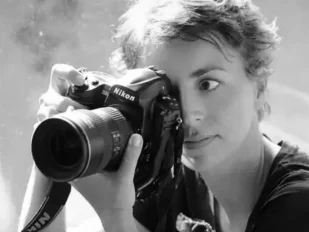
Vesna Lalić, an excellent photographer, has passed away. She photographed all the most important social and political events in Serbia, as well as seemingly ordinary everyday moments.

It sounds incredible, but it's true - AI worms could soon spread through home devices

There is, literally, no difference between the one who claims it is day in the middle of the night, or the one who claims to be a giraffe, from the claims we read on billboards: that Vučić is working to unify Serbs and that Serbia is doing better and better day by day.

The pre-election arrests due to the alleged "overthrow of the state" testify to the regime's panic. The bad news for them is - they can't arrest the whole people who decided to defend themselves from progressive beatings and election theft

The ring that tightens around Ćaciland Student list is getting narrower. Because there are more and more spoiled people who see the false prophet for what he is: a street obscener who is fighting Serbia

The archive of the weekly Vreme includes all our digital editions, since the very beginning of our work. All issues can be downloaded in PDF format, by purchasing the digital edition, or you can read all available texts from the selected issue.
See all




