Of the writers who belonged and still belong to the canon of Yugoslav literature, as well as those from world literature who, from the Yugoslav perspective, belonged to the canon, the last one, chronologically, I started reading was Meša Selimović. The first book by Meša Selimović that I read was Dervish and death, and I read it shortly before my eighteenth birthday, in late April or early May 1995. I don't remember the exact time of reading because of the impression the book left on me, I remember it because of the overall context.
I went to the third grade of the grammar school in Travnik, and at the beginning of May I participated in the national mathematics competition for high school students, which was held that year in Tuzla. Dervish and death I finished the night before the trip to Tuzla. Here, in fact, is why I remembered it. Before the war, I traveled relatively often to Tuzla, and that trip lasted two or three hours. In May 1995, however, we traveled for eight hours. We traveled alone free territory, an area, as it was said, under the control of the BiH Army, and that meant that on the Travnik-Tuzla road we would pass through Visoko, Vareš, Olovo and Kladanj. Somewhere between Vareš and Olov, our bus, actually a minibus, with about fifteen high school students, stopped next to a burnt motel. We took a break there, to rest and eat the sandwiches we brought from home. A few of us boys couldn't resist entering the skeleton motel, and as a souvenir we took the alarm clock we found in the ruins. It worked after we wound it up. Somewhere between Olov and Kladnje, the driver warned us to duck because we will briefly pass a part of the road where we can be shot at. And a little before Tuzla itself, we passed through the village of Devetak. I read the name of that village the night before, near the end of the novel Dervish and death. The young man who approached Ahmed Nurudin "on the alley, near the bridge" is from that village. The name of the village will make it dervish he remembers his childhood because his mother is from the same village and because he often stayed there as a child.
LOCAL AND UNIVERSAL: We were in Tuzla, it seems to me, for three days. I knew, of course, that Meša Selimović was born in Tuzla, but Tuzla itself did not stimulate the memory of the newly read novel. It was intense in those days and evenings, especially evenings. It was warm, and the streets of Tuzla were so crowded that we used to hold hands so as not to lose each other. There were no cell phones back then. The epicenter of the crowd was a locality called Kapija. I guess we were working everything that young people love; mathematics, at least for us Travničans, was just an excuse to come. However, I slept poorly during those two or three nights in Tuzla, and in my insomnia I remembered Dervish and death. And it's really bizarre, but I kept going back to Devetak in those thoughts. If there is a cliché that is used in all secondary schools Dervish and death reads as a part of compulsory reading and repeats ad infinitum, then I guess that is the name of this novel universal. And really, at first glance, the novel is devoid of concreteness. Dubrovnik is mentioned, but I guess Dubrovnik is objective most universal a recognizable city in this part of the world; Travnik is mentioned, but to me, subjectively, any mention of Travnik is completely logical and understandable. Apart from these two cities and possibly Constantinople, and that more as a vague symbol than as a concrete city on the Bosphorus, it was mentioned, at least that's how it seemed to me at the time, and it's not much different now, just that Devetak. The Nine itself is, however, enough to universality Romanian localizes. When we were leaving Tuzla, we greeted our new friends there, saying that we would see each other soon. In a few weeks, sometime at the end of May, a national physics competition was scheduled there. I don't know how it was elsewhere, but in Travnik the representatives from mathematics and physics were more or less the same people. However, we did not go to Tuzla sometime at the end of May 1995. On Youth Day, May 25, 1995, a shell fell on the Gate and killed over seventy people, mostly young men and women, our peers. After that, I was not in Tuzla for almost fifteen years. For the first time after May 1995, I was in September of last year, at literary meetings on the occasion of the awarding of the "Meša Selimović" award for the best novel in Bosnia and Herzegovina, Montenegro, Croatia and Serbia. The whole event is dedicated to Meša Selimović, but it is only a special event and again, as such, it did not make me remember him. I remembered Selimović and I remembered my first experience of his most famous novel, promoting the book of correspondence between Miljenko Jergović and Semezdin Mehmedinović in Tuzla. Transatlantic Mail. In that book, in one letter, Jergović writes that Selimović is a writer of our world in which terror and persecution "begin with some opaque metaphor followed by a threat." It is later clarified: "And it is always the same problem with that discourse: a man would even accept a warning, he would withdraw, sprinkle himself with ashes and give up something he was doing, but he cannot do that, because there is no deed committed, nor is there any content of what was done At the end of the fragment, there is a part that reminded me of my long-ago insomnia about the village of Devetak: "Referring to that language and that world, Meša Selimović is a very local writer. Because of this, the interpretations of his two great novels are somehow flawed, wrong and banal. He did not write about totalitarianism, the relationship between the government and the individual, rebellion against the state..."
OLD SUJUKA: Yes, Meša Selimović is a very local writer, actually the most local great Yugoslav writer. It is no coincidence that nowhere and never in his opus (but really nowhere and never!) Danilo Kiš does not mention Meša Selimović. Few things in literature were as annoying as rain local color, and Selimović's work despite the generally accepted universality crowded local colors. There is something else very characteristic of Selimović. There are writers in English literature like Edmund Spencer or Abraham Cowley who are called "writers for writers". Of all canonical domestic writers, Meša Selimović is the least "writer for writers". There is a whole legend about the speed with which it is Dervish and death consensually accepted by the Yugoslav public. The recently deceased Milorad Pavić wrote in a biographical note how he got to the novel Khazarian dictionary was the most unknown writer in Yugoslavia, but after the publication of this novel he became - the most famous. This could, perhaps with greater accuracy, be applied to Meša Selimović i Dervish and death. Selimović himself noted with characteristic self-awareness in his own Memories that in the sea of superlative reviews there were only three negative ones and that his fellow writers were after him Dervish nominated for the Nobel Prize. Selimović died in Memories briefly reviews those three negative reviews published in Yugoslav periodicals. One negative review on Dervish, however, it was only written in the old friar's diary and was published decades later. I will quote here the entry of the Bosnian Franciscan Ljubo Hrgić, which he recorded in his diary on September 29, 1967: "As if at some suggestion of the critics who praised Meša Selimović's novel, I took it to read, he is our author, I will find some new words and new sentences, style... But! But I also suffered from reading. It was difficult. It's like eating very dried, old sudjuka. There are no better actions in the first part, motionless movement and rumination of the dervish's thoughts; Tuesday comes deep Qur'anic sayings that keep our thoughts and that there are more of them. A novel with very poor expressions, almost a book of books. Psychology gradually falls, and then, in the second part, the cocooning of all those expectorations of our dervish Nasrudin is justified. (sic!) The book is similar to an old coconut. Hard to open the hard shell, the milk, initially runny, and later somewhat thicker and sweeter.
Nevertheless, the novel shows quite well the circumstances of the Islamic world in Bosnia, there are hints of some resistance to the authorities from Istanbul. Yes, the troubles and violence, insidiousness and fear in our eternally occupied Bosnia are outlined. Some faces like Hasan and Mullah-Mustafa are well portrayed. Human kindness and wickedness are in constant conflict. Selimović has some obvious mistakes here. Well, did the Little Brothers in Dubrovnik deal with and raise female children. What an anachronism! Did the main character, who had an oriental education, know about the windings in the brain. Western Europeans also studied it only later and found significant features of our brain circuits. (And maybe they don't mean as much as you think!) That's how the novel Mešin is like some kind of cabinet work. Therefore, he does not give anything cheerful, without hope, only the dervish rose to the height of honesty and heroism."
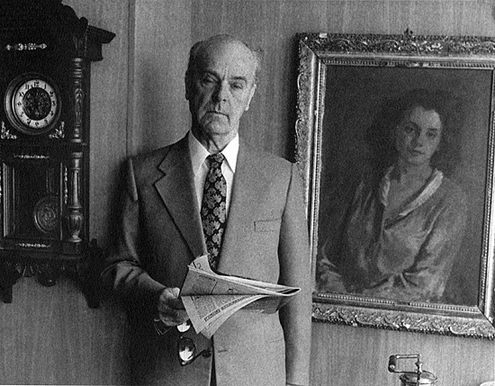
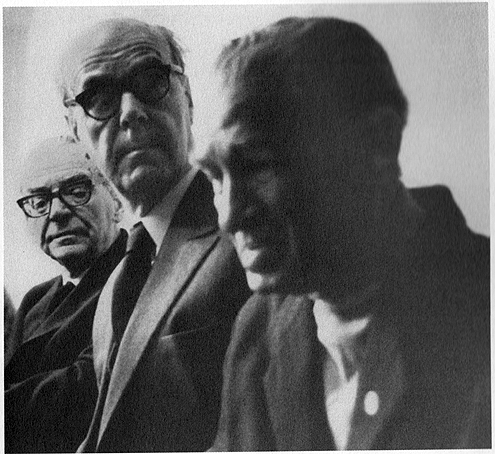
RETURN TO HISTORY: I am not quoting this micro-essay so broadly here just for the sake of curiosity and its relative obscurity. When I read it three or four years ago, I was pleased to see that I am not the only one who Dervish and death don't fall on your face. And to return to Kish, if a decade later the chase is on Tomb for Boris Davidovich had non-literary (that is, political) motives, it also seems to me that it is a dominant Yugoslav experience Dervish and death inseparable from non-literary (ie political) background. U Memories Selimović told the story about the shooting of his brother Šefkija and the lecture he gave the day after he heard about his brother's death. Coming down Dervish is already there, only Selimović will place it in the past. (U Memories explains: "Why did I go into history? Perhaps also because I was afraid of the direct factual violence of the topic and private limitations, which could again drag me into an unwanted affective reaction. And I wanted to extract from it its universal meaning.") When a man reads panegyrics today Dervish, it is evident that this motif of mutual interchangeability of dogmas appears as a common place. The story of Islam read, therefore, like the story of communism. If Meša Selimović was a less local writer, probably the contemporary global context would have brought him posthumous wide world fame, today when a geopolitical transfer took place on the line of communism-Islam from the Western perception, almost like a replica of the transposition that is in Selimović's the insidious workings of biography translated into a novel. Selimović was pleased with the success of his novel, he was pleased with fame, and even that vague thing they call a nomination for the Nobel Prize. However, the nominations are legion, and the awards are few and far between. Nevertheless, in the late sixties of the twentieth century, a future Nobel laureate visited Meša Selimović in his Sarajevo apartment, and then, twenty-five years later, when Sarajevo was under siege, before his own death, he briefly recorded the memories of that meeting. This is what Elias Canetti wrote (translation from the German of Stevan Tontić): "Visit to Meša Selimović in Sarajevo. I told him he was like a Scotsman from the Highlands. He asked incredulously what I meant by that. His wife offered us Turkish coffee on her knees. His daughters giggled softly in the hall. He told me that he was compared to Dostoyevsky. A very proud man."
PANDAN: Yes, it is not. Fortresses, Meša Selimović would definitely be the "writer of a book". Fortress would, however, be impossible without Dervish. Selimović himself wrote how it is Fortress during Dervish and death. Deadline during according to Klaić it means a thing that can be placed alongside other things; what goes with something; by, drug, "image and opportunity" something equal, this. Part of the destiny of this work seems to be foreshadowed by the phrase. It happens most often Dervish io Fortress speaks in pairs, almost as if they are parts of the same cycle, Fr extensions. Nevertheless, in a certain sense, these two novels oppose each other. U Dervish death is as meaningless as life, while Fortress meaning offers in love. End of penultimate chapter Fortresses as if it were the direct antithesis of the famous ending Dervish and death. Like this Dervish: "Fear sinks me, like water." The living know nothing. Teach me, dead, how to die without fear, or at least without horror. Because death is meaningless, just like life." Like this Fortress: "I decided on love." It is less true, and less probable, but it is nobler. And more beautiful: everything makes more sense that way. And death. And life." Dervish i Fortress together they made it possible Memories, the most personal book of the most local great Yugoslav writer. My relationship with Meša Selimović is inseparable from Memories. It is his book that I return to most often, the one that I have read the most times. She, in a way, provides both the key and the context for both Dervish and for The fortress. In addition, Memories are both a bildungsroman and a "portrait of an artist in his youth" and a confession about the discovery of atheism and memories of partisan days and a text that is in Selimović's bibliography what Skender Kulenović, his peer, is the second part of the poem I'm on the right path., mother, came out: that is to say, a kind of symbolic settling accounts.
BRAND: Reckoning with yourself does not, however, obligate anyone else. In this sense, it is worth saying something about the ways in which Selimović and his work are perceived in the Yugoslav historical space today. Exactly at the beginning of the year in which the hundredth anniversary of his birth is coming to an end, Bosnia and Herzegovina took away the banknote with his image from Meša Selimović. In other countries, on the centenaries of great writers, they receive postage stamps with their image, and in Bosnia convertible stamps are taken away from them. This is a joke, of course, and just an unusual way to mention the coincidence that on January 2010, XNUMX, a five-mark banknote (that is, a banknote) with the image of Meša Selimović was really withdrawn from circulation. There is no conspiracy behind it, it's just that a five-mark coin was put into circulation in the meantime, so the need for a paper banknote disappeared. The story of the paper money has, however, an interesting subtext. When BH was designed after Dayton. coin, it was decided that the characters of the writers would be on the banknotes. Each denomination would have two variations: Bosnian-Croat/federal and Republika Srpska, and on each denomination there would be characters of writers. The Federation chose Mako Dizdar, Antun Branko Šimić, Nikola Šop and - Meša Selimović in their "representation"; Republika Srpska chose: Aleks Šantić, Filip Višnjić, Jovan Dučić and - Meša Selimović. On both variations, the text would be written in both Latin and Cyrillic, except that on the "federal" denominations the Latin letter is uppermost, and on the "Republican Serbian" it is the other way around. The five-mark banknotes were, therefore, the same in both variations, except for the difference in the order of the Latin and Cyrillic alphabets.
POSTHUMOUS CONSENT: The story is indicative, among other things, because it conveniently illustrates the dual pretensions to the work of Meša Selimović. On the one hand, it is a fact that Meša Selimović himself declared during his lifetime that he belonged to Serbian literature. And in media polls for the most famous Serbs of all time, like that of NIN, Selimović usually figures highly. On the other hand, while the SFRY still existed, the Sarajevo publishing house Svjetlost published the edition "Muslim literature in 25 books", in which Selimović was the most represented author. Also, in today's Sarajevo there is quite a popular joke, the author of which is allegedly Alija Isaković, according to which, allegedly, unnatural that the greatest Serbian novel begins with Bismillah. It seems, however, that such a story about unnaturalness a mere Bosniak projection. Today's Bosniak Muslim official social and cultural elite actually has a big problem with Selimović. Immediately after the war, when the dramatization of the novel was staged in Sarajevo's National Theater Dervish and death, author of the first Bosnian language spelling Senahid Halilović "translated" parts of the novel into the Bosnian language, that is, in his words, he made "minor linguistic adjustments". The most exposed detail that, according to Halilović, but not only according to him, made such a thing necessary concerns the well-known part when Ahmed Nurudin to the sons of Adam He says he won't hold. sermon. According to Halilović and those who hired him, it is completely inadmissible for a dervish to pronounce foreign word sermon, so Halilović translated it nicely and put it in the dervish's mouth that he would not hold - vaz. The whole thing was crowned by the fact that Halilović said in an interview that he was in favor translation had (and now I'm quoting him!) "Mesha's posthumous consent".
SATANIC INSPIRATION: And while the war was still going on, Nedžad Ibrišimović, aggressively promoted during the war and after the war as "the greatest living Bosniak novelist" (the poetic title of the same rank is reserved for Abdullah Sidran), published a book Spiritual and satanic inspiration. The book explains the theory that all works of art are inspired either divinely or diabolically. God is the creator spiritual inspiration, and Satan – devils inspiration. As an example of the work she created devilish inspiration, Ibrišimović mentions Selimović Dervish and death. By the way, after Ibrišimović's first published book, Meša Selimović drew the attention of the general public to him by comparing Ibrišimović's prose with Chagall's paintings. The already quoted Caneti fragment about Selimović from 1993 ends with a rhetorical question: "Where would you be today?" In Sarajevo?" It is, of course, impossible to give an unequivocal answer to such hypothetical questions, but the option that Selimović would not be in Sarajevo, that is, that he would be perceived from Sarajevo as a kind of literary Kusturica, is not unrealistic either. After all, little is known about the fact that during the war, a brigade composed mainly of Muslims called "Meša Selimović" operated within the Army of the Republika Srpska. There is a passage in Ivan Lovrenović's essay on Ivo Andrić that can also be applied to Selimović, and Lovrenović himself says that what is true for Andrić is also true for anyone "of his generation of great writers"; Therefore, Lovrenović wonders what would have happened if Andrić had experienced the war breakup of Yugoslavia and says that his (as well as Selimović's, let's add) "the world would have collapsed". He then recalls how Andrić, speaking to Ljuba Jandrić about the year 1941, paraphrased Helderlin, saying that he had to follow his people and clarifying: "I gave myself a firm belief: you will also go with your people." You'd rather die than do otherwise! A writer who wants to write about his people must be with them. It is the basic root on which both his word and his work rest." The year 1991, however, was different from 1941. In the context of Andrić's hypothetical experience like that In the nineties of the twentieth century, Lovrenović writes: "The question that Andrić would be faced with is, ours years old, it would be cruelly simple, and for him an impossible question: with which nation will you go, as with his? Especially: in Bosnia!
BLOOD FLOW: In an often quoted interview, Selimović said: "Bosnia is my great constant love and my occasional painful hatred." Countless times I tried to run away from it and always stayed, although it doesn't matter where a person physically lives: Bosnia is in me, like a blood stream. It is not only an inexplicable connection between us and our homeland, but also a tangle of heritage, history, the entire life experience related to this region, my experience and someone else's experience, far away, which has become mine." Today, however, it should be said that Yugoslavia and the Yugoslav context inseparable from Selimović and his work, inseparable, to use his analogy, like blood flow. In an essay The dervish and the poet, Muharem Pervić remarked: "What homeland and Judaism are for Kafka, Bosnia and Islam are for Selimović." Apart from being nicely said, it is also true, and the parallel with Kafka could grow to a separate essay. (After all, when Jergović, speaking of Selimović, says, as already quoted: "A man would even accept a warning, he would withdraw, sprinkle himself with ashes and give up something he was doing, but he cannot do that, because there is no committed act, nor there is a content of what has been done", doesn't that sound Kafkaesque?) However, the way I would continue Pervić's parallel here is only telegraphic: What Austria-Hungary is for Kafka, that is Yugoslavia for Selimović. They are local writers of those worlds, of their own worlds, and universality is only later, not to say - secondary. That is why, among other things, it is nice that Tuzla, Selimović's hometown, paid tribute to its most famous writer by naming the award for the best novel written by him after him. ours, language. In this way, his heart and the heart of his work are preserved. I say heart thinking of the verses of the most famous poet from the Scottish Highlands. Robert Burns wrote: My heart's in the Highlands, my heart is not here; / My heart's in the Highlands.-chasing the deer; / Chasing the wild deer, and following the path, /My heart's in the Highlands, wherever I go. The great Balkan writer Elias Caneti compared another great Balkan writer with a Scottish one Highlander. In their honor, I freely translate the Scotsman's verses into our language:
My heart is in my homeland., My heart is not here.;
My heart is in my homeland., The deer is chasing;
While I'm hunting deer, while I follow the trail of a doe,
My heart is in my homeland., wherever the devil takes me.