

Culture
FAF - a festival made by people dedicated to film
80 films are coming to the 32nd Original Film Festival, many of them with awards from the Cannes festival. It is organized by a citizens' association, without a dinar of state money

The last night of love strikingly figures both as a successful genre work and as a film that could easily please even the more exclusive supporters of European films with an easily noticeable artistic profile
In the presentational sense, the story of the film The last night of love, one of last week's five novelties in the repertoire of cinemas in Serbia, began with a special, and therefore flattering, screening in one of the non-competitive, but definitely official programs of the Berlin Film Festival last winter. Bearing in mind the often bigoted fanaticism about the more radical arthouse productions that have been the focus of the local film selectors for the last ten or so years, it is somewhat surprising that an Italian full-blooded and undeniably genre profiled film was honored in that group of specially selected and distinguished ones. It must be the result of convincing lobbying, and perhaps also a natural consequence of the fact that behind this title stands a powerful house (Junversal), and perhaps the true/ultimate explanation is also the simplest - it is simply an excellent film that hits right at the many targets it is Andrea di Stefano, the director and screenwriter of the mentioned feat (otherwise mostly an actor) set himself.

And it is really surprising that among the Berlin selectors and heads there were those who had enough understanding for what Di Stefano's film so suggestively offers; namely, this film is truly unique in one extremely important dimension for him and for us - it happily and in the right proportion combines the already mentioned genre purity on the one hand and indisputable craftsmanship and ambitious execution on the other. In this respect, we arrive at the trail of what, unfortunately, as a topic and interesting implication, has only slightly begun in documentary production Dario Argento Panico, recently shown in Belgrade, where much more attention should definitely have been paid to one true specific from the domain of the local branch of film history - namely, Arđento and his comrades, epigones and satellites entered the scene as a kind of negation of what is deep in its core meant, offered and represented Italian cinematic neorealism (in all its apparent sub-forms and variations). Thus, in contrast to sometimes stylistic ostentatiousness, we got frantically fast and often visibly sloppy craftsmanship, while the focus came on stories with a completely different tone and profile than those we remember from the neorealist wave.
Andrea di Stefano, in his third directorial work, reconciles these two (of course, only in appearance) conflicting traditions and currents - while one can hardly dispute his determination to The last night of love (originally - L'Ultima Notte di Amore) rooted in the genre experience of a narrative film, this now definitely confirmed author makes a visible effort to raise this work above mere genre usability and consistency, especially since it moves within the boundaries of a genre whose die-hard admirers and consumers are often ready to turn a blind eye to a lot noticeably questionable whether they would not "feed" their movie-loving souls with their favorite and most necessary type of content. On this basis, this film brings to mind (admittedly conditional) analogies with the strength of more recent films coming from Spain and in which almost always the most important roles are played by the hardened and precisely in this field of crime dramas of the contemporary or more contemporary genre, the iconic Luis Tosar, with that that in terms of production and authorship, Di Stefano is a few steps further compared to that "Tosarov" average.
The basic thread in the aspect of the plot is crystal clear and here it starts from the well-known and often used genre trope - a policeman on the verge of retirement/end of professional career, with an unblemished work record, gets into trouble that will in a short period of time problematize everything he is involved in believed in the moment and what he had sworn until then. More concretely, it looks more or less like this: police inspector Amore, committed to the letter of the law, unobtrusiveness and firm life and moral views, only ten days before retirement (after 35 years of service and commendable biographical and work items that during that really long period he never shot anyone, and it's not that there weren't circumstances when that could easily have happened) agrees to, one would say, a lucrative business engagement - that during the last working day, in the shadows farewell party on that occasion, for the needs of the Chinese businessman whose life he saved, he ensured the transportation of an important colleague. Of course, a lot of things will (as expected) go badly, tragedy is inevitable, the stakes are high. It should be mentioned here that Di Stefano does not run away from the unrelenting, and in terms of genre purity, he places his Last Night of Love in an ideological sense among the devotees of genre film expression from the last century and decades that are still loved poliziotteschi films from the seventies and the beginning of the eighties, and that was almost one hundred percent a precise determinant for violent and truthfully organized films from the lives of policemen who deal with the "bloodier" spheres of crime. However, in contrast to the quickness and joviality that we know from that part of the Italian film heritage, Andrea di Stefano here offers the seriousness of films with an undeniable arthouse profile, which thoroughly traces the path to The last night of love impressively figures both as a successful genre work and as a film that could easily please even the more exclusive supporters of European films with an easily noticeable artistic profile, and, why not, also elevate them. In this regard, another illustrative analogy could be Michael Cimino's never sufficiently and fairly valued film - Year of the Dragon (Year of the Dragon), with which The last night of love it rhymes precisely with that author's ambition in the performance itself, and in the context of the genre, an ambition which, fortunately, is by no means an end in itself or the ultimate goal. And there are no exhausted arguments in favor of the thesis that Di Stefano (which was noticeable to a much lesser extent in his two previous directors - achievements Escobar: Paradise Lost i Sneak) thoroughly aware of the heritage from which inspiration can still be drawn, and which is the basis of the stories he is clearly aiming for here - namely, The last night love is certainly adorned with a superb musical score evoking the sound "landscapes" and effects that at least the more versed ones remember from the contributions that the Italian Goblins and Claudio Simonetti bequeathed to us in the case of the films of the already mentioned Dario Argent. It certainly represents a significant and significant link between the Italian police film from half a century ago and what we can enjoy for 124 minutes in this film by Andrea di Stefano, with no further name worth following closely in the years ahead.
And that's not all - The last night of love it also gives us an encounter with characters that the viewers care about, because their mistakes, as well as the impulses to proactively run away from the inevitable, are easily discernible passwords with a source in the lives of modern people here or there; indeed, it would hardly have been possible without the actor's certainty and personality of Pierfrancesco Favini (also known from Bellocchi's Traitor), who again excels on the theme of reluctant and suffering machismo with noticeable existential discomfort, and Linda Caridi as Amore's doomed young wife, whom this actress seems to easily bring to the point of undeniable likability as an ever-reliable path that leads to the very heart of the audience's empathy.
The last night of love, with everything already explained, captivates and on the plan implicitly given in the conceptual dimension - thus we have a quiet, in fact turbulent identity drama of a man who, with a careless decision, violently shook the foundations of his own moral being and battle, as well as a look at the joyless everyday life of the majority and the civilians there who, in the vortex of clearly metastasized late capitalism, have to, in addition to everything else, equally or more or less burdensome, juggle for necessity additional work, and a reminder of the neo-noir given - the easy perishability of the human soul, even in the cases of those who do not leave such an impression... All that The last night of love does, with a completely different Lanthimos Poor creatures, the best new title in the Serbian cinema offer this winter.
80 films are coming to the 32nd Original Film Festival, many of them with awards from the Cannes festival. It is organized by a citizens' association, without a dinar of state money
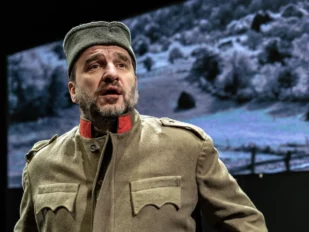
Tomorrow "Zvezdara Theater" will celebrate the 400th performance of "The Book of Milutin" by Nenad Jezdić's monodrama. Plays that have been in the repertoire for more than a decade are currently being played in Belgrade. The musical "Some like it hot", even - three

More than 400 artists and cultural workers signed the request of the Initiative for Free Culture, which calls for the dismissal of all the leaders of cultural institutions in Pancevo.
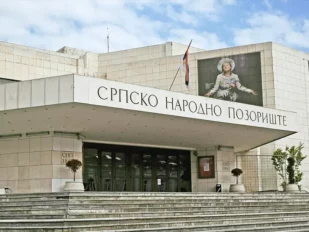
After the resignation of Dragana Milošević, the acting manager of the SNP, Željko Andrić was appointed the director of the Opera, even though the employees are demanding a change in the entire administration.

There is little information about the 61st October Salon. It is not known, for example, how the selected artists deserved to represent the current art world scene and how much it all costs

At the moment when the institutions of the Republic are destroyed, when Vučić's octopus is still alive, when people are disgusted by the injustice and the stench left behind by the Essenes regime, we have, as Machiavelli said, only civic virtue as the fuel with which we can return to the beginning

The four independent members of REM are an example of perseverance and civic responsibility. Rodoljub Šabić even, upon leaving the premises of REM, after the sentencing of the Informer, experienced that the Essenes insulted him, hit him with their hands and feet. But that too will soon be over

Vučić pardoned the batterers and Dijana Hrkalović. The election winners should abolish the sultan's power that allows one man to run afoul of the entire judicial system

Time explores: The construction of the St. Sava Temple
Did the money paid by the Government to SPC end up in Moscow through Alta Bank? subscribeThe archive of the weekly Vreme includes all our digital editions, since the very beginning of our work. All issues can be downloaded in PDF format, by purchasing the digital edition, or you can read all available texts from the selected issue.
See all



