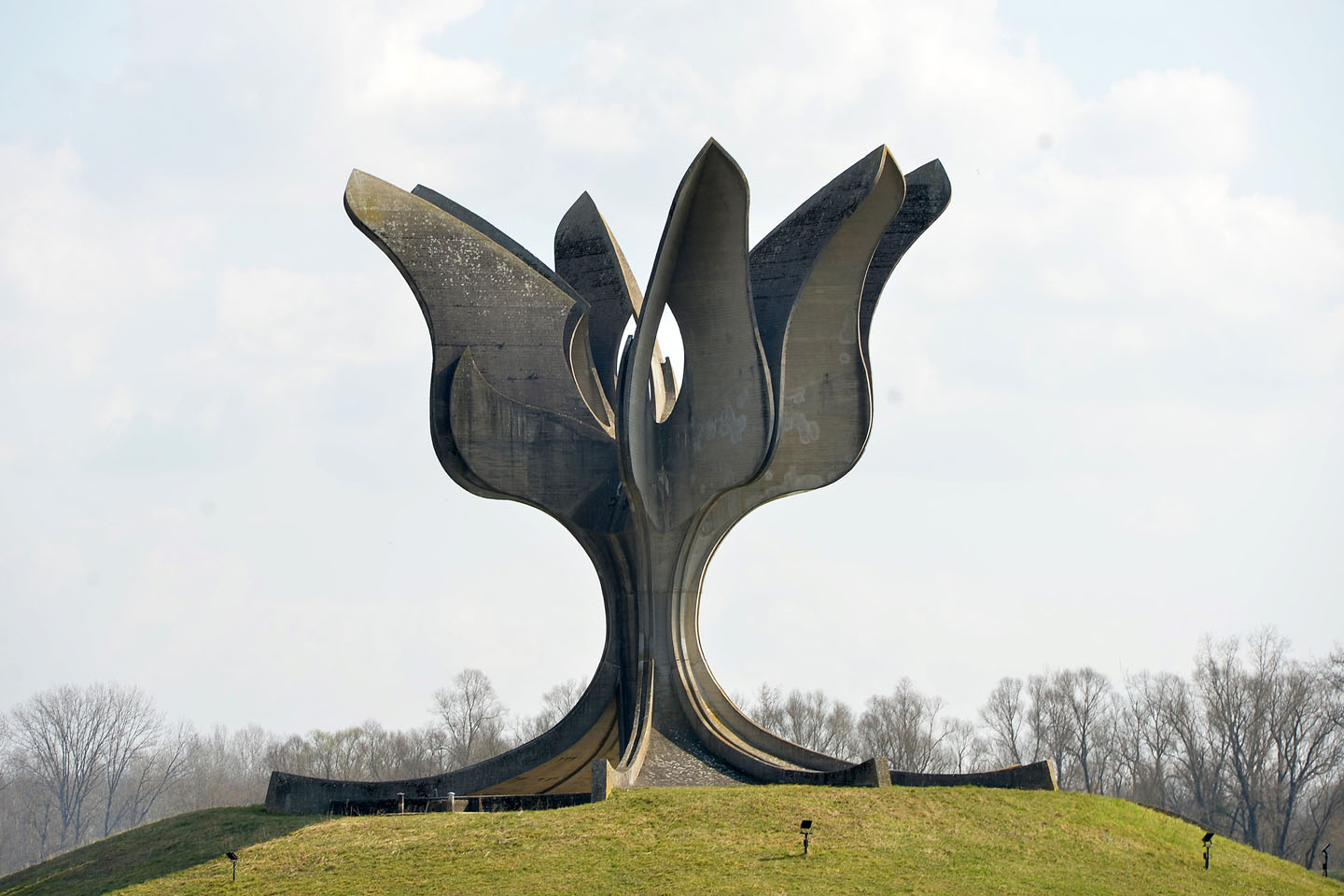
Croatia did not heed Serbian President Aleksandar Vučić's wish to visit Jasenovac privately and pay his respects to the Serbian victims. There was a heavy fight between the representatives of the two countries and that before the anniversary of the Croatian military operation "Storm", which both sides, like every year, will celebrate violently - Croatia will celebrate the victory and liberation, and Serbia will call on the criminal character of that action, ethnic cleansing and numerous Serbian victims. We are unfortunately used to such occurrences, but this whole outcry reminded me of something I personally experienced three years ago.
The Prime Minister of the smallest German province of Thuringia, Bodo Ramelo, my friend and reader of my books, wanted to visit me privately on the occasion of my ninetieth birthday, present me with the medal in a close circle of friends and family, and dine with me at the Writers' Club. Well, that was not possible.
First, he was warned by his protocol that he must report the visit to the Government of Serbia, and the German security services that he must be accompanied by two armed bodyguards, which, of course, must be agreed with the Serbian security authorities, so Ramel's men officially requested the Serbian authorities permission for his private visit to me.
His private visit was gladly approved on the condition that he officially visit the Government of Serbia, lay a wreath at the monument to the victims killed in the Staro sajmište camp, and then let him do whatever he wants. Ramelo agreed, and what German would refuse to pay respect to the murdered Jews? At the airport, the Serbian authorities greeted him as per protocol and assigned him two more local, armed members of the security service. He could not go anywhere without the more or less discreet escort of four bodyguards, German and Serbian, who were also present at the dinner. He apologized for that, commented that it was stupid, who would recognize him on the streets of Belgrade.
This whole circus was caused by the visit of the president of a provincial government, an incomparably less important politician than the president of the Republic of Serbia. The whole of Thuringia has approximately the same number of inhabitants as Belgrade. But there are no private visits if you are in a certain political position.
Of course, I also remember Tito's visits to foreign countries, because as a translator I was involved in the preparations that would begin a month or two before the planned event.
Vučić has experienced experts in his services. They certainly knew that the privacy of such a visit was excluded, and there was also mutual concern, and that of the host country, for the safety of the President of Serbia in such a sensitive area as Jasenovac, precisely because there are neo-Ustasha in Croatia and that bilateral relations are tense due to politically potentiated unresolved historical accounts.
If Croatia's note on the reasons for rejecting that visit, as reported by the media, was relatively polite, the Serbian note was all the more impolite, and the attacks of most Croatian media on Vučić were inappropriate and rude, as were the reactions from Serbia.
When anyone lays a wreath in Jasenovac, they also lay it on the part of my family that was killed there. I am bothered by all the circus that is made about it. All that remains for me is to sadly write what I know, aware that apart from publishing a few sentences, I cannot change anything. But Serbian and Croatian citizens can. They can, only if they want to take over the sovereignty that belongs to them according to the constitution of both countries.
Read daily news, analysis, commentary and interviews at www.vreme.com