
Analyze
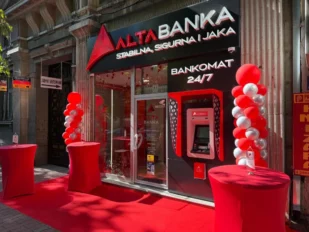
Alta banka: Progressive elephant, banking fly
Can Alta bank disrupt the financial system of Serbia? What messages does the introduction of bankruptcy send - should we trust banks and which ones?

Srbijavoz recorded a historic loss of 1,8 billion dinars. Experts point to investments, security problems and a drop in public confidence
Public company "Srbijavoz” achieved the highest net profit last year loss in its history of as much as 1,8 billion dinars, while the year before that minus amounted to about 260 million dinars.
According to data from the financial reports of this company, published at the Agency for Business Registers, Srbijavoz made a profit of 175 million dinars in 2023. In 2022, it had a loss of 344 million dinars, while it ended 2021 with a profit of about 200 million dinars, writes Danas.
The interviewee of Danas states that the reasons for last year's loss of 1,8 billion dinars can partly be found in the large investments that the company realizes and the loans that it repays, but also in the high costs that, in his opinion, stem from bad business decisions. Such costs, as he points out, burden not only the company, but also all taxpayers.
He adds that the fall of the canopy at the railway station in Novi Sad, as well as the suspension of traffic during large protests, also affected the business, which, he says, further damaged the company's image and demotivated citizens to use the railway.
That is why, according to the interlocutor, citizens today avoid the railway for two reasons - safety, but also out of principle.
Dragoljub Rajić, director of the Cluster of Southeast European Railways, tells Danas that the deepening loss of the Srbijavoz company to as much as 1,8 billion dinars is a consequence of large investments, but also of a poorly set up railway development system, expensive infrastructure maintenance, political decisions and a serious drop in citizens' confidence in the safety of railway traffic.
"First of all, Srbijavoz is currently in a situation where there are not enough railways built throughout Serbia and now that infrastructure is being built. It cannot make a big financial result because currently the investments are very large. The company borrows, raises loans in order to acquire new train sets and to invest in some basic means of operation. A whole series of costs is necessary because a transformation is underway, which is currently supported by European banks," Rajić points out.
However, as he warns, in parallel with the investments, the events of the last year and a half are further collapsing the company's business, because passengers are avoiding the railways due to safety issues.
"All that is happening is very negative. Not only the fall of the canopy in Novi Sad, but also the derailment of trains near Subotica, two trains in a few days. This has a very negative impact on the company's operations," says our interlocutor.
As he points out, this gives the citizens a signal that the railway is not reliable from the safety point of view.
Rajić reminds that the former director of the Infrastructure of the Railways of Serbia, Vladimir Maksimović, a few months after the fall of the canopy in Novi Sad, came out with a report in which, on 150 pages, they listed defects on the railway, infrastructure defects, which they labeled as dangerous for traffic safety.
"A lot of people read it, watch it, follow it. That's why you have a situation where it's very difficult to restore people's trust in the railways," Rajić points out.
According to him, there is another type of citizen who avoids the railway, but out of "principle", due to, as he says, the suspension of trains during protests which, he believes, are probably politically motivated.
Read the complete text on this topic on the newspaper's portal Today.
Source: Today
Can Alta bank disrupt the financial system of Serbia? What messages does the introduction of bankruptcy send - should we trust banks and which ones?

The situation regarding Alta Bank does not threaten the regular operations of Belgrade Waterfront

Intesa Invest claims that the impact of Alta Bank's collapse on its money funds is limited and one-time. The funds operate regularly, and the issuance and redemption of investment units take place smoothly.

Which bank, from when and in what period of time, will pay out money to the depositors of Alta Bank, for which the Commercial Court in Belgrade issued a decision on the initiation of bankruptcy proceedings.
Clients of Alta Bank in Serbia no longer have access to their accounts. Among them are many Russians. When will they be able to get their money? Will they have to say goodbye to sums greater than 50.000 euros?

Vučić pardoned the batterers and Dijana Hrkalović. The election winners should abolish the sultan's power that allows one man to run afoul of the entire judicial system
Davor Matura's ALTA empire is the transplanted heart of the corrupt regime of Aleksandar Vučić, who was defeated in the October 25 elections. From ALTA Bank, roads lead directly to the top of the progressive government.

Things are unfolding at an astonishing speed, as astonishing as the speed with which Vucic conceded a convincing defeat. Impatience is understandable, but misplaced

The archive of the weekly Vreme includes all our digital editions, since the very beginning of our work. All issues can be downloaded in PDF format, by purchasing the digital edition, or you can read all available texts from the selected issue.
See all



