Buying juice or beer could soon carry a small additional cost - bail from 10 to 15 dinars per packaging, which is fully refunded to the consumer when he brings the empty bottle or can back to the store. It is about the deposit-refund system announced by the Ministry of Environmental Protection for 2027, which should solve the problem that the current recycling model has not been able to eliminate - the low percentage of returned and recycled packaging, the Biznis.rs portal announced.
The principle is simple, as Jelena Petljanski, president of the Alliance for Circular Packaging, explains in an interview with this portal: when buying drinks in disposable packaging, the consumer pays a deposit - for example, 10 dinars for a smaller one, or 15 dinars for a larger one. When he returns the empty packaging to the designated place, the deposit is fully returned.

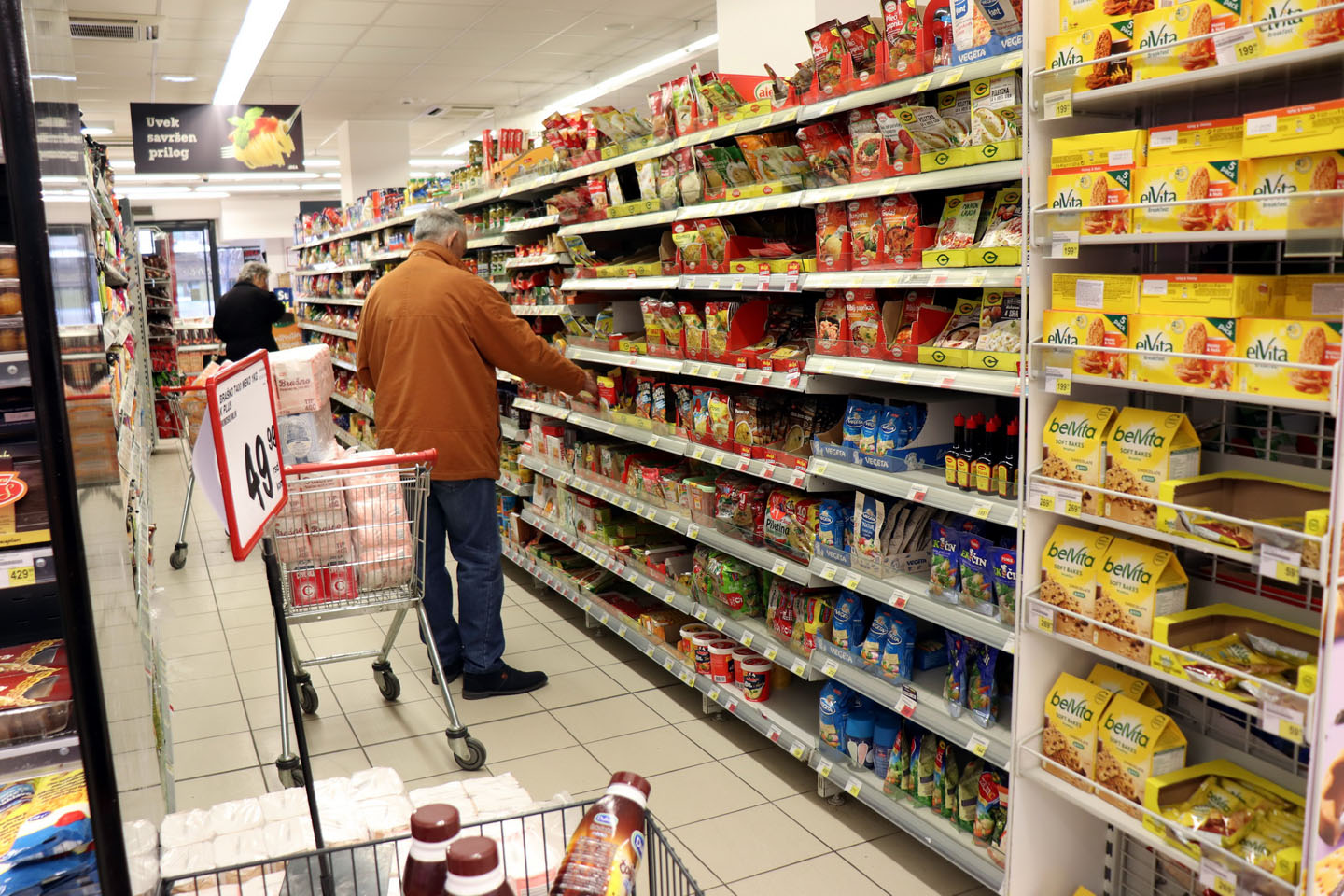
Photo: Milovan MilenkovićThe shop
Introduction of packaging acceptance machines
The return would be done in the sales facilities, through the packaging acceptance machine or manually, depending on the size of the store.
"Traders have one of the key roles in the functioning of the system, because it is with them that citizens return the packaging and obtain a deposit refund. On the other hand, manufacturers finance the functioning of the system through fees, while a special non-profit depository organization manages the entire process, organizes logistics, monitors packaging flows and ensures the transparency of the system," explains Petljanski.
The deposit system is based on the principle of extended producer responsibility, which means that the largest part of the financial burden is borne by the industry that markets the packaging.
"The system is financed from several sources - through fees paid by producers, income from the sale of collected materials, as well as funds from deposits for packaging that was not returned to the system. The state does not play the role of financier, but rather a regulator. Its responsibility is to establish a clear legal framework, ensure supervision of the functioning of the system and create conditions for the equal participation of all stakeholders," adds our interlocutor.
Traders organize the reception of packaging, while citizens, through their participation, enable valuable materials to return to the production cycle instead of ending up in landfills or in nature. Management of the system would be entrusted to a special non-profit depository organization that would coordinate logistics, financial flows and monitoring of packaging, with the aim of making the system efficient, transparent and sustainable in the long term.
The Ministry announced the start of implementation in 2027, but the legal changes that would enable this have not yet been adopted. According to Petljanski, the profession believes that a phased introduction is the most realistic - the first phase would include PET packaging and cans, followed by glass and multilayer cardboard packaging.
"It is important that the state defines the deadlines as soon as possible, so that the economy can plan investments," she points out.
Why is the existing model insufficient?
Today in Serbia, there is only a voluntary deposit system for part of the returnable glass packaging - some beverage manufacturers have returnable glass bottles for which a deposit is charged and returned, but the system is not unique.
"The amount of the deposit differs from producer to producer or trade chain, there is no unified management of the system or unified rules at the national level. In addition, it covers only a small part of glass packaging and does not apply to PET bottles, cans or other packaging that today makes up the largest part of packaging waste," says Petljanski.
The introduction of a comprehensive deposit system has been discussed for almost two decades, but the corresponding legal framework still does not exist. The previous model, based on primary separation, did not give the expected results - especially when it comes to PET packaging, cans and glass.
At the same time, PPWR requires an increasing proportion of quality recycled material in new packaging, which can only be ensured through controlled collection flows. Additional challenges are the lack of infrastructure, national packaging register and material traceability system, the president of the Alliance for Circular Packaging assesses.
Photo: TanjugWide selection of items
How far behind is Serbia?
The data cited by Jelena Petljanski show the extent of the problem: Serbia today recycles only 15,45 percent of municipal waste, while the European Union average is around 49 percent. Only 28 percent of citizens have access to an organized recycling system, while as much as 13,6 percent of waste ends up outside the system - in wild landfills or in nature.
"It shows that the problem is not only in the set goals, but above all in the insufficiently developed infrastructure and waste collection system," he assesses.
A special challenge is presented by PET packaging, for which a collection rate of 80 percent is foreseen - a result that, according to the experiences of European countries, is almost impossible to achieve without a deposit system. On the other hand, the experiences of the countries that have introduced it show that deposit systems enable packaging collection rates higher than 90 percent, with high-quality recyclate for the production of new packaging.
Through the process of harmonization with the EU, Serbia has committed itself to reach European packaging waste recycling goals by 2030: 85 percent for paper and cardboard, 75 percent for glass, 60 percent for aluminum and 55 percent for plastic. The basis for this is laid by the Regulation on establishing the Plan for the reduction of packaging waste for the period 2025-2029, which foresees an increase in the rate of reuse of packaging waste to 72 percent and the recycling rate to 65 percent by 2029.
Starting in 2027, more precise targets will be introduced by type of material, including the separation of plastics into PET, polyethylene and other types.
The domestic economy must also prepare for the new European Regulation on packaging and packaging waste (PPWR), which prescribes a mandatory share of recycled material in new packaging and strict recyclability criteria. From 2030, it will not be possible to place packaging with a recyclability of less than 70 percent on the EU market.
"That's why the issue of recycling today is not only an issue of environmental protection, but also of the competitiveness of the domestic economy and the preservation of exports", assesses Petljanski and states that the best long-term solution for Serbia would be for the system to include PET packaging, cans, glass and multi-layer cardboard packaging, with a phased introduction and a clearly defined road map.
"This would fulfill the requirements of the PPWR and ensure the conditions for the development of the circular economy," concludes the president of the Alliance for Circular Packaging.
Source: Biznis.rs
Only in August: Save three thousand dinars on the annual subscription to the digital edition of "Vremena"! Take advantage of the discount here and support independent journalism.