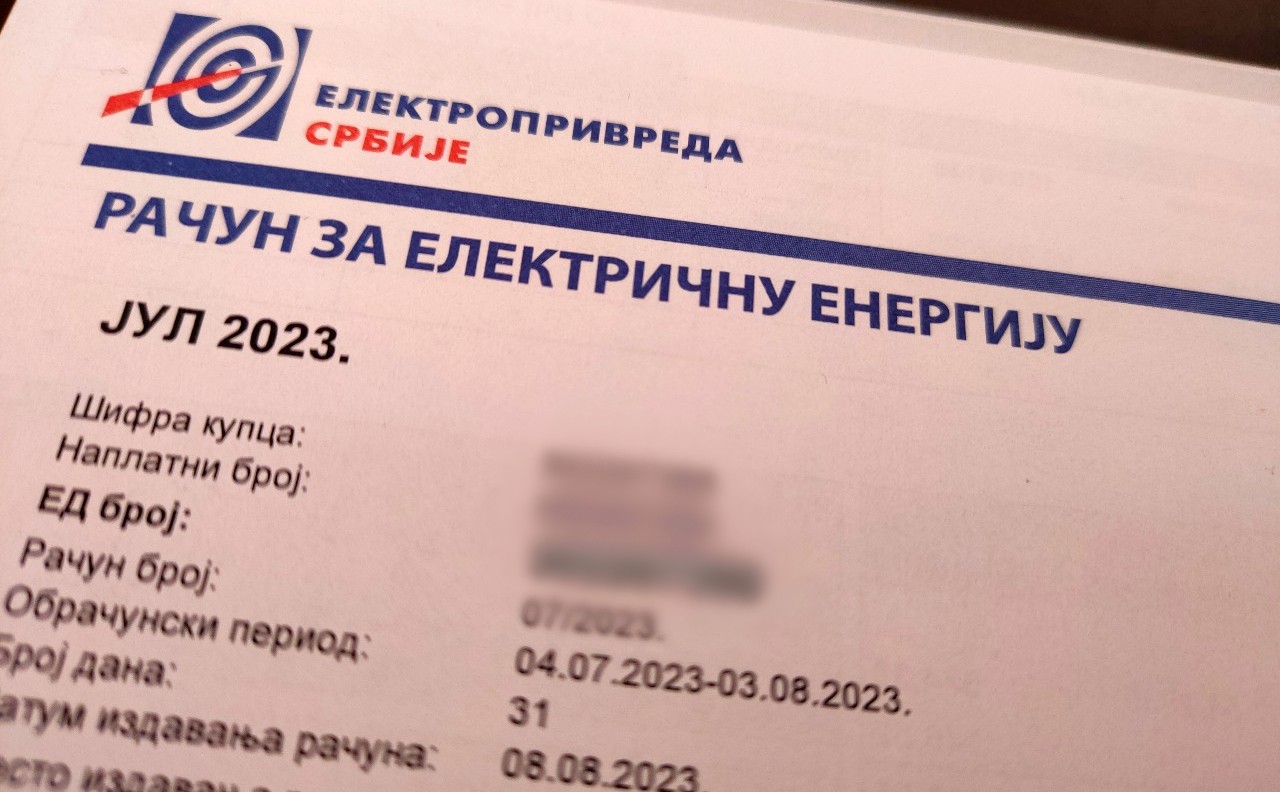
Record consumption electricity which during August in Serbia went over 100 gigawatt-hours, due to the constant operation of air conditioners, of course it resulted in significantly higher electricity bills.
"I normally get 4.000 to 5.000 dinars maximum for electricity, even though I cook and have a large apartment," says Ivana Todorović, a resident of Belgrade, who lives with her husband and two children. "Now the bill was 7.500 dinars. I was shocked, but then I remembered that we almost didn't turn off two air conditioners for most of the month. It's good that it wasn't even bigger."
The amount of electricity that citizens consume during one such scorching month goes up to 12 million euros, depending on the market conditions, so it means a lot to many people to turn on large consumers during the night, in the period of cheap electricity.
That is why it is important for citizens to know that the cheap, lower electricity tariff in Serbia lasts for eight hours every day, but the start time varies by region and is valid only with a two-tariff meter.
In Belgrade, it is valid from midnight to eight in the morning, in Vojvodina from 23 p.m. to seven in the morning, and in central Serbia from 22 p.m. to six in the morning. These times are the same 365 days a year, regardless of weekends or holidays.
The price of a kilowatt-hour in the lower tariff is about four times lower than in the higher one.
The type of meter is also important.
The official and exact number of exclusively single-tariff meters in Serbia has not been publicly identified in the statistics of Elektrodistribucija Srbije, but it is known that there are a total of 3,7 to 3,8 million meters in the country. Most of them are dual-rate, while single-rate are less common and are mostly found in cottages, older residential buildings or smaller establishments.
The majority of households in Serbia never actively chose the type of their meter, they simply got the one that was available when connected, and the electricity distribution company decides on the type of meter based on technical capabilities.
However, the difference between a two-tariff and a single-tariff meter directly affects how much and how citizens pay for electricity every month. With the latest price increases and the reduced limit for the red zone, from 1.600 to 1.200 kilowatt-hours, this issue has never been more relevant.
The single-tariff meter measures the total consumption of electricity without distinguishing the time of day. For a household that consumes 500 kilowatts per month, the single-tariff meter calculates all 500 kilowatt-hours at a single price for each zone, regardless of when you used that energy.
The two-tariff meter separates consumption into two periods: a higher tariff (more expensive, daytime) and a lower tariff (cheaper, night). The meter records how much citizens spent in each period separately, and each is calculated at a different price.
How to change the meter
The type of meter can be decided by the consumer, but only if the technical conditions allow it.
Consumers who want to switch to a two-tariff meter, and have the possibility of cheap electricity at night, must submit a request for the issuance of technical conditions to the local distribution. Upon receipt of the conditions, they should hire a licensed electrician for any adjustments. After the inspection of the performed works, the replacement costs are paid, and the price of the new meter is about 8.000, plus the costs of the MTK receiver of about 1.000 dinars. After inspecting the performed works, the user at the counter pays the costs of replacing a single-tariff meter with a two-tariff meter, which is about 1.000 dinars.
Those who want to introduce a single tariff, which pays off for people who have cottages and consume very little electricity, must again turn to distribution.
Only in August: Save three thousand dinars on the annual subscription to the digital edition of "Vremena"! _Take advantage of the discount here and support independent journalism.