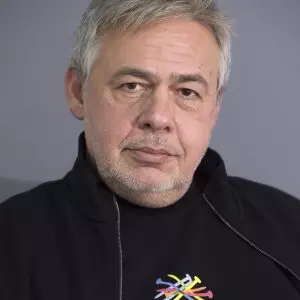
In the midst of crisis and uncertainty about fate Oil Industry of Serbia, before the deputies Serbian Parliament a proposal was found budget law for the year 2026, which was explained by the Minister of Finance Sinish Mali.
However, the presented budget did not take into account the uncertain future of the Serbian Oil Industry, with which many companies, including Petrohemija, are connected.
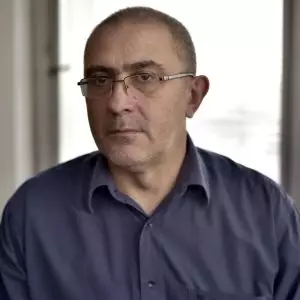
Ecologist Ljubomir Madjar he says for "Vreme" that ignoring the changes that can happen in NIS is inadmissible, so such a budget "has no value".
Budgetary ignoring of NIS
If OFAK does not change the decision on NIS and does not extend Serbia's deadline for the smooth operation of the Refinery in Pancevo, the budget would have to be reprogrammed within a month or two.
"One harm is when the budget is made, and it does not correspond to the real circumstances, and the other is the need for rebalancing. Reprogramming the budget is an activity that is not free, which has its own costs. On the other hand, those budget changes introduce new unnecessary elements of uncertainty into economic life and additionally reduce the efficiency of the economy, which will be low anyway due to all the miracles that happen to us", explains Madjar.
The Fiscal Council also pointed out the lack of reference to the situation with NIS when preparing the budget proposal.
As stated in the report, at the moment the main fiscal risks for the budget plan for 2026 are the uncertainty in the energy sector, first of all the acute problem of NIS sanctions that requires an urgent solution, then the open questions regarding gas supply, as well as the potentially negative impact of the application of the EU cross-border carbon price adjustment mechanism (CBAM) on export competitiveness and EPS operations.
How much money from NIS goes into the Serbian budget
The oil industry of Serbia is a large taxpayer, which pays large amounts of money into the state coffers. Last year alone, NIS paid more than two billion euros into the budget in the name of various tax obligations.
In total, NIS and its subsidiaries paid 244,7 billion dinars into the state budget last year, which is about 2,09 billion euros, Nova ekomomia announced earlier.
"NIS is a big contributor to the budget. It can happen that a large source of budget revenue disappears, and when preparing this budget they did not take that risk into account. This can lead to the cutting of items in the budget. When such a large source of income disappears, expenditures must be cut, and that is not easy. Especially since the items that are usually cut have already been cut, such as education, scientific and research work, health care," says Madžar.
There is no doubt that in that case there will be additional borrowing.
"We have already stepped deep into debt, and if the NIS stops, there will be a great need for further funds. The big question is how these debts will be secured. The credibility of the country has already been reduced due to the political instability that has been shaking Serbia for a year, and because the debt has already increased. The more indebted the country, the lower the credibility, and then the more difficult and unfavorable conditions for further borrowing," concludes Madžar.
The World Bank is ready to help
The World Bank also commented on the situation in Serbia.
Lazar Šestović, an economist of the World Bank in Serbia, reminded that our country had previously faced high costs of remediating problems in companies such as EPS, Srbijagas or Air Serbia, among which we could now also include NIS.
"Serbia is facing potentially significant consequences for the budget when it comes to the situation with the NIS, but the state has sufficient financial reserves for possible interventions. We hope that this time it will not come to that," said Šestović, according to Nova ekonomija.
The longer the situation lasts, the more potentially harmful it is to the economy, and the SB is ready in terms of financial availability to cover it if it becomes necessary.
BLACK WEEK: Twenty percent discount on all subscriptions until the end of November! Subscribe to digital edition, printed "Vreme", better newsletter Interval plus or support our podcast with any amount