That the Faculty of Chemistry does not have enough funds to pay basic expenses, among which they are the largest current and heating, the Government of Serbia, the Ministry of Education, the Ministry of Energy and Mining, as well as the Rectorate have been aware of this problem since 2021, when they were sent a letter about this problem, the dean of this faculty, prof. Dr. Goran Roglić.
"This year, the faculty needs to provide 30 million dinars from its own funds to pay these bills." For January alone, electricity and heating bills amounted to 5 million dinars, of which the state covered 1,6 million," says Roglić and emphasizes that the figures he is talking about refer only to the Faculty of Chemistry, which uses 60 percent of the building. Faculty of Science and Mathematics, and that's how much he pays.
Roommates
The Faculty of Chemistry and the Faculty of Physical Chemistry are housed in the building on Student Square, while part of the space is used by the Faculty of Mathematics, Physics, Biology, Geography and Mining and Geology. Roglić explains that there is only one meter at the level of the entire building.
"We have a gentleman's agreement with the other faculties in the building, everyone pays in proportion to the area they use. Both the Faculty of Physics and the Faculty of Physical Chemistry are in trouble, but the biggest expenditures are for the Faculty of Chemistry, which has the largest area," said the dean, adding that these are also the faculties with the least self-financing students.
For the past three years, fewer students have applied for the mentioned three faculties than there are places, so most of the enrolled are on the budget. Last year, the Faculty of Chemistry enrolled 122 students, of which only 13 were self-financed.
The Faculty of Chemistry annually receives about 21 million dinars from school fees, explains Roglić and adds that in addition to the electricity and heating bills, this money should be used to pay for hygiene, as well as equipment for student exercises, for which the faculty does not receive a single dinar from the state.
Fateful session
"The biggest problem is electricity, which has risen in price by 2022 percent since 100, and the funds we receive from the Ministry of Education for energy services have remained at the level of 2019," says the dean, noting that the faculty pays 120 euros per MWh, that is about the so-called industrial price of electricity, which is significantly higher than that for households.
The Faculty has the means to pay expenses only until May of this year, and in the middle of that month, at the session of the Senate of the University of Belgrade, the final decision on the fate of the PMF building will be made.

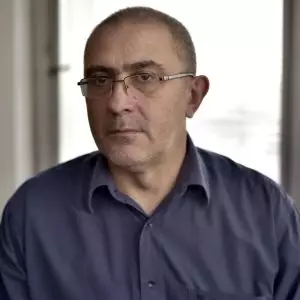
Photo: Printscreen/N1Goran Roglić, Dean of the Faculty of Chemistry.
"The only solution is for the Ministry of Education to take over the payment of the bill." The faculty can go into debt, but our assessment is that it is not in the interest of the faculty, we are a serious institution and we will not allow it", emphasized the dean of the Faculty of Chemistry.
The Ministry of Education and the Ministry of Finance repeatedly broke the deadlines they promised to find a solution, says Roglić, and the problem exists at the level of the entire University of Belgrade, because most faculties spend all their funds on bills, instead of raising the quality of teaching.
Energy dissipation
As an additional problem, the dean of the Faculty of Chemistry cites the old carpentry, which is why, in addition to central heating, the rooms must be heated with the help of electricity. That is why it is necessary to invest in the replacement of windows.
"It is a long-term solution, we are advocating it for the second time. Back in 2021, we asked for a meeting with the then minister Zorana Mihajlović, and the project for the building has existed since 2015," says Roglić.
The long-awaited negotiations on this topic have recently started with the Ministry of Mining and Energy. It is estimated that the large investments required for energy efficiency could be returned in seven years through the reduction of electricity and heating bills. However, first of all, it remains for the other competent ministries to make a decision for the current year.